Catalogue Search | MBRL
Search Results Heading
Explore the vast range of titles available.
MBRLSearchResults
-
DisciplineDiscipline
-
Is Peer ReviewedIs Peer Reviewed
-
Series TitleSeries Title
-
Reading LevelReading Level
-
YearFrom:-To:
-
More FiltersMore FiltersContent TypeItem TypeIs Full-Text AvailableSubjectCountry Of PublicationPublisherSourceTarget AudienceDonorLanguagePlace of PublicationContributorsLocation
Done
Filters
Reset
175
result(s) for
"أمراض النبات"
Sort by:
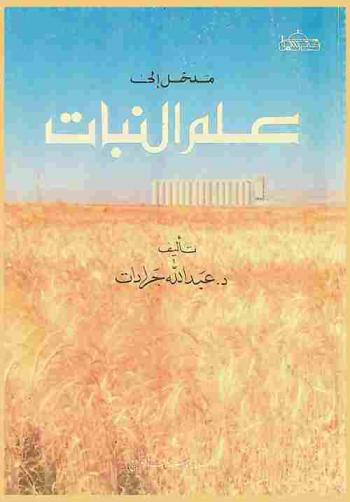
مدخل إلى علم النبات
1990
يتناول كتاب (مدخل إلى علم النبات) والذي قام بتأليفه (الدكتور عبد الله جرادات) في حوالي (235) صفحة من القطع المتوسط المحتويات التالية : الفصل الأول : أهمية النبات، الفصل الثاني : تصنيف النباتات، تصنيف النباتات حسب استعمالاتها، تصنيف النباتات حسب الاستخدام الخاص، تصنيف النباتات حسب دورة حياتها، تصنيف النباتات حسب التأقلم المناخي، تصنيف النباتات حسب المعاملات الزراعية ... إلخ.
Biological Control of Peacock Spot Disease Caused by Spilocaea Oleagina on Olive Using Bacteria
2020
The olive leaf spot disease caused by the fungus Spilocaea oleagina (Cast.) Hughes (syn. Cycloconium oleagina) is one of the most destructive diseases on olive trees causing losses that may reach 20% of the yield. The disease is controlled by the application of chemical fungicides which is not always feasible in providing proper protection against the pathogen. In this work we report the efficacy of Pseudomonas fluorescenc isolate ORS3 and Bascillus atrophaeus isolate BAT in controlling the disease under field conditions. An Olive field in, Tulkarm governorate, Palestine was selected. The olive trees were 5-10 years old and were highly infected with the olive leaf spot. Trees were sprayed with bacteria formulated in oil. Control trees were sprayed with water. For evaluation of bacterial efficacy against the disease, olive leaves were collected before and after application of the bacteria. Germination of conidia latent infection and severity were deter-mined. In addition to that, bacterial viability was assessed. Results of the work revealed that the bacteria were able to inhibit conidial germination of the fungus. The percent of reduction in conidial germination (85.8 and 70.2%) in the presence of P. fluorescenc isolate ORS3 and B. atrophaeus isolate BAT, respectively was significantly lower than that in the control or in leaves sprayed with 10% oil (69.1 and 56.1%, respectively). After two weeks of spraying, the percent of latent infectoin was significantly (P <0.05) lower on leaves sprayed with P. fluorescenc isolate ORS3 and B. atrophaeus isolate BAT (5.1 and 3.8% latent infec-tion, respectively). However, bacterial shelf life on the surface of olive leaves was reduced after three days of spraying (i.e no bacteria were re-isolated). The results indicated that the bacteria can be used for control of the leaf spot disease. Further studies are required to evaluate the efficacy of the bacteria under different environmental conditions.
Journal Article
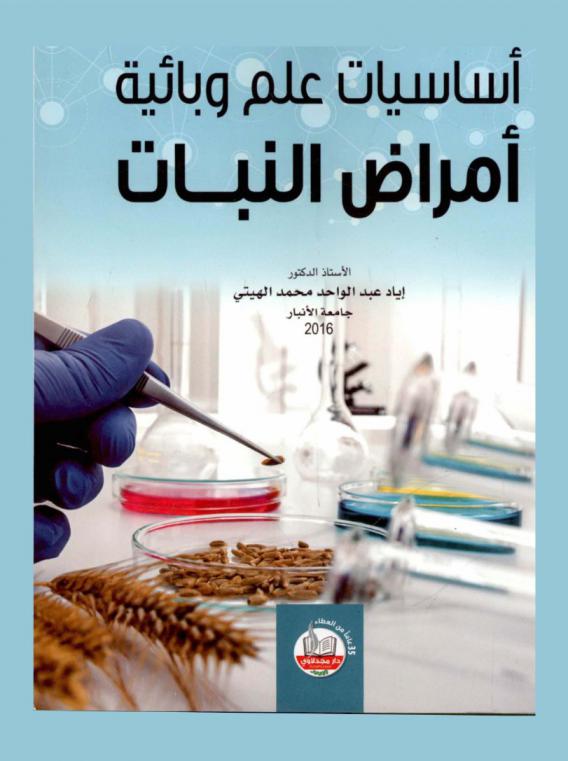
أساسيات علم وبائية أمراض النبات
2018
يتحدث كتاب أساسيات علم وبائية أمراض النبات للدكتور إياد عبد الواحد محمد الهيتي عن علم وبائية أمراض النبات التطور والمفهوم وتقويم أمراض النبات وخسائرها في الحاصلات الزراعية وطرز تطور أمراض النبات العوامل البيئية وتطور الامراض الوبائية ويتحدث الكتاب أيضا عن حدوث المرض وتطوره والتغاير الوراثي للمسببات المرضية والعائل وتطور الوباء والتغاير الوراثي في العائل ومقاومة أمراض النبات.
Incidence of Common Bunt ( Tilletia spp. ) in Syria
by
ميلودي نشيط
,
ميادة كيالي
,
منذر نعيمي
in
AGRICULTURAL LAND
,
PLANT DISEASES
,
PLANT FUNGAL DISEASES
2011
Journal Article
الجمعية العربية لوقاية النبات ودورها في ترسيخ ونشر الوعي لإدارة آفات نخيل التمر
by
الجبوري، إبراهيم جدوع، 1953- مؤلف
in
الجمعية العربية لوقاية النبات
,
النخيل أمراض وحشرات ضبط البلاد العربية
2021
قبل البدء بشرح دور الجمعية العربية لوقاية النبات ودورها الأكاديمي والعلمي في ترسيخ ونشر الوعي لإدارة آفات النخيل والآفات الأخرى لابد لنا أن نعرف من يقرأ هذا الكتيب عن هذا الكيان بأنه تنظيم ثقافي منه لا يسعى للربح، يضم نخبة من علماء وباحثين ينتمون لمعاهد أكاديمية ووجهات علمية وصناعية عامة وخاصة، وهي تمثل تنوعا لتجمع العلماء المختصين في مجالات وقاية النباتات في العالم العربي أو خارجه. وتعمل الجمعية على تعزيز الأنشطة البحثية والتعليمية، والإرشادية المتعلقة بالآفات الزراعية بأنواعها، وتوفير المعلومات المبنية على أسس علمية للقطاعين العام والخاص، وتعزيز المدارك والوعي بالآفات وآثارها في الأنظمة.
Histopathological and morphological alterations caused by Plasmodiophora brassicae in Brassica oleracea L
2011
Plasmodiophora brassicae is a plant pathogen of the Brassicaceae family, which presents a remarkable ability to survive in soil and high capacity of infection, significantly reducing crop yields. The present histopathologycal study conducted with the aim of contributing to knowledge of the infection cycle of the pathogen, showed the presence of multinucleated plasmodia at cortex and periderm cells level in infected cabbage roots, as well as thickening and disruption of cell wall. As a result of this disarray was observed in diseased tissues, mainly in the cortex, compared with healthy tissues in uninfected plants. The inoculation cabbage seedlings with dormant spores of P. brassicae at concentrations of 1 · 107 and 1 · 108 spores mL-1 by immersion and spray, induced a higher growth and less growth longitudinal lateral roots compared with uninoculated plants as well as presence of young plasmodia at 28 days after inoculation. Key words: Plamodiophora brassicae, Brassica oleraceae L., histopathology, gall, plasmodia, inoculation, hypertrophy.
Plasmodiophora brassicae es un patógeno de plantas de la familia Brassicaceae que presenta notoria habilidad de sobrevivencia en suelo y alta capacidad de infección, lo cual reduce considerablemente el rendimiento de los cultivos. El presente estudio se realizó para contribuir al conocimiento del proceso infeccioso de este patógeno en el repollo, una especie de interés económico para Colombia, pues la información disponible es incipiente y desactualizada. A fin de determinar el daño a nivel celular se practicaron cortes histológicos en plantas con infecciones naturales; adicionalmente, se hicieron pruebas de patogenicidad con el fin de hacer un seguimiento de los síntomas iniciales de la enfermedad bajo condiciones controladas. Los resultados indicaron la presencia de plasmodios multinucleados en las células del cortex y la peridermis, así como engrosamiento y rotura de la pared celular en raíces de repollo infectadas, además de pérdida en la diferenciación de los tejidos, principalmente del cortex, comparado con tejidos sanos de plantas no infectadas. La inoculación de plántulas de repollo con esporas latentes de P. brassicae en concentraciones de 1 · 107 y 1 · 108 esporas mL-1, mediante inmersión y adición de inóculo en el sustrato, indujo mayor crecimiento lateral y menor crecimiento longitudinal de las raíces comparado con plantas no inoculadas, además de la presencia de plasmodios jóvenes a los 28 días de la inoculación. Palabras clave: Plamodiophora brassicae, Brassica oleraceae L., histopatología, agallas, plasmodios, inoculación, hipertrofia.
Journal Article
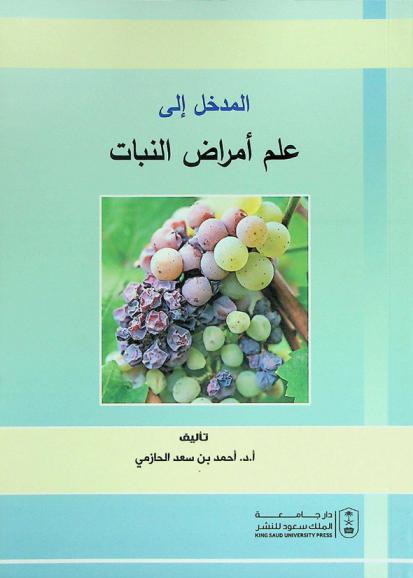
المدخل إلى علم أمراض النبات
by
الحازمي، أحمد بن سعد فهد، 1950- مؤلف
in
أمراض النباتات دراسة وتعليم (عالي) السعودية الرياض
,
علم النبات دراسة وتعليم (عالي) السعودية
2021
يتناول هذا الكتاب الأسس والمفاهيم العامة والأساسية في علم أمراض النبات، الضرورية لكل مهتم ودارس لهذا العلم بتفرعاته المختلفة. وقد تمت مراعاة أن تقدم مادة هذا الكتاب بأسلوب مبسط، وبلغة عربية سهلة، مع تجنب الكثير من التفاصيل والتعمق الذي يخرج عن هدف هذا الكتاب الأساس. يشتمل هذا الكتاب على عشرة فصول متسلسلة، تبدأ بفصل خاص عن مفهوم المرض النباتي، وتنتهي بفصل عن أسس (إدارة) أمراض النبات. ويتميز هذا الكتاب بوجود ملحق خاص عن : بعض المفاهيم الأساسية والمصطلحات العلمية بشروحاتها، مع صور ملونة وواضحة لأعراض أمراض النبات. وهو كتاب مقرر في كلية علوم الأغذية والزراعة بجامعة الملك سعود، ومفيد جدا للمهتمين والطلبة في مجالات أمراض النبات المختلفة.
عزل و تشخيص الفطر Rhizoctonia solani من بذور الزينيا و اختبار إمراضيته و مكافحته بمواد صديقة للبيئة
2017
This study was conducted to isolate the fungus Rhizoctonia solani associated with Zinnia
seeds, test its pathogenicity and evaluation the effect of alcohol extract of coontail and lotus,
grapefruit extract, sea bloom 29 and Bioimmune on this pathogene. This fungus was
presented in 3 samples from 11 samples and was recorded for the first time on this plant in
Iraq. All the isolates caused a significant reduction in seeds germination. Isolate A22 gave the highest decrease in percentage of germination (4 %). This isolate gave 100% disease incidence and 96.5 % disease severity compared to control (2.5 %). The percentage of germination capacity and seed germination of the seed primed with PEG solution and planted in soil inoculated by this isolate was 45 %. The alcoholic extract of coontail 0.2% and Bioimmune 12 % caused a significant superiority in the inhibition of this isolate . Also these two extracts caused a significant reduction in disease incidence 77.5 % and 72.5% and diseasse severity 72.5 % and 70% compared to control 100% and 99.38 %.
Journal Article