
Catalogue Search | MBRL


Are you sure you want to remove the book from the shelf?

{{itemTitle}}
101
result(s) for
"الأحماض النووية"
Sort by:
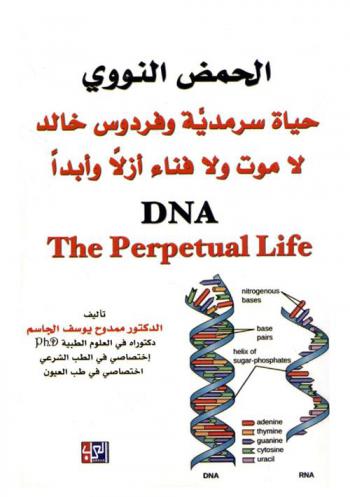
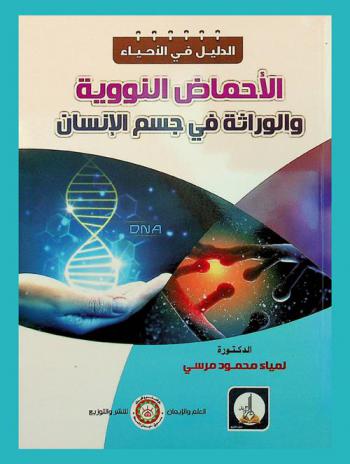
الحمض النووي : حياة سرمدية وفردوس خالد لا موت ولا فناء أزلا وأبدا = DNA : the perpetual life
يبين كتاب \"الحمض النووي حياة سرمدية وفردوس خالد / لا موت ولا فناء من الأزل إلى الأبد \" وفق هيكل عالمنا المادي ذي الجوانب الثلاثة (المادة والطاقة والمعلوماتية)، فقسمناه إلى ثلاثة أجزاء، والأول يتناول الجانب المادي للحمض النووي من كيمياء وبيولوجيا، والتاريخ المادي لهذا العلم الذي ألقى الضوء على الجهود الجبارة لكوكبة من العلماء الذين عملوا بلا كلل ولا ملل حتى توصلوا إلى كشف النقاب عن الـ DNA، الذي يعتبر حلقة مفصلية في سلسلة العلم البيولوجي وقد أرفقنا هذا الكتاب بتجربتنا المتواضعة في هذا المجال كطبيب شرعي، من خلال وضع مخططات وصور هيكلية لبنية الحمض النووي وعكس تجربتنا قبل اكتشافه في مجال البنوة والنسب المعتمدة على دراسات سيرولوجية وأنتروبولوجية.
BOOK

Applicability of Fibrous Cellulose -D In Extracting Double-Stranded RNA \dsRNA\ of ToBRFV
The viral replicative form double strand RNA (dsRNA) is a unique feature to the plant RNA viruses that used for non-specific detection of plant viruses. For decades; fibrous cellulose -11 (CF11) was used for dsRNA purification, but recently was no-more produced. Other fibrous celluloses (CF-A; -B; -C; -D; and -E) were suggested as alternatives to CF11. This study was to evaluate the applicability and reproducibility of using CF-D with two different dsRNA extracting methods: micro-spin column and modified Dodds extraction methods. The best results were recorded on Dodds extraction method over micro-spin one. This results also confirmed the applicability of extracting dsRNAs from infected plant tissues with CF-D as an alternative to CF-11. Interestingly, the sample which was exhibiting Tomato brown rugose fruit virus (ToBRFV) symptoms but negatively tested by reverse transcription-plymerase chain reaction (RT-PCR); were exhibited band (~6000 bp) approximate size of the suspected ToBRFV. Thus, dsRNA emphasizing its applicability in detecting the RNA variants of the virus. From the best of our knowledge, this research was the first to be conducted and recommending using CF-D in modified Dodds extraction method. Moreover, research on applying CF-D for RNA extraction would be highly recommended.
Journal Article

Synthesis, characterization, antifungal, antibacterial and DNA cleavage studies of some heterocyclic Schiff base metal complexes
Co(II), Ni(II), Cu(II) and Zn(II) complexes of the Schiff base derived from indole-3-carboxaldehyde and m-aminobenzoic acid were synthesized and characterized by elemental analysis, molar conductance, IR, UV–Vis, magnetic moment, powder XRD and SEM. The IR results demonstrate the bidentate binding mode of the ligand involving azomethine nitrogen and carboxylato oxygen atoms. The electronic spectral and magnetic moment results indicate that Co(II) and Ni(II) complexes have tetrahedral geometry, while Cu(II) complex is square planar. Powder XRD and SEM indicate the crystalline state and surface morphology studies of the complexes. The antimicrobial activity of the synthesized ligand and its complexes were screened by disc diffusion method. The results show that the metal complexes were found to be more active than the ligand. The nuclease activity of the ligand and its complexes were assayed on CT DNA using gel electrophoresis in the presence of H2O2. The Cu(II) complex showed increased nuclease activity in the presence of an oxidant when compared to the ligand and other complexes.
Journal Article
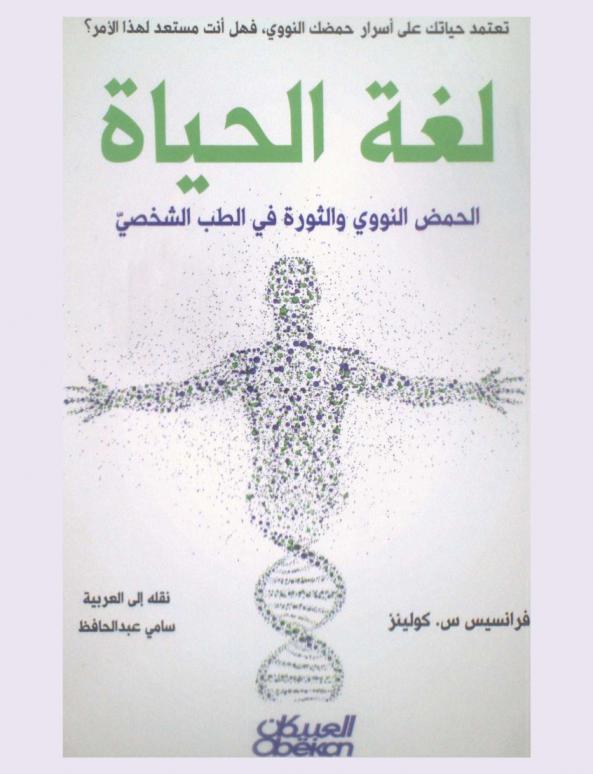
لغة الحياة : الحمض النووي والثورة في الطب الشخصي : تعتمد حياتك على أسرار حمضك النووي فهل أنت مستعد لهذا الأمر ؟
لقد اجتاحت حياتنا ثورة علمية وطبية، ففي الولايات المتحدة وحدها يعاني ستة آلاف شخص أمراضا نادرة، يعزى معظمها إلى خلل جيني أو الجينات الخطأ. عمليا تحدث جميع الأمراض بسبب مكون وراثي. وقد أخذت أمراض كثيرة، مثل السكري والقلب والسرطان والأمراض العقلية والربو وداء المفاصل والزهايمر، تتكشف أسرارها من خلال الحمض النووي. وقد بدأت عائلات كثيرة من التي واجهت مشكلات عامة، وكادت تفقد الأمل، تكتشف عالما جديدا من المعرفة والعلاج والوقاية، أنت مدين لنفسك لتعرف عن حمضك النووي : كيف يعمل وما يكشف، وما مزايا هذه المعرفة الجديدة وحدودها .كما أن ال د. فرانسيس كولينز ، من الرواد الباحثين في علم الجينات. قضى 15 عاما مديرا للمعهد الوطني لبحوث الجينوم البشري، حيث قاد مشروع الجينوم البشري العالمي إلى نهاية ناجحة. وتقديرا لمساهماته الثورية في البحوث الجينية، حصل على وسام الحرية عام 2007 م، والوسام الوطني للعلوم عام 2009 م، وهو مدير معهد الصحة الوطني الأمريكي.
Book

DNA methylation and feSOD gene expression affected by plant density in Zea mays L.
Methylation Sensitive Amplification Polymorphism (MSAP) was used to characterize the alterations in DNA methylation in maize (Zea mays L.) inbred lines and their half-daillels affected by plant densities (213333 plant h-1 and 13333 plant h-1). The two restriction was enzymes ( HpaII and MspI) succeeded in diagnosing a total of 23 specific loci, most of (22 loci) were Methylation Sensitive Loci (MSL), while the only one NML (No Methylated Loci) was monomorphic. Thirteen out of 22 MSL loci polymorphic, recording a were polymorphism percentage of 59%. Results of FeSOD gene expression cleared the different response of maize inbreds and hybrids to high plant density stress. Generally, the expression of the targeted gene was increased in plants submitted to high plant density stress compared with low density. The inbred 3 and its single hybrid 1×3 achieved the highest level of gene expression under high planting density (5505.7 and 21098.6 copy, respectively), meanwhile, inbred 5 and it's single hybrid 4×5 gained the maximum level of FeSOD expression at the low plant density (8317.6 and 6862.1 copy, respectively). The response reached to its maximum limit in many of those genotypes, some other genotypes showed relatively steady performance along with higher stress, such as parent 1, that gave the lowest number of gene copies in both, high and low plant density (1375.8 and 1569.5 copy, respectively).
Journal Article

Effect of a neoflavonoid (Dalbergin) on T47D breast cancer cell line and mRNA levels of p53, Bcl-2, and STAT3 genes
Background: Breast cancer is an important cause of death among women. Prevention of cancer through dietary intervention has
recently received increasing interest. Lately, dietary polyphenols have gained much attention for their health benefits, including
anticancer properties. Dalbergin as a polyphenol is synthesized from a common neoflavene intermediate.
Objectives: This study aimed to examine whether dalbergin can be useful in the chemotherapy of estrogen receptor-positive T47D
cell line.
Methods: This experimental study was performed at the Laboratory of Biophysics and Molecular Biology, the Institute of Biochemistry and Biophysics, University of Tehran, Tehran, Iran, from October 2017 to November 2019. The doubling time of T47D cells was
obtained from the growth curve. The cytotoxic effect of dalbergin on T47D breast cancer cells was evaluated. To assess the clonogenic
ability, T47D cells were treated with dalbergin for 48 hours and then, the colony assay was performed. A Real-Time PCR was used to
determine the transcription levels of p53, Bcl-2, and STAT3 genes.
Results: The doubling time of T47D cells was 28.02 ± 4.22 hours (P < 0.05). Dalbergin decreased the viability of the T47D cell line.
The half-maximal inhibitory concentration (IC50) values of dalbergin for T47D cells were found to be 1 µM in 24 hours, 0.001 µM
in 48 hours, and 0.00001 µM in 72 hours of treatment (P < 0.05). In the clonogenic assay, 0.001 µM dalbergin for 48 hours could
reduce the surviving fraction of T47D cells (P < 0.05). Additionally, dalbergin could change the mRNA levels of p53, Bcl-2, and STAT3
genes (P < 0.05).
Conclusions: Our results indicated that dalbergin has some an
Journal Article

Synthesis, Characterization, Antimicrobial, DNA Cleavage, and In Vitro Cytotoxic Studies of Some Metal Complexes of Schiff Base Ligand Derived from Thiazole and Quinoline Moiety
A novel Schiff base ligand N-(4-phenylthiazol-2yl)-2-((2-thiaxo-1,2-dihydroquinolin-3-yl)methylene)hydrazinecarboxamide (L) obtained by the condensation of N-(4-phenylthiazol-2-yl)hydrazinecarboxamide with 2-thioxo-1,2-dihydroquinoline-3-carbaldehyde and its newly synthesized Cu(II), Co(II), Ni(II), and Zn(II) complexes have been characterized by elemental analysis and various spectral studies like FT-IR, 1H NMR, ESI mass, UV-Visible, ESR, TGA/DTA, and powder X-ray diffraction studies. The Schiff base ligand (L) behaves as tridentate ONS donor and forms the complexes of type [ML(Cl)2] with square pyramidal geometry. The Schiff base ligand (L) and its metal complexes have been screened in vitro for their antibacterial and antifungal activities by minimum inhibitory concentration (MIC) method. The DNA cleavage activity of ligand and its metal complexes were studied using plasmid DNA pBR322 as a target molecule by gel electrophoresis method. The brine shrimp bioassay was also carried out to study the in vitro cytotoxicity properties for the ligand and its metal complexes against Artemia salina. The results showed that the biological activities of the ligand were found to be increased on complexation.
Journal Article