
Catalogue Search | MBRL


Are you sure you want to remove the book from the shelf?

{{itemTitle}}
450
result(s) for
"الأدباء الأمريكيون"
Sort by:
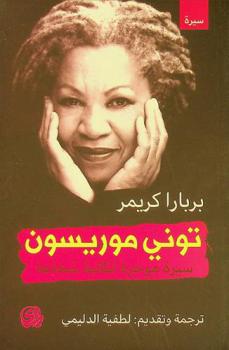
توني موريسون : سيرة موجزة لكاتبة شجاعة
في هذه السيرة، تستكشف المؤلفة باربرا كرامر حياة توني موريسون الحائزة على جائزة نوبل للآداب، ومسيرتها الحياتية والمهنية. منذ طفولتها في لورين، أوهايو، إلى تعبيراتها الإبداعية عن الثقافة الأميركية-الأفريقية. تقول لطفية الدليمي في مقدمة الكتاب (شدتني علاقة روحية خاصة إلى موريسون، منذ أن قرأت لها روايتها الأولى (العين الأكثر زرقة)، ثم توطدت وشائج هذه العلاقة مع روايتها اللاحقة). فالقيمة الأساسية في روايات موريسون هي السعي الحثيث للأشخاص السود لإيجاد ملامح هويتهم على المستويين الذاتي والثقافي وسط مجتمع تشيع فيه مظاهر اللاعدالة واللامساواة)
Book

Natural Landscape in Willa Cathers Pioneer Novels
According to critics, Willa Cather's O Pioneers (1913) and My Antonia (1918), two novels written early on in her career, tend to espouse an overt anthropocentric celebration of the domestication of the land. In keeping with this direction in criticism, Louise Westling comments on Cather's attitude towards the land in these two novels from an ec-feminist perspective saying, \"Cather succeeded in many respects as the epic celebrant of western settlement [...] her novels of the land remain part of a male semiotic economy of heroic action\" (81). However, a few lines later Westling inadvertently goes on to point out that Cather's \"imperialist nostalgia\" is challenged by the subtext of women's rituals and domestic values. Yet, she does not believe that this really marks an attempt at subversion by Cather. I believe that as critics, we need here to pause and explore the ramifications of this brief bifurcation in Westling's argument, setting aside the issue of Cather's conscious attempt at subversion, it is my opinion that we can trace in these two early novels a polyphony of natural landscape discourses through this very subtext which at times echoes and at others subverts the official dominant historical discourse of pioneering. Westling's own inadvertent reference to an inherent subtext in Cather's pioneer novels testifies to that. Critics like Michael J. McDowell posit that \"the best landscape writers suppress their egos and give voices to the many elements of a landscape\" (386). In alignment with this, it is my intention to propose that natural landscape discourses in Cather's pioneer novels display a multi-vocal interplay of conceptions of nature through weaving discourses such as the official pioneering discourse, which promoted the Frontier myth and folk vernacular discourses, which trace actual interactions with the land.
Journal Article
Memory Seemed Unwise
An archetypal reading of Toni Morrison's Beloved highlights the archaeological dynamics of memory and amnesia at work in the novel to communicate the author's dualistic vision of the world, in general, and of racial discrimination and the American dream, in particular. Memory and forgetfulness are both individual and collective. Morrison's digging into archival residues seems very effective since she addresses 'racial memory'1 or the 'collective unconscious'2 of all readers. The technique underlying the whole novel is that of memory reenacted, in other words, of the ritualistic incarnation of the past, allegorically through the ghost of Beloved, then, literally through her fatal resurrection. The ghost could be taken as a projection of Sethe's tormented conscience while the body of Beloved is, indeed, but a fatal resurrection. Beloved is a paradoxical symbol of both past and present as well as amnesia and memory, whether wilful or unconscious, personal or racial. Is it a call for always retaining the memory or the scar of a racist past? Repressing the memory is crystallized in the concluding statements: \"it is not a story to pass on\" and \"memory seemed unwise\"3. \"They forgot her like an unpleasant dream during a troubled sleep\", \"quickly and deliberately forgot her\" (274, 5). The danger of forgetfulness is a national disaster of complicit silence, absence and erasure from the authentic narrative of American history.
Journal Article
عمل الحياة
استعرض المقال حوار مع الكاتبة الكبيرة في الأدب الأمريكي التقدمي مايا أنجيلو، وقد أجرى الحوار أليسون بيرد، وترجمه علي عيسى داود. ودار الحوار في عدد من التساؤلات والأجوبة دارت كالتالي: إيضاح ما تعلمته مايا من أمها، وما اكتسبته من جدتها وأمها بشأن الإدارة الجيدة للأعمال، وذكر النقاد التي تصغى إليهم ماريا، وأكدت ماريا على أن الشعر يعد من المهن الأكثر تحديا بالنسبة لها، ثم أخبرتنا ماريا عن أفضل الوقت لديها للكتابة، ثم كشفت عن سر استمرارها بالإنتاج الكثير في الكتابة، وأوضحت ماريا مقومات القائد العظيم، ثم تطرق الحوار إلى شراكتها مع هولمارك وتوضيح المفاجآت أو التحديات التي واجهتها في هذا المشروع. وفي الختام أكدت ماريا أن أهم الجوائز بالنسبة لها هي قول الناس عنها أنها شخصية ودودة. كُتب هذا المستخلص من قِبل المنظومة 2024
Journal Article

Semiotic signs of horror in Stephen King's the shining
This paper is concerned with the purpose behind using some signs of violence and horror in Stephen King's fiction The Shining (1977) .These signs that are no more than few fictional representations portrayed by the American writer play vital roles in creating real-like situations and exciting the reader and spectator . The characters that are portrayed in the text are no more than the presence of material bodies in the performing arts. Each of them are fleshed out and has flaws that anybody has seen. Here King's mastery as a story teller is revealed for this state of transformation which keeps the readers and the audiences enthralled. Adaptation of the American writers to the use of picture images and signs reflect an important part of their culture. One factor at work in making the impossible seem plausible is the writer's or director's ability to lead the viewer out of the real world and into the fantastic kingdom of their horrible story .The repetition of scenes of violence and monstrous way of murdering of a whole family like Grady's use of axe to kill his twin daughters in the novel, the appearance of a woman in room number 217 in the novel is a proof of the abnormal state of the modern man which leads him to imagine things as if they are real . The flood of blood rush from the elevator in the text refers to mass murder case of the Indians by the American. The signs about Indians refer to such state. The signs that are linked with the idea of violence suggest the fact that maybe evil can prevail even in the presence of good. The body of these characters' are haunted by demons and evil power. A special gothic atmosphere takes place . A character responds to these images in the novel as an estimation of courage, cowardice, and will power. The question that posits itself is what meanings these signs carry? How can characters behave to get rid of evil power and remain virtuous or overcome by vice? The suitable theory in this field is picture theory by W.J.T. Mitchell .The basic issue he argues is that \"the values and texts of the western tradition are either being ignored or reduced to political horrors: Truth , beauty and excellence are regarded as irrelevant, in the academic humanities today\"(1). These images in this theory suggest that the vast number of hours \"Americans\" spend in front of television sets. Thus the common culture seems a product of what they watch rather than what they read. In addition to Mitchell's views about the use of signs other views of famous critics are important like Roland Barthe's views of Semiology and Bogg's views about the \"Art of watching films\". The fearful situations the hero faces indicates his failure in keeping his family happy. All the fearful sketches are translations of the presence of devil inside human beings. Even the pretty naked woman who appears as ghost in the novel turns to an ugly person as a reference to the character's desire in beautiful looking woman rather than an ugly one, soon reality overcomes his imagination and disappoints him. The paper consists of an abstract and three sections. The first section is an Introduction which traces the beginnings and the importance of the study of signs in the twentieth century, Semiology, as a term. The second section presents Stephen King's biography and a summary of the novel .The third one is an analysis of the novel through language and images or signs. The last section is concerned with the findings of the study followed by a bibliography.
Journal Article


التحليل الوظائفي للحكاية الشعبية
البحث يقارب حكاية شعبية شأنها شأن الحكايات التي تصدر عن عقول ومواهب متعدد، فقد وقع الاختيار على حكاية (كوشولين) لنؤكد مدى فاعلية المنهج السيميائي في دراسة وتحليل كل الخطابات الإنسانية. لقد تم تقسيم الحكاية إلى مقاطع من أجل تحديد الوظائف وتصنيفها، ثم تبين أن هناك حركتين للحكاية، دلت على إمكانية توصيفها كونها حكاية (مفردة متكاملة)، لأنها تتكون من حركتين واحدة تنتهي إيجابيا والأخرى تنتهي سلبيا
Journal Article
F.Scott Fitzgeralds Viewpoints on His Women Characters in The Great Gatsby
Fitzgerald claims to a friend that \"the whole idea of Gatsby is the unfairness of a poor young man not being able to marry a girl with money. This theme comes up again and again because I lived it\" (Quoted in Turnbull, 150). Later he met Zelda Sayre (1900- 1948), at first she rejects him in the same way as he reflects it through Gatsby's economic failure to marry Daisy Buchanan in 1917. Later on Fitzgerald and Zelda get married and they enjoy together fame and fortune in which he reflects his own experience through his novels. Throughout American literature women have been depicted in many different ways. The portrayal of women in American literature is often influenced by an author's personal experience or a frequent societal stereotype of women and their position. The twenties were a time of change in the views of women. Fitzgerald's women are beautiful, enchanting, and hollow. A fair example in The Great Gatsby is Daisy Buchanan, she is a portrait of the American women of her class. According to Fitzgerald's conception of America in the 1920s, she represents the moral values of the aristocratic East Egg set. She also represents the paragon of perfection, for she has the aura of charm, wealth, sophistication, grace, and aristocracy. She is a beautiful young woman who is fickle, shallow, bored, and sardonic. Her prattle reveals that she is of little substance. Her character is empty. She is an object of wonder, and she represents the beauty of the world. She symbolizes Fitzgerald's wife Zelda. Like Zelda, she is in love with money, ease, and material luxury Daisy Buchanan is Tom's wife, she is Nick Carraway's cousin, and he is Tom's college friend. They live in East Egg. She is from Louisville. The life of the Buchanans is comfortable and secure, they like it the way it is. \"They had spent a year in France for no particular reason, and then drifted here and there unrestfully wherever people played polo and were rich together\" (The Great Gatsby, 12). Nick is fascinated by the charm of the Buchanan's house for it is \"a cheerful red-and- white Georgian Colonial mansion\" (ibid). He is also fascinated by the beauty of Daisy, for he considers her as a Fragonard goddess in the \"bright rosy colored space\" (ibid, 14), of its drawing room. Also the way Daisy apologizes to Nick when he enters her house and it is too hot for her even to struggle up off the sofa. She says \"I'm p-paralyzed with happiness\" (ibid, 15). Later on Nick feels comfortable while he is around Daisy and Tom for dinner, he tells her. \"You make me feel uncivilized, Daisy\". \"Can't we talk about crops or something\" (ibid, 19). Nick is later informed about Tom's betrayal and that he has a mistress. Daisy imagines herself as \"sophisticated\", and she is. She aims at showing herself to be hardened to her way of life. \"Her eyes flashed around her in a defiant way, rather like Tom's, and she laughed with thrilling scorn. 'Sophisticated- God, I'm sophisticated!'\" (ibid, 24). She feels disillusioned and unhappy
Journal Article
The Use of Historical Figures in E. L. Doctorow's Ragtime
E. L. Doctorow's Ragtime (1976) is one of the most important fictional experiments with history and historiography. The paper sheds light on the use of historical figures as presented by Doctorow in Ragtime. It also depicts how the novelist incorporates three fictional families living in America in the early days of the twentieth century with real historical figures, amid the influx of immigrants and social changes that altered the complexion of the country both positively and negatively. It also shows how these characters move from innocence to disillusionment and from peace time to the beginnings of racial conflict and World War I. In conclusion, the paper presents how the interaction of both characters is a strategy that enables Doctorow to explore the thin boundaries between fiction and historiography
Journal Article