
Catalogue Search | MBRL


Are you sure you want to remove the book from the shelf?

{{itemTitle}}
4,518
result(s) for
"الأدب الروائي"
Sort by:
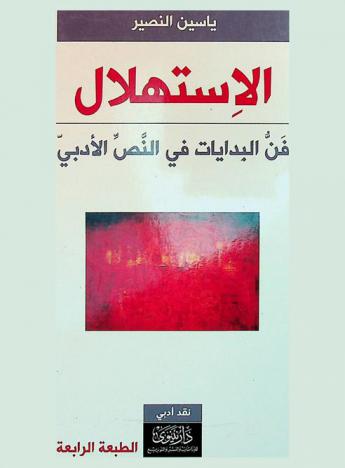
الاستهلال : فن البدايات في النص الأدبي
يتوزع فصول الكتاب على الشكل التالي الباب الأول \"الإستهلال والكتابة الجديدة\" والباب الثاني \"بنية الإستهلال في الآداب القديمة\" ويتناول فيه الفصل الأول \"الإستهلال المركز في الملاحم القديمة والفصل الثاني \"الإستهلال الإهابي في الخطابة عند أرسطو\" والفصل الثالث \"الإستهلال الطللي في الشعر الجاهلي\" والفصل الرابع: \"بنية الإستهلال البلاغي في النقد العربي القديم\" بينما الباب الثالث \"الإستهلال في الآداب الحديثة\" ويتناول فيه الفصل الأول: بنية الإستهلال السردي في المسرحية، وبنية الإستهلال السردي في الحكاية الشعبية والفصل الثاني البنية الغنائية والنص المركب والفصل الثالث بنية الإستهلال السردي الروائي والفصل الرابع الإستهلال السردي في القصة القصيرة أما الباب الرابع \"نماذج تطبيقية\".
Book


Un-Paralleling the Parallel
Contrastive linguistic studies compare and contrast how texts are formed and interpreted in different languages and cultures. Recently, computational tools have been utilized to empirically conduct linguistic analysis. Stylometry is the quantitative study of literary style through computational text analysis. This study attempts a parallel-corpus contrastive stylometric analysis of H.G. Wells' The War of the Worlds (1898) and its Arabic translation (2012). The paper aims to demonstrate the various challenges of English/ Arabic parallel corpus alignment and to explore the effect of the intricate nature of the Arabic language on natural language processing (NLP) attempts by examining English adverbs and automatically recognized named entities of locations, people, and organizations in comparison to their Arabic renditions. For alignment, the heuristic-based NLTK sentence segmenter successfully produces valid alignments though some discrepancy occurs. The part-of-speech (POS) tagger is more trained on English texts. Most English tokens are accurately tagged; however, the tagger underperforms with Arabic tokens, either misidentifying parts of speech or by labelling them X, standing for unidentified. It is evident that Arabic renditions of adverbs fail to parallel those employed in the English source text featuring a variety of morpho-syntactic alternatives. NER tags manifest better results in both texts with the translator's tendency to transliterate named entities. The study concludes by shedding light on some of the factors that might have led to inaccurate alignment and annotation. The study also reflects on the translator's inconsistent choices in translating adverbs and entities of locations and organizations.
Journal Article

Names Forming and Deforming Identities
The article studies the calamities the migrants face in western societies. It uses Frantz Fanon's ideas of psychoanalysis to critically read and examine Jhumpa Lahiri's novel The Namesake. The novel narrates the events that occurred to an Indian family abroad for thirty-two years from 1968 to 2000. The cultural clashes a newly arrived couple from Calcutta, India encounter in Cambridge, America to the calamities their children later face are meticulously depicted in the story. Most of the novel's events revolve around Gogol Ganguli, who suffers from a duality of personality and develops double consciousness because of his Indian name. The study finds that although they distance themselves from their traditions and embrace the western culture, the migrants can not fully assimilate to the white culture and eventually develop identity crises.
Journal Article

Voice of the Marginalized in the Grapes of Wrath (1939) by John Steinbeck, and Hunger (2013) by Mohamed El Basaty
Literature shows us that man is man, at all times and places, remains the same with his unknown motives and simple needs, his tendency to violence, hatred, love and power. Literature not only falls into the category of vulgar romanticism, as some promote it, but it introduces us to countries we did not know about, ideas and religions we did not know existed. Literature dispels our loneliness and makes our world rich in feelings and experiences hard and soft without being a real party to it. It not only gives us ideas, but also makes us more compassionate and humane than before. A couple of novels make us get out of our self-immersion and let us share with their personalities their poverty, ostracism, and harsh conditions. The Grapes of Wrath (1939) by John Steinbeck, and Hunger (2013) by Mohamed El Basaty shed light on the harsh conditions families have to get through in two different countries in two different generations but their routes cross by the motives of survival through the tough economic crises in both the United States and Egypt to prove that humans share the same feelings and thoughts in time of hunger and led by their fear of starvation, and their journey through the hardest times until they reach the safety shore. Social realism is adopted to illustrate the great poverty and exploitation lower class Americans and Egyptians are suffering. Social philosophy maintains that human survival is dependent upon the banding together of humans to find strength in group unity and action. The elaboration of this theory in the novels is seen in the education of the oppressed and disadvantaged with the organization of unions and strikes as vehicles of group protest and change.
Journal Article
Karl Marx's Metabolic Rift as a Blessing in Disguise in Nadine Gordimer's Get a Life
This paper explores Karl Marx's political-economic and ecological analysis of capital, investigating how expropriation and exploitation lead to the formation of social classes, significant disparities in wealth, and environmental deterioration across several levels. Nadine Gordimer's Get a Life (2005) offers ground for exploring Karl Marx's concept of metabolic rift through the lens of environmental degradation. The novel centers on Paul Bannerman, an ecologist diagnosed with thyroid cancer. Get a Life examines the connection between humans and the environment by portraying a habitable future amidst distant environmental catastrophes. Paul, as a cancer sufferer due to radiation, refrained from openly expressing his sympathy and empathy for black characters who he believed would face social exclusion and marginalization otherwise. Based on the evidence, I can infer that metabolic rift is a hidden advantage. Paul's encounter with the unsettling nature of nuclear power is situated within the framework of Western awareness of nuclear energy, as opposed to South Africa's acquisition of nuclear technology influenced by neo-colonialism. Get a Life aims to establish a basis for ethical behavior and opposition to the divisive belief in the separation between oneself and others. Therefore, dismantling the dichotomy between the two extremes of South African society enables both factions to resist Euro-centric capitalism, which is perceived as a contemporary manifestation of colonialism. This can contribute to the establishment of a new, environmentally friendly, and economically prosperous society in South Africa. So metabolic rift could be a blessing in disguise.
Journal Article

Virtual Bonds and Transformed Homes
Objective: This research aims to explore the significant impact of Information and Communication Technology (ICT) on literary representations of diasporic experiences, particularly focusing on its role in connecting immigrants worldwide. Methodology: The study employs an analytical approach to examine the influence of ICT on diasporic literature. Key Findings: The findings reveal that ICT has played a crucial role in reshaping the concept and portrayal of diasporic experiences in literature. In Inaam Kachachi's novel The Dispersal (2023), Iskander's technological skills highlight ICT's potential to maintain family connections. He uses technology to preserve his family's history by creating a virtual graveyard, allowing for the sharing of cultural practices and traditions. Conclusions: The research concludes that ICT is a transformative tool that helps preserve cultural identities, enhance resilience, and strengthen the diasporic experience by facilitating communication and fostering a sense of belonging. Recommendations: The study recommends applying the same analytical approach to other novels within diasporic literature to further explore how technology influences diasporic experiences in literature.
Journal Article


استراتيجيات ترجمة المحظور اللغوي في الرواية اليمنية
تشكل ترجمة المصطلحات المرتبطة بثقافة معينة تحديا كبيرا للمترجمين المحترفين، إذ تتطلب فهما شاملا لكل من العناصر اللغوية والثقافية، ومن بين هذه التحديات البارزة ترجمة المحظور اللغوي، وتتناول هذه الدراسة تحليل ترجمة المحظور اللغوي في الرواية اليمنية من خلال دراسة حالة لرواية الكاتب علي المقري \"اليهودي الحالي\"، وتهدف إلى تحديد الاستراتيجيات التي استخدمها المترجم في ترجمة المحظور اللغوي من اللغة العربية إلى اللغة الإنجليزية، وتهدف الدراسة أيضا إلى رصد الفروقات بين المحظورات اللغوية في الثقافتين العربية والغربية وتقترح تبعا لذلك وسائل لتحسين ترجمتها، ولتحقيق أهداف البحث تم اختيار عينة مكونة من إحدى عشر نموذجا من المحظورات اللغوية، وتحليل ترجمتها إلى اللغة الإنجليزية باستخدام استراتيجيات الترجمة التي حددها نيو مارك (1988م) ، ونظراً للعلاقة الروحية العميقة بين الإسلام وأتباعه فقد اتضح أن الدين والثقافة يؤديان دورا حيويا في ترجمة الكلمات والتعبيرات المحظورة، لذلك، ومن أجل إنتاج ترجمة لغوية فصيحة ودقيقة للمصطلحات المحظورة ينبغي على المترجمين نقل النص بطريقة تتوافق مع ثقافة اللغة المستهدفة، مع ضرورة فهم الجوانب الثقافية لكل من اللغتين، حيث أن ما يعد محظورا في ثقافة المصدر قد لا يكون كذلك في الثقافة المستهدفة والعكس صحيح، وأثبتت نتائج الدراسة أن استراتيجية \" المحظور بما يقابله من محظور لغوي أو ثقافي كانت الأكثر استخداما، تليها استراتيجية التلطيف، ثم الحذف، وأخيرا الاستبدال. كما توصلت الدراسة إلى وجود خمسة أنواع من المحظور اللغوي ضمن العينة المختارة، وهي الشتم الإهانة السخرية النبرة المهينة واللغة العامية، وقد يكون هذا البحث العلمي مفيدا جدا للمترجمين، خصوصا المبتدئين منهم، في التعامل مع ترجمة المصطلحات المحظورة في مختلف النصوص، كما يمكن أن يساعد هذا البحث الطلاب المتخصصين من خلال منحهم أفكارا واستراتيجيات عملية يجب مراعاتها أثناء عملية الترجمة.
Journal Article