
Catalogue Search | MBRL


Are you sure you want to remove the book from the shelf?

{{itemTitle}}
740
result(s) for
"الأدلة الجنائية"
Sort by:

ATR FT-IR Spectroscopy
Blood is often encountered on different types of substrates in criminal investigations. Among such substrates, blood stained fabrics are one of the most commonly encountered evidence. Analysis of bloodstains on fabrics is restricted due to interference of fabric dyes, color of fabric which hampers visual identification, and limited sample quantity. Over the years, a plethora of research has been conducted to analyze recovered blood traces, however, the methods employed are limited by factors such as sample destructibility, chronophagus processing, and vulnerability to false positive results. To circumvent the aforementioned limitations, use of ATR FT-IR spectroscopy has surged as a non-destructive and reliable tool for the detection of traces of blood and other body fluids on fibers. In the present study, an attempt has been made to detect traces of blood in fibers of different types and colors using ATR FT-IR spectroscopy. The obtained results unequivocally concluded that by using ATR FT-IR spectroscopy blood can be successfully detected even on a single fiber through characteristic peaks positioned at 1650 cm-1 and 1543 cm-1 corresponding to amide I and amide II. On the basis of the IR marked protein region (1700-1500 cm-1) bloodstains could easily be discriminated from the blank fibers (except human hair, which overlapped with the peaks of bloodstained fibers) by using PCA chemometric tool. Although, further investigations are needed to be conducted, this proof-of-concept study establishes the potential use of ATR FT-IR spectroscopy for the non-destructive, rapid, eco-friendly, and reliable identification of blood traces from a single fiber due to its inherent surface sensitivity and smaller penetration depth.
Journal Article

Interpretation of Evidence
The advent of new technologies such as DNA typing, the weight of scientific evidence in criminal trials of widespread publicity, and the proliferation of fictional and non-fictional works in popular media have contributed to making forensic science well known, although perhaps not as well understood, by the general public. One of the consequences of this popularisation of forensic science was a sharp change in the attitude of investigators, who increasingly tend to delegate to scientists the collection of information necessary to identify the perpetrator of the crime. However, the prominent focus on the search of biological traces or fingerprints, due to their high potential for the personal identification of the individuals present at the crime scene, somewhat fade the interest towards other kinds of evidence, such as trace evidence. This kind of evidence is in fact perceived by judges and lawyers as less informative, because they think that \"all plastic items are the same\", i.e. that it is impossible to discriminate among mass produced items. The purpose of this paper is to stress that, with sound methods for interpreting evidence, it is possible to improve the communication between the scientist and the Court, and to show the real significance of the analytical results, in the context of the case. The analysis of the traces found on a knife used in a murder case were performed by optical microscopy, IR spectroscopy, and UV-visible spectroscopy. The interpretation of evidence was carried out according to a Bayesian approach. A description of the interpretation of evidence in a case in which fibres were the key evidence. It is shown that the key aspects for having a high value of the evidence are the circumstances of the case and the reconstruction of the events given by the prosecutor and by the defence, in addition of course to a sound analytical procedure. In other words, it is shown that in some cases the evidential value of fibres or other trace evidence can be very high, sometimes comparable to that of fingerprints or DNA: when properly interpreted, trace evidence can give key information for solving cases.
Journal Article
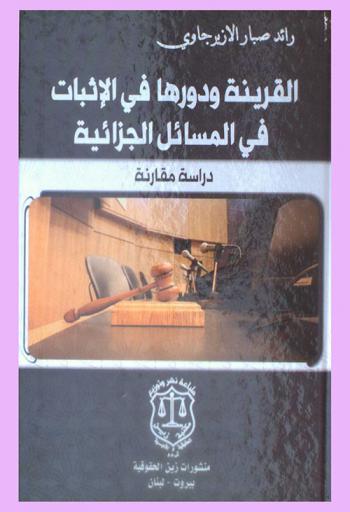
القرينة ودورها في الإثبات في المسائل الجزائية : دراسة مقارنة = Presumption and its role of proof in criminal matters : a comparative study
هو كتاب مبسط يعطي للقارئ المختص وغير المختص معلومات قيمة ومفيدة عن جغرافية النقل لا سيما طلبة العلم في مجال النقل، كما أنه يعد إضافة علمية للمكتبة الجغرافية العامة يتألف الكتاب من ثمانية فصول، تناول الفصل الأول مفهوم جغرافية النقل وأهميتها وأساليب البحث فيها ومناهجها وعلاقتها بالعلوم الأخرى واختص الفصل الثاني ببيان أسباب النقل وعناصره والآثار السلبية الناتجة عنه ويوضح الفصل الثالث العوامل الجغرافية (الطبيعية والبشرية) المؤثرة على النقل. أما الفصل الرابع اختص بالنقل البري بأقسامه النقل بالسيارات والسكك الحديد والأنابيب والنقل بالأسلاك الكهربائية واهتم الفصل الخامس بالنقل الحضري وأنماطه وخصص الفصل السادس للنقل المائي (النهري والبحري)، أما الفصل السابع اختص بالنقل الجوي وخصص الفصل الثامن لبيان النقل متعدد الوسائط وأهميته للنشاطات الأخرى.
BOOK
Application of Adobe® Photoshop® CC 2018 for Identifying the Source of HP® Color Laser Printouts
In today's digital world, printer forensics is one of the most important disciplines to reveal the authenticity of printed documents and track criminals. Digital steganography is an advanced approach to secure color laser printing processes, but it cannot be applied to monochrome laser printers. Therefore, the identity of the machine used to print color questioned documents provides a valuable means for detecting forgery crimes in digital forensic labs and law enforcement agencies. Based on this, we introduced a new forensic method that unveils the steganography (hidden information) embedded in color laser printouts via an adopted preset in Adobe® Photoshop® CC 2018. This forensic tool can be applied as a nondestructive and indirect tool for image processing. In the present work, printing, scanning, extraction, and measurements for the embedded tracking dots of candidate color laser printouts were conducted. Thirty-five HP® color laser printers were selected with different and same models with different serial numbers and used to print a hundred color laser printouts. The defined coded dots matrix patterns that characterized the color laser machines of the HP® brand could clearly be determined. Therefore, this procedure could successfully be applied to distinguish between various color laser printouts printed by HP® printers with a variant serial number in digital forensic labs with a conclusive accuracy ratio attained to one hundred percent.
Journal Article
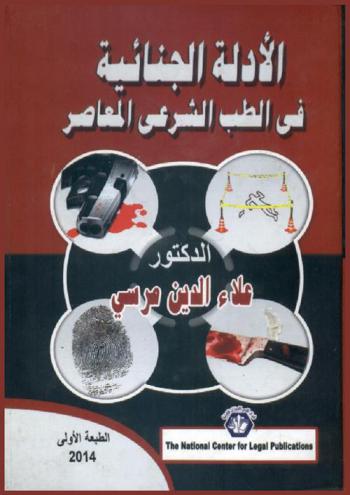
الأدلة الجنائية في الطب الشرعي المعاصر
يتناول هذا الكتاب الأدلة الجنائية في مسرح الجريمة وخطوات فحص مسرح الجريمة وحل مشاكل قضايا إثبات النسب لاستعراف(تحقيق الشخصية-تحديد الهوية) والجروح والإصابات وإصابات الأسلحة النارية والخنق والشنق والغرق والحمل والولادة والإجهاض والجرائم الجنسية وجرائم الاغتصاب والكشف على المتهم أو المشتبه به والجرائم الجنسية الأخرى والأدلة الجنائية في جرائم العنف وجرائم المخدرات.
Book

دور المدنيين في التوثيق الجنائي الرقمي لانتهاكات حقوق الإنسان
أهداف البحث: الفظائع التي يرتكبها الكيان الصهيوني بحق المدنيين في قطاع غزة المحاصر، والقمع الصهيوني لوسائل الإعلام، المنظمات الدولية، ومنظمات المجتمع المدني هي التي شجعت كتابة هذا البحث من أجل الإسراع في استحداث نظام يعزز دور منظمات المجتمع المدني والأفراد في التوثيق الجنائي التكنولوجي. منهج الدراسة: قامت هذه الدراسة على ثلاثة مناهج وهي الوصفي والاستنباطي والمقارن، حتى تقدم عرضًا لأهم الأسس العامة التي يجب على منظمات المجتمع المدني والأفراد الالتزام بها عند قيامهم بتوثيق انتهاكات حقوق الإنسان باستعمال وسائل التكنولوجيا الرقمية عليه، بنيت الأسس التي يقدمها هذا البحث على الدليل الإرشادي الذي أعدته مجموعة القانون الدولي العام والسياسة حول أسس توثيق انتهاكات حقوق الإنسان من قبل المجتمع المدني بجانب التوجهات التي تبناها القضاء الدولي في هذا المجال. النتائج: نتج البحث إلى أهمية تنظيم عمل منظمات المجتمع المدني في التوثيق والتنسيق والتعاون مع الحكومات والصحافة والمنظمات الدولية من أجل توحيد الجهود لتحقيق المساءلة والعدالة الجنائية. أيضا، ضرورة إيجاد نظام إقليمي يشترك فيه الأفراد من الدول العربية والإسلامية في توثيق الانتهاكات. أصالة البحث: يشكل هذا البحث إضافة للدراسات في مجال إرساء قواعد لتنظيم التوثيق الجنائي التكنولوجي الذي يمارسه الأفراد ومنظمات المجتمع المدني، ومدى حجية هذه الدلائل في الإثبات، فالمجال لايزال متاحا للمساهمة في تشكيل وتطوير مثل هذه القواعد؛ حيث لا وجود لقواعد مستقرة واضحة تطبقها المحاكم الوطنية والدولية خاصة أن العلم مازال يتطور والتحديات التي ترافق استعمال التكنولوجيا تتكشف دوريًا من ثم، تلزم الحاجة إلى مثل هذه الدراسات في الوقت الذي تنفضح فيه جرائم الكيان الصهيوني ضد الفلسطينيين في غزة عن طريق صور وتسجيلات التقطت ونشرت إما عن طريق منظمات أهلية أو أشخاص عاديين.
Journal Article
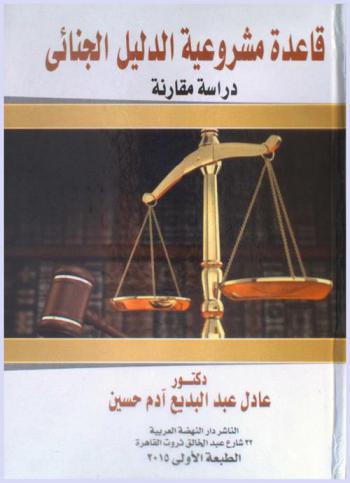
مشروعية الدليل الإلكتروني في الإجراءات الجنائية المقارنة
بأسلوب سلس يبدأ الكاتب عبد الرحمن عبد الله خالد الجلهمي الحربي، كتابه ببيان ماهية الأدلة الجنائية التقليدية والأدلة الإلكترونية، بعدها يوضح مفهوم قاعدة مشروعية الدليل الجنائي، ويعرض لخصائصها، ثم يستعرض موقف النظم القانونية منها، بعد ذلك ينتقل إلى مشروعية الدليل المتحصل من المعاينة الإلكترونية، ثم المتحصل من التفتيش الإلكتروني، وبعدها من الضبط الإلكتروني، ثم من الشهادة الإلكترونية.
Book

ذاتية الضوابط الإجرائية للأدلة الجنائية الرقمية في الأنظمة القانونية ذات الأصل اللاتيني والأنجلوأمريكي
كشف البحث عن ذاتية الضوابط الإجرائية للأدلة الجنائية الرقمية في الأنظمة القانونية ذات الأصل اللاتيني والأنجلو أمريكي. واعتمد البحث على المنهج التأصيلي التحليلي والمنهج المقارن. واُستهل بالمبحث التمهيدي ماهية الدليل الرقمي وطرق تحليله جنائيا واشتمل على المطلب الأول مفهوم الدليل الرقمي، والمطلب الثاني البحث عن الدليل الرقمي تمهيداً لتحليله جنائياً. وعرض الفصل الأول ذاتية البحث عن الدليل الرقمي في مرحلة جمع الاستدلالات عدة مباحث. المبحث الأول مجال الاستدلالات من جانب مأمور الضبط القضائي لضبط الدليل الرقمي من شبكة الإنترنت. والمبحث الثاني دور مقدم الخدمة في مرحلة جمع الاستدلالات، والمبحث الثالث بعنوان الحق في الخصوصية المعلوماتية وعلاقتها بجمع الاستدلالات. وتكون الفصل الثاني الطبيعة الخاصة لمرحلة التفتيش والضبط بحثاً عن الدليل الرقمي من عدة مباحث. المبحث الأول التفتيش في جرائم تقنية المعلومات. والمبحث الثاني الضبط والتحفظ على الأدلة المتحصلة من الأجهزة الرقمية. واشتمل الفصل الثالث ذاتية الأدلة الجنائية الرقمية في مرحلة المحاكمة على عدة مباحث. المبحث الأول إلزام مزودي الخدمات والغير بتقديم الدليل الإليكتروني. والمبحث الثاني حجية الدليل الرقمي في الإثبات الجنائي. والمبحث الثالث استبعاد الأدلة الجنائية الرقمية على سند من بطلانها. وأكدت نتائج البحث على تعدد وتنوع الأدلة الرقمية، وأنها لا تستخدم في اكتشاف وإثبات جرائم تقنية المعلومات فحسب بل تمتد لتكشف آثار الجرائم التقليدية، وللأدلة الرقمية حجية في الإثبات، كُتب هذا المستخلص من قِبل المنظومة 2022
Journal Article