
Catalogue Search | MBRL


Are you sure you want to remove the book from the shelf?

{{itemTitle}}
3,593
result(s) for
"الإنتاج الزراعي"
Sort by:
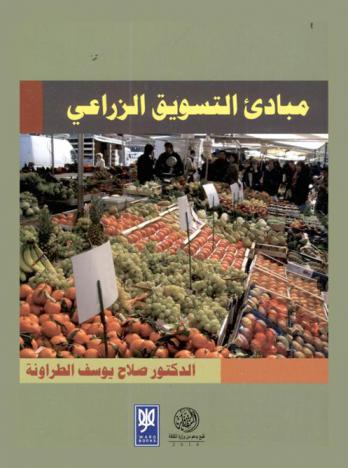
مبادئ التسويق الزراعي
يعد هذا الكتاب محاولة لحصر المفاهيم الأساسية والجوانب الرئيسة في ميدان التسويق الزراعي من الناحية الاقتصادية والتنظيمية والتطبيقية مع التركيز على التجربة الأردنية في هذا المجال ؛ وذلك من خلال مناقشة موضوعات مختلفة ؛ مثل : علم التسويق، والتسويق الزراعي، الأسواق والوسطاء، والأسعار الزراعية والسياسات السعرية، والتسويق الزراعي والتعاقدات الزراعية، وغيرها.
BOOK

The optimal crop rotation of Ai-Rasheed district farms using linear programming technique
The objectives of this research are to determine the optimal agricultural plane to achieve the optimum crop combination that maximizes the profits and the total and net agricultural income of the Al-Rasheed / Hamorabi Farm in Baghdad using L.P technique to reach the production volume that maximizes profit to choose the best plan and to increase the efficiency of the use of available resources at the farm level, to optimize the utilization of natural water resources and to protect them from the risk of attrition and to promote their use by deriving mathematical models for use in water needs assessment, including the application of an agricultural rotation to maintain soil fertility. The research has reached a number of conclusions, perhaps the most important is that the optimal solution using the linear programming method shows us the difference in the optimum crop combination of the actual crop structure of the agricultural crops and their areas. The farm has achieved a much higher income than the resulting income of the actual farm plan, as explained by the resource-based model, the LHS of the model, is less than the available resources that represent the RHS, which means that optimal plans have used fewer resources and given higher net income. From the conclusions reached, we can make a number of recommendations. The most important of these is the implementation of the linear programming technique to determine the extent to which the available resources are invested efficiently, which helps to increase the production in order to achieve the economic efficiency of the farmers and the need to generalize and apply this method in associations with similar environments to determine the optimal use of different productive resources.
Journal Article
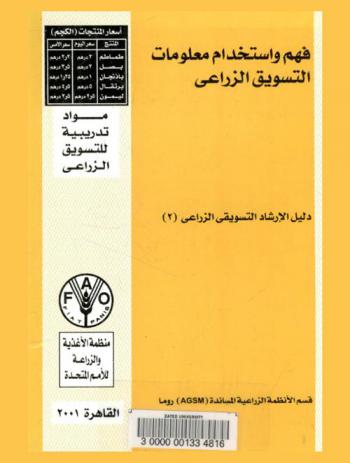
فهم واستخدام معلومات التسويق الزراعي
فهم واستخدام معلومات التسويق الزراعي: مواد تدريبية للتسويق الزراعي، يقع في حوالي 156 صفحة، من إصدار منظمة الأغذية والزراعة للأمم المتحدة، وحدة التسويق والتمويل الريفي، قسم الأنظمة الزراعية المساندة، ويتناول ما يلي : استخدام معلومات السوق، جمع ورصد معلومات السوق، لماذا تتغير الأسعار، تحليل الأسعار المعلنة، حساب تكاليف التسويق، الاستفادة من معلومات التسويق.
Book

The Reality of Food Security in Algeria
The issue of food security in Algeria is considered a major challenge facing the country amidst continuous economic and environmental changes. It is a vital and sensitive issue related to providing sufficient and healthy food for all of the country's population. Food security in Algeria faces several challenges including desertification, water scarcity, climate change, and heavy reliance on food imports. Algeria is moving towards enhancing self-sufficiency by supporting local agriculture and developing agricultural technologies to increase production. However, there is still an urgent need for effective measures including improving water resource management, enhancing climate change adaptation, and improving food supply chains to address current and future challenges in food security. The study focuses on analyzing the reality of food security in Algeria with a focus on identifying and understanding the factors affecting the state's ability to ensure the provision of sufficient, safe, and nutritious food for all its citizens.
Journal Article
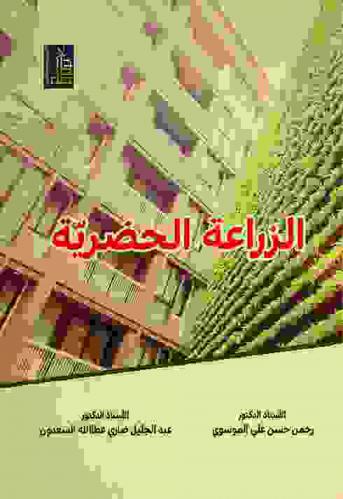
الزراعة الحضرية
يتناول كتاب (الزراعة الحضرية) والذي قام بتأليفه (الأستاذ الدكتور رحمن حسن علي الموسوي) في حوالي (276) صفحة من القطع المتوسط موضوع (الإنتاج الزراعي) مستعرضا المحتويات التالية : الفصل الأول بعنوان الزراعة الحضرية مفهومها وأهدافها وأهميتها، الفصل الثاني التحضر والعلاقات الإقليمية، الفصل الثالث نظريات المدن والزراعة الحضرية، الفصل الرابع أهمية التطورات الزراعية وأثرها على القطاع الزراعي.
Book



Anti- Transpirants Impact on Pepper Cultivated under Different Drought Stress Levels
Drought is one of the most limiting factors for agricultural productivity worldwide (Hamdi et al., 2020). Drought stress can be simply defined as a shortage of water that causes significant changes in plant morphology, physiology, and biochemistry (Liang et al., 2020), and the most environmental stress that affect both crop production and quality (Biareh et al., 2022). Approximately, 95-98% of the water absorbed by the plant is lost via transpiration (Singh et al., 2021), so that reducing the transpiration rate could be considered as an important strategy for combating with drought conditions. This could be achieved by using compounds called anti-transpirants (ATs) which are chemicals that reduces the loss of water from plant leaves by decreasing both the size and number of stomata (Sow and Ranjan, 2021). The research was carried out at the 2ed faculty of agriculture and at the laboratory of plant physiology during years 2021 and 2022. Chili pepper was used as plant material under two levels of deficit irrigation (50 and 70 of field capacity) in addition to control (100% of field capacity). Under each irrigation level, three types of ATs compounds were applied ten days after drought stress treatments. Plants were sprayed with salicylic acid at two different concentrations 1 and 0.5 mMol (as a stomata closing AT type), flaxseed oil emulsion at 20% concentration (that combines two types of ATs: a film forming and a reflective AT type) and glycerol at 6% concentration (as a film forming AT type). 120 days after planting, following parameters were determined: plant height, root length, number of roots per plant, leaf area (dm2), plant dry weight (g), fruit diameter and weight (g) and total soluble solids (TSS %). Relative water content RWC (%), leaf content of total chlorophyll (mg/ g fresh weight) and water use efficiency WUE (g/l) were determined as well. The experiment was performed as completely randomized design (CRD) in a factorial system. The results showed a reduction in all growth parameters by increasing drought stress level as compared to the control (100% of field capacity). Foliar application of ATs showed a significant effect in improving growth parameters under drought stress conditions. Application of flaxseed oil increased plant growth and fruit quality with significant difference as compared to drought stress treatment. While SA exceeded significantly drought stress treatments concerning root length, number of leaves per plant, leaf area and TTS. Additionally, SA and flaxseed oil application increased RWC and WUE with significant deference compared to drought stress treatments. A reduction in chlorophyll content and plant dry weight was recorded in all ATs application, but no significant differences were recorded in comparison to irrigation levels applied.
Journal Article