
Catalogue Search | MBRL


Are you sure you want to remove the book from the shelf?

{{itemTitle}}
11,919
result(s) for
"الإنسانية"
Sort by:


Philosophy, Humanism and Development in Africa
Since the wake of a postcolonial era in Africa, philosophers have unceasingly reflected on political ideas that can serve as harbingers for social transformation and development in Africa; from socialism, Marxism, welfarism, Pan-Africanism, and Ubuntuism, to humanism. Odera Oruka is one of the foremost African philosophers whose thoughts on humanism and philosophy, though less known and controverted, entail some strategic directions for addressing the challenges of development in Africa. This paper seeks to interrogate Oruka's understanding of humanism and philosophy in Africa to explore its functional relation to the question of development. Oruka conceives humanism as the ultimate moral standard, which involves the quality and security of human life. Bemoaning the obscene disregard for humanism in Africa, Oruka hypothesizes a critical and dialectical philosophy as an antidote to what he called ARID (African Republic of Inhumanity and Death). Notwithstanding the fertile points in Oruka's thought, arguments are raised in this paper that humanism is a concept with diverse interpretations, which do not fit into one formula as Oruka depicts. Beyond Oruka's discourse on philosophy and humanism in Africa (as opposed to African philosophy and African humanism), this paper discusses the view that sees African humanism as the defining element of the Africaness of African philosophy. It consequently defends the position that African humanism can serve as a positive ideological springboard for sustainable development in Africa.
Journal Article
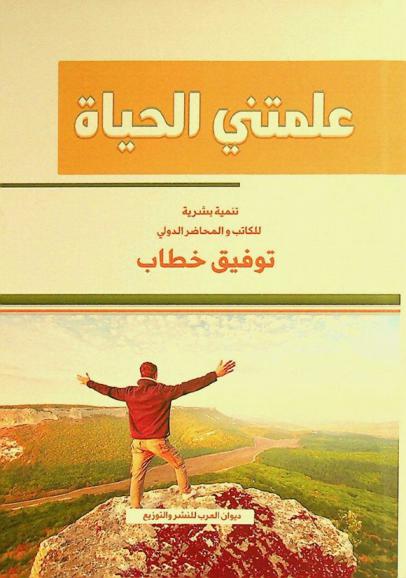
علمتني الحياة : تنمية بشرية /
هذا الكتاب يشرح لك فنون التعامل مع الحياة بشكل يمكنك من تجاوز المحن والصعاب والتخلص من كل الأفكار وأي إزعاج يعكر صفو حياتك وأن تملك المهارات التي تسهل عليك التمتع بالحياة دون قلق أو توتر وأن تخوض معارك الحياة بقوة إيجابية وقدرة على التعامل مع الأخرين ومع معطيات الحياة بسيطرة وتحكم وذكاء.
Book

The resiliency of humanitarian aidworkers in disasters : a qualitative study in the Iranian context
Objectives: the purpose of this study is to explore the factors affecting the resiliency of humanitarian aidworkers in disasters in Iran. Methods: the present qualitative study has been conducted using a content analysis method. a purposeful sampling method was applied until reaching data saturation. a total of 18 humanitarian aidworkers participated in this study. data were collected using face-to-face semi-structured interviews. Results: six main categories which influence resiliency of humanitarian aid workers in disasters were extracted from the data: challenges of disasters’ scene, self-adequacy, self-care, burnout, organizational support, and supportive network. Conclusions: the officials and executive directors of humanitarian service organizations should be aware of the factors affecting resiliency and try to enhance the resiliency of their workers in order to encourage them for keeping on their voluntary efforts.
Journal Article


Ethnographic Analysis Tools in Digital Environments
This research paper presents the methodological foundations for applying ethnography in digital environments to investigate and uncover communication and human phenomena within what is known as virtual communities. This study establishes a set of data and variables that arise when ethnographic research tools- both methodologically and epistemologically- are applied to digital groups, after these tools have been used for decades to research and investigate spatial human groups with their various cultural, social, and even ideological diversities. This study primarily verifies the scientific feasibility of netnography tools as a methodology classified within qualitative correlational studies that have adapted to the changing systems of human existence.
Journal Article

Moving Beyond the Islamophobic Discourse to Mutual Collaboration
This study reconsiders the controversial relationship between the so-called 'Humanists' and 'Muslims' in the UK, by suggesting that it is characterized by a mutual collaboration rather than hostility. The terms 'Humanist' and 'Secularist' are used interchangeably to refer to the same school of thought, that of atheism. While it is true that some contemporary scholars have attempted to associate the rising Islamophobic discourse with the secularists, this article, however, offers two hypotheses to prove the opposite. The Humanist movement UK is like a melting pot that encompasses individuals from a variety of denominational and ethnic backgrounds, including Muslims. The other argument is the openness of Humanists and Muslims to foster dialogue and exchange of views on inclusive education and interfaith dialogue. The analysis showed that the religion of Islam represented an important current in humanist culture. Additionally, Humanists and Muslims fully committed themselves to fighting both Islamic and secular extremism by promoting a moderate perspective, through which they created a more inclusive, tolerant, and cohesive social fabric.
Journal Article

Rethinking Research Ethics in the Humanities
This article highlights the importance of AI scientific research ethics in human science. It explores the potential benefits and challenges of AI in human science and discusses the ethical considerations that researchers must address to ensure that AI research is conducted in a responsible and socially beneficial manner. By prioritizing ethical considerations and addressing the challenges posed by AI, researchers can ensure that AI research is conducted in a way that benefits all members of society. As such, ongoing dialogue and collaboration are essential to developing ethical guidelines and governance structures that can ensure the responsible development and implementation of AI systems in human science.
Journal Article

The Concept of Imbalance as a Marked Sign in the Heart of America
Naomi Wallace's play in the Heart of America is about personal lives, human interactions, cultural metamor-phosis, and identity formation. The play attempts to highlight the compatible alliance between power and racism that leads to marginalization of certain minority groups based on cultural background and gender identity. For no apparent reason other than neutralizing social class differences, authority operates at the socio-political level to affirm the alleged beneficial relationship between power and racism. This paper examines identity and be-longing in Wallace's play within the framework of Peggy Phelan's Marked and Unmarked Theory. The compat-ibility between the two stems from the essential features of each: the play weaves around human interactions, and Phelan's theory is about power operations and social perceptions. This alliance, thereby, assists in inactivat-ing the aporetic paralysis in which inequality and racism are taken for granted.
Journal Article
