
Catalogue Search | MBRL


Are you sure you want to remove the book from the shelf?

{{itemTitle}}
10,551
result(s) for
"الاقتصاد الإداري"
Sort by:

الاقتصاد الإداري
يهدف هذا الكتاب إلى تزويد الدارس بالأسس النظرية والأدوات الرياضية والقياسية اللازمة لإتخاذ القرار الإداري السليم في منشأت الأعمال ويضم الكتاب ثلاثة عشر فصلا والفصل الأول مقدمة للتعريف بمنشأة الأعمال من حيث أهدافهاوحرية إتخاذ القرار الإداري مع التذكير باللمفاهيم الإقتصادية الأساسية وقد خصص الفصل الثاني لمراجعة أهم أدوات التحليل الرياضي المستخدمة في المقرر وتطبيقاتها ثم جاءت الفصول من الثالث وحتى السابع لتقدم المكونات الأساسية للنظرية الإقتصادية الجزئية تطبيقاتها في مجال إتخاذ القرار الإداري وتقدير دالة الطلب وفي الفصول من الثامن وحتى العاشر قدمنا الهياكل السوقية المختلفة أردفناها بالفصل الحادي عشر عن الطلب على عناصر الإنتاج وتقويم جدوى المشروعات ثم الفصل الثاني عشر عن إستراتيجيات التسعير وأخيرا الفصل الثالث عشر عن الحكومة ومنشآت الأعمال.
Book

تشكيلة أعضاء الأجهزة الإدارية في الشركة المختلطة الاقتصاد المحلية
تعتبر الشركات المختلطة الاقتصاد المحلية عقود شراكة تبرم بين شريك من القطاع العمومي وآخر من القطاع الخاص بهدف تحقيق منفعة عامة لسكان إقليم معين في مجالات عدة من الحياة كالسكن والنقل والتهيئة والصحة... الخ، تحوز أغلبية رأسمالها جماعة أو عدة جماعات إقليمية يجب أن تكون بالضرورة عضوة في مجلس إدارتها. ورغم أنها تتخذ شكل الشركة بالأسهم المنصوص عليه في القانون التجاري، إلا أنها لا تخضع لنفس أحكامها التأسيسية، لكن بالمقابل إمكانها اتباع النماذج الإدارية المتاحة في التسيير، أي أكثر من نموذج، وما ينجم عن ذلك من أثار قانونية خاصة العضوية في المجلس التي تختلف من نموذج إلى آخر.
Journal Article


Pépinières et Centres D'appui en Algérie entre une Volonté Déterminée des Pouvoirs Publics et un Vécu Contrarié
L'intérêt porté à l'examen de la situation des pépinières et centres d'appui comme incubateurs, encadrant les PME/PMI est de savoir dans quelles mesures ces structures locales ont-elles permis aux porteurs de projets de résoudre l'ensemble des difficultés rencontrées dans la création de leurs entreprises. Pour ce faire, nous avons privilégié le travail de terrain par l'organisation de rencontres directes avec les responsables en charge de ces structures au niveau des chefs-lieux de wilayas de l'Est Algérien. Chefs-lieux regroupant à la fois une pépinière et un centre d'appui. Ces rencontres sous forme d'interviews, ont permis aux responsables de mettre en exergue les difficultés rencontrées lors de leur mission d'encadrement. Parmi ces contraintes on notera le financement, l'éloignement des sièges par rapport aux centres des chefs-lieux, rendant tout déplacement des porteurs de projets difficile. Enfin les gestionnaires de ces incubateurs n'ont pas la formation entrepreneuriale requise pour insuffler une dynamique réelle d'encadrement des porteurs de projets.
Journal Article

Optimizing Pricing Decisions in the Face of Evolving Business Dynamics
This research explores the various pricing approaches employed by enterprises and the factors influencing their pricing decisions. The study investigates three main pricing approaches: cost-based pricing, competition-based pricing, and customer value-based pricing. Each approach is analyzed in terms of its advantages, disadvantages, and suitability for different market conditions. Additionally, the research discusses the conditions under which each pricing approach is most effective, considering factors such as market structure, competition intensity, and product differentiation. The findings suggest that while cost-based pricing remains widely used, market-based approaches that incorporate competition and customer value are becoming increasingly important for enterprises seeking to achieve competitive advantage. The research concludes that pricing decisions in highly competitive markets, where pricing too low or too high can have adverse effects on profitability, should be made through an understanding of market dynamics and are formed by a combination of cost, competition, and customer value considerations. It also recommends the adoption of advanced management accounting techniques to improve the accuracy and objectivity of cost data.
Journal Article

Managerial Property, Strategic Resources and Diversification of Enterprises, Case of Tunisian Businesses Rated
The question of the relationship between shareholder structure and diversification of the enterprise has caused many debates. We propose to shed a particular light in applying this question in the context of companies listed on the BVMT, which have specific characteristics in terms of relations between shareholders and leaders. Our study focuses on 51 companies. We are studying the relations between character of the company level and type of diversification. Our results show that family businesses are more diverse than the non-family ones. In addition, we identify a negative relationship between the presence of an actionnarial block and level of diversification for the non-family businesses. In contrast, this relationship is not found for the family businesses. Our results allow as well to emphasize the special features of family businesses. However, our results also show that these features do not lead to a difference between family businesses and non-family businesses in terms of the choice of type of diversification (connected or not connected). This article aims to analyze the impact of the managerial property and strategic resources on diversification in the Tunisian companies listed on the stock exchange of movable values of Tunis (BVMT). The data have been collected from a sample of 51 Tunisian enterprises holding data on four successive years. The results obtained show the existence of an impact statistically significant of the managerial property on the strategy of diversification of the undertaking. These results have also shown that the non redeployable resources positively affect the connected diversification.
Journal Article
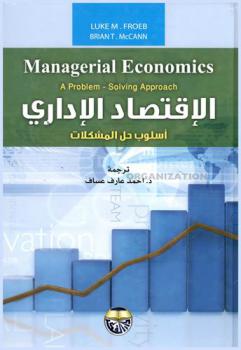
الاقتصاد الإداري : أسلوب حل المشكلات
محتويات الكتاب الجزء الأول : حل المشكلات واتخاذ القرار الفصل الأول : مقدمة: عم يتكلم هذا الكتاب الفصل الثاني : الدرس الأول في الأعمال الفصل الثالث : العوائد والتكاليف والقرارات الفصل الرابع: قرارات المدى، كم عدد الفصل الخامس : قرارات الاستثمار : انظر للأمام وفكر فيما مضى الجزء الثاني : التسعير والتكاليف والأرباح الفصل السادس : التسعير البسيط الفصل السابع : وفورات الحجم والمدى الفصل الثامن : فهم تغيرات الأسواق والصناعات الفصل التاسع : العلاقات بين الصناعات : القوى التي تحركنا تجاه التوازن بعيد المدى الفصل العاشر : الاستراتجية، المكافحة لحاية الربح من التآكل الفصل الحادي عشر : استخدام العرض والطلب : النقد الأجنبي, والتجارة الخارجية، وفقاعات الاقتصاد الجزء الثالث : التسعير لإحراز ربح أكبر الفصل الثاني عشر : التسعير الأكثر واقعية وتعقيدا الفصل الثالث عشر : التميز السعري المباشر الفصل الرابع عشر : التميز السعري غير المباشر الجزء الرابع : اتخاذ القرار الاستراتجي الفصل الخامس عشر : الألعاب الاستراتيجية الفصل السادس عشر : المساومة الجزء الخامس : حالة الشك أو عدم التيقن الفصل السابع عشر : اتخاذ القرار في حالة الشك الفصل الثامن عشر : المزادات الفصل التاسع عشر : مشكلة الاختيار السيئ الفصل العشرون : مشكلة الخطر الأخلاقي الجزء السادس : التصميم التنظيمي الفصل الحادي والعشرون : جعل الموظفين يعملون لأفضل صالح للشركة الفصل الثاني والعشرون : جعل الأقسام تعمل لأفضل صالح للشركة الفصل الثالث والعشرون : إدارة العلاقات الراسية الجزء السابع : الختام الفصل الرابع والعشرون : كن أنت المستشار.
BOOK