
Catalogue Search | MBRL


Are you sure you want to remove the book from the shelf?

{{itemTitle}}
1,670
result(s) for
"الاقتصاد الكلي"
Sort by:

The Relationship between Macroeconomic Variables and Housing Prices in Saudi Arabia Using Vector Auto-Regression Analysis
This paper examined how housing prices were determined by some macroeconomic factors in Saudi Arabia. Variables used are Gross Domestic Product Per capita (GDPP), Consumer Prices Index (CPI), and Unemployment Rate (UNEMP). Quarterly data for a period (2014q1- 2019q4) were collected from publications of Saudi Arabian Monetary Authority (SAMA). The paper followed a descriptive analytical method in which Vector Auto-Regression Analysis (VAR) is employed to capture the dynamic effect of the variables on housing prices. Granger Causality, Variance Decomposition and Impulse response function were also used. The results showed that housing prices were insignificantly and positively related to GDPP, whereas it was negatively related to both (CPI& UNEMP). Only CPI had a significant relationship. The three variables, jointly, had Granger causality on HPI. Variance decompositions reflected that CPI was the variable with the highest explanatory power over the variation of housing prices, followed by GDPP and the UNEMP respectively indicating that CPI was the most influential determinants for housing prices. The findings suggested that Saudi authorities need to pay close attention to the effect of CPI on housing investment, and in view of the relatively large share of that sector, on overall growth. Finally, the paper expects that the results would provide awareness into the relation between housing investment and macroeconomic indicators in other developing countries.
Journal Article

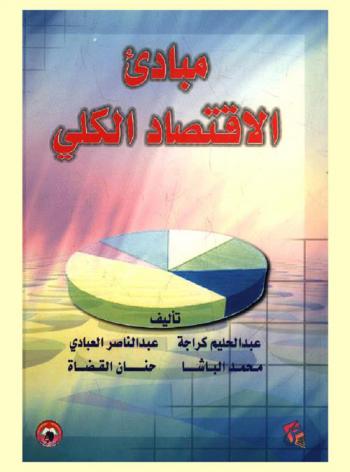
مبادئ الاقتصاد الكلي
لأن لغة الاقتصاد هي المهيمنة على حياة الإنسان في جميع مناحي الحياة ولأنها أصبحت ضرورة ثقافية فقد دأب المؤلف الكريم على تعريف الإنسان بالأسس النظرية التي يقوم عليها الاقتصاد، ولأن جميع المشكلات التي قد يعاني منها واقتصاديات الدول من فقر وبطالة وتضخم وآيضا الهجرات المختلفة داخلية كانت أم خارجية وصولا منها إلى التنمية ومشاكل آخرى عديدة أساس حلها هو الاقتصاد، لذلك وضع المؤلف فكرة الكتاب التي تتناول مبادئ التحليل الكلي في النظرية الاقتصادية لإلقاء الضوء على موضوعات كثيرة وأهم المشاكل الاقتصادية المتعددة مع كيفية إيجاد حلول جذرية لها.
Book

صدمات أسعار النفط وانعكاساتها على بعض المؤشرات الاقتصادية الكلية في السعودية خلال الفترة 2003-2023
تعد المملكة العربية السعودية من الاقتصادات النامية التي تمتلك اكبر احتياطي نفطي في العالم وثاني أكبر منتج واكبر مصدر للنفط الخام في العالم وهذا جعلها صاحبة قرار مؤثر في السوق النفطي وبالتالي في السعر النفطي، وتعد المملكة العربية السعودية من الدول التي تتأثر بالصدمات النفطية الإيجابية والسلبية والتي تؤثر بدورها على استقرار المؤشرات الاقتصادية الكلية في السعودية، وتعمل المملكة العربية السعودية على تنويع مصادر الدخل من خلال رؤية (۲۰۱٦- ۲۰۳۰) التي تعمل على تحقيق التنمية الاقتصادية (تنمية القطاعات الأخرى غير النفطية) باستعمال فوائض القطاع النفطي أداة لتنمية هذه القطاعات وبالتالي تحقيق الاستقرار في المؤشرات الاقتصادية الكلية.
Journal Article

مبادئ الاقتصاد الكلي من منظور سياسات الانفاق
يتناول كتاب (مبادئ الاقتصاد الكلي من منظور سياسات الانفاق) والذي قام بتأليفه (محمود أحمد عياد صلاح، إبراهيم جابر السيد) والذي يقع في حوالي (292) صفحة من القطع المتوسط موضوع (الاقتصاد الكلي) مستعرضا أبرز المحتويات التالية : الفصل الأول : منهجية علم الاقتصاد وأهمية دراسته، الفصل الثاني : أهم مدارس الفكر الاقتصادي، الفصل الثالث : مفهوم الاقتصاد الكلي، الفصل الرابع : التحليل الاقتصادي الكلي، الفصل الخامس : مبادئ الاقتصاد الكلي.
Book

Macroeconomic Determinants of Economic Growth Using Panel Data Analysis
This study aims to identify the most important determinants of economic growth in a sample of six countries from the Middle East and North Africa region. Two of which are from high income countries, Bahrain and Saudi Arabia, and two of the highest middle-income countries, Jordan and Lebanon, and two from lower Middle income, namely Egypt and Morocco. They were chosen in addition to the classification of income groups, based on data available to sample countries during the period 2001-2017. Augmented-Dickey-Fuller, a test of stationary of endogenous and exogenous variables, and Granger Causality Analysis were used to infer the causal relationship between these variables and economic growth. By applying Panel Data Analysis, according to Hausman Test, and by comparison between the fixed and random effect models, the results showed a preference for the random effect model. The results showed that the employment rate, foreign direct investment, gross national income, government expenditure, and inflation were among the most important in determining economic growth in the region during that period. All of them had a significant and positive impact on economic growth, except for the rate of growth in gross national income, which negatively affected the rate of economic growth. The pairwise Granger Causality showed that unidirectional causality is running from foreign direct investment Gross Domestic Product growth rates, from both Gross Capital Formation growth rates and Imports growth rates to Employment Ratio. Unidirectional causality also runs from both of Exports growth rates, Gross Capital Formation growth rates, Imports growth rates to Foreign Direct Investment as a percent of Gross Domestic Product. There is also unidirectional causality from foreign direct investment and imports to unemployment.
Journal Article

Workers' Remittances in Yemen
This study aims to examine the determinants of workers' remittances and their impact on economic growth in Yemen. Autoregressive Distributed Lag (ARDL) bounds test to co-integration and error correction model (ECM) were applied on data covering the period from 1990 to 2014. According to the model of remittances determinants, workers' remittances in Yemen respond to the macroeconomic conditions of both the home and host countries. It is found that, in the long-run, migrant stock and income level at the host countries are positively and strongly influence remittances level, with a feeble impact of domestic inflation rates. The effect of the home country's income seems to be positive but insignificant in explaining the behavior of remittances level. The model of economic growth suggests that, in the long-run, the impact of workers' remittances appears to be positive and moderate with positive and stronger influences observed for financial development and official development assistance. Accordingly, it is recommended that a lesser weight should be given to remittances in the strategic planning process, taking into consideration the increasing potentials of the conditions in the neighboring host countries to be changed. In addition, using remittances as a means of economic growth can be enhanced by encouraging migrants to direct their savings towards productive investment activities, and via formal channels.
Journal Article
The Impact of COVID-19 on the Financial Performance of Firms in the Kingdom of Saudi Arabia
COVID-19 pandemic has been highly detrimental to both the overall economy and the financial performances of firms in all sectors. It has placed increased pressure on the manufacturing capacity and supply chains throughout the world, but it has also provided new opportunities for the logistics industry to make advancements in ecommerce. This study analyses the financial performance of 130 Saudi firms that listed on the Saudi Stock Exchange in order to explore those dynamics which belong to the following sectors (energy, material, industrials, consumer discretionary, communication services, consumer staples, healthcare, financial, information technology and utilities). To facilitate comparison between several ratios in 2019 and 2020, the Wilcoxon Signed Rank test was conducted. This study determined that there was no improvement to any of the 130 listed firms in the sample during this time, which is reassuring for businesses in Saudi Arabia, as over the same period, the Saudi Economy shrunk. These findings are useful for businesses to plan for Covid-19 like disruptions in the future.
Journal Article