
Catalogue Search | MBRL


Are you sure you want to remove the book from the shelf?

{{itemTitle}}
46,694
result(s) for
"التحليل"
Sort by:
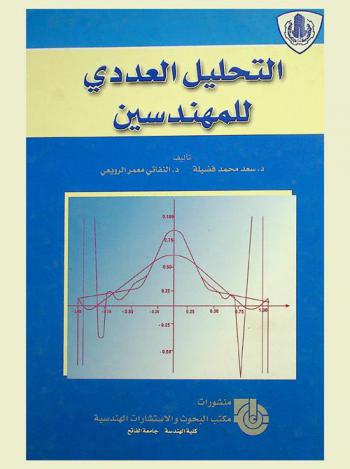
التحليل العددي للمهندسين
يأتي هذا الكتاب في إطار دعم جهود التعريب بإضافة كتاب منهجي باللغة العربية في مجال التحليل العددي، وهو يعني بتقديم الموضوعات الأساسية في هذا المجال، ويناسب طلبة السنة الثالثة بكليات الهندسة والمعاهد الفنية العليا. وهو يقدم لهم عدد كبير من التطبيقات التي لها صلة بمختلف فروع الهندسة، وهذا شيء متوقع في كتاب عنوانه \"التحليل العددي للمهندسين\" حيث يبدو جليا أن التحليل العددي هو جزء لا يتجزأ من عمليات تحليل النظم الهندسية، وأن الدقة والاعتمادية، وهما من المتطلبات الأساسية للتحليل العددين تأتيان في الصدارة بالنسبة للتقاليد الهندسية. هذا وقد سعى المؤلف عند إعداده أن يتمشى الأسلوب التعليمي لهذا الكتاب المنهجي مع تطور لهذا الكتاب المنهجي مع تطور مجالات التحليل العددي نفسها.
Book






Evaluating the Impact of Resampling Methodologies on Multiple Regression Performance in Housing Price Analysis
This study compares bootstrap, stratified, and systematic sampling for housing price regression models. Using both simulated and King County real-world data, we evaluate their impact on predictive accuracy through adjusted R2. Key Findings Stratified sampling outperformed other methods consistently, showing 8.3% higher R² than bootstrap and 12.7% higher than systematic sampling. This advantage was strongest for smaller samples (n<1000). Method Comparison Bootstrap sampling showed small-sample bias risks, while systematic sampling displayed high variability with clustered data. Stratified sampling maintained superior performance across all sample sizes. Real-World Validation King County data confirmed stratified sampling's advantages were even greater in practice than simulations, highlighting its real-world applicability. Implications Results strongly recommend stratified sampling for real estate modeling, particularly with limited data. Findings emphasize sample representativity's crucial role in regression accuracy, with broader applications to naturally stratified variables. The study contributes to the growing body of literature on sampling methodology optimization and provides empirical evidence for best practices in regression model development.
Journal Article


A Quantitative Analysis of Differences and Similarities in Linguistic Memory Retrieval among Adults
The current study analyzed adults' difference and similarities of memory retrieval of linguistic structures through Spreading Activation Theory suggested by Anderson (1976). This study adopted the quantitative descriptive approach. Thirty-three educated adults, from Mahrah University, who speak English, participated in the study. Participants took three tests derived from Spreading Activation Theory: Fact Retrieval (FR) test, Configured Cue (CC) test, and Schemata Sentences (SS) test. The study showed these results; similarity percentage between individuals in retrieval process throughout the four tests was high which scored (67.20%). While the difference percentage scored (32.80%). The differences between learners were statistically significant at a value of less than (0.01), with the (f) value across the tests scoring (75.105). The study concluded with recommendations in studying retrieval process of phones and morphemes.
Journal Article