Catalogue Search | MBRL


Are you sure you want to remove the book from the shelf?

{{itemTitle}}
1,275
result(s) for
"التناص"
Sort by:
نظرية التناص والتناصية في النظرية الأدبية المعاصرة
إن مفهوم \"التناص\" كمفهوم مركزي جديد يولد الكثير من الجهد من جانب الباحثين والأكاديميين والنقاد الغربيين والعرب ولقد أصبح مفهوما يخلق حوله العديد من الأبحاث والدراسات وكذلك أصبحت من مجالات النقد الحديث، وأداة تحليل الخطاب وأداة ذات أهمية قصوى ويحاول في هذا الكتاب أن نرى كيف طور المنظرون والنقاد العرب هذا المفهوم ونفذوه في دراستهم (محمد مفتاح ومحمد بنيس وسعيد يقطين وبشير القمري)
Book

Contesting Bloomian Anxiety
Azar Nafisi's memoir, Reading Lolita in Tehran (2003), is noted for its subtitle, A Memoir in Books, since major literary works are interwoven into the very fabric of her account of her life story, thereby typifying Julia Kristeva's concept of intertextuality. The memoir is divided into four sections, each framed in relation to well-known novels and writers. In so structuring her book, Nafisi may be said to contest Harold Bloom's theory of the anxiety of influence, which, as he postulates, results from a psychological struggle to gain aesthetic strength. While Bloom's perception of influence denigrates intertextual connections as the source of the author's/poet's uneasiness with his/her predecessors, Nafisi's recourse to canonical texts is a coping mechanism. It is the aim of this paper to examine Nafisi's memoir vis-a-vis Bloom's theory of influence, showing how she absolves herself of any impending anxiety through an array of Western classics that intersect with her writing, instead of having her talent belligerently pitted against them. In so doing, influence may be said to wield a liberating impact, rather than being the source of a writer's anxiety and incapacitation. In contradistinction to Bloom's theory of influence, Kristeva's notion of intertextuality may be said to offer an apt lens through which Nafisi's memoir can be read.
Journal Article
نظرية الأجناس الأدبية : دراسات في التناص والكتابة والنقد
قد أطلق \"تودوروف\" على نظرية الأجناس الأدبية مصطلح \"الاختلاط الأجناسي\"؛ ففكرة الجنس الأدبي المختلط أو المزدوج هي «حصيلة المواجهة بين نسقين من الأجناس كاختلاط التراجيديا والكوميديا لينتج جنس الترجيكوميديا عندما يحدث هناك خرق مثلا في نهاية كل جنس كأن تفرض التراجيديا موت البطل في النهاية، لكن في هذه الحالة تكون سعيدة». لكن هناك من النقاد من رأى أن التداخل النصي لا يعني طمس تلك الفروق والتخوم الموجودة بين الأجناس، وهذا ما حذر منه الناقد محمد بنيس بقوله : » فالتداخل النصي لا ينتج إنتاجا في ضبط العلاقات النصية وحسب، وإنما في الوعي بالفروق بين الأجناس هكذا يمكن للتنظير الأجناسي أن يعتمد التـداخل النصي أداة للتمييز بين الخطابات لا وسيـلة للتـوحيد بينهما» ؛ فمع مرور الأزمنة وتفتح العالم على الثقافات تغير مفهوم نظرية الأجناس الأدبية خصوصا في النقد الحديث، حيث أصبحت لا تعترف بتلك الفوارق وبصفاء الجنس ونقائه.
Book

L'écriture de l'autarcie dans Je t'offrirai une gazelle de Malek Haddad
Lucien Dällenbach distinguishes three types of intertextuality: the general intertextuality, the restricted intertextuality and the autarkic intertextuality (autotextuality). The autotextuality manifested by the \"mise en abyme\" present in Je t'offrirai une gazelle that includes an image in another image that reflects necessarily; so it becomes a relation of interlocking between a reflective story and a reflexive story. In this perspective, the overall story becomes a specular story that, by the mirror effect, reflects his own narrative principles
Journal Article

Simulation of the Algerian Novel to Global Texts
In this study, we aim to explore the critical theoretical and conceptual aspects associated with the term \"intertextuality,\" a modern literary technique that enables authors to achieve prominence in global literature. It is widely acknowledged that every literary or artistic work is rooted in and derives from preceding texts, forming intertextual relationships and connections. We have selected \" Ha and the Journeys of Ishtar\" by Algerian writer Ezzedine Jalawji as our primary text, noted for its rich intertextuality encompassing religious, literary, historical, and heritage dimensions, and its integration of various literary genres within the novelistic form. This technique is prominently displayed in his contemporary Algerian narratives, which oscillate between traditional roots and modern experimental forms. Our research attempts to trace and explore its characteristics, interpret its meanings, decode its symbols, highlight its aesthetic elements, and examine its multifaceted functions in these novels. Key questions we seek to address include: - To what extent has Ezzedine Jalawji utilized the technique of intertextuality in his works? - How has he employed this technique to achieve genre openness and ascend in the realm of narrative experimentation on a global scale? - Has Ezzedine Jalawji successfully achieved global recognition through this technique? - Do the subtitles serve the narrative content's theme, or is it vice versa, or are both merely experimental? Our research paper endeavors to answer these questions.
Journal Article
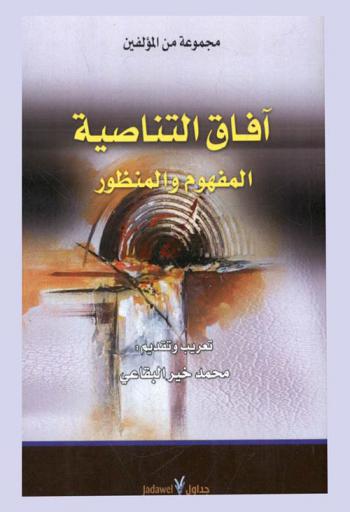
آفاق التناصية : المفهوم والمنظور
يعالج موضوع هذا الكتاب شغل النقاد والمفكرين منذ أن صاغت له \"جوليا كريستيفا\" مصطلحا حمل تحته كثيرا مما أطلق عليه من قبل \"باختين\" مصلِح \"الحوارية\" وما أن صاغت مصطلح التناصية \"Intertextualité\" حتى سارع النقاد والسيميائيون والمهتمون بالقراءة والتلقي إلى استخدامه وتطويره وتفصيل مداخله ومخارجه ويتصدى هذا الكتاب أيضا لعرض مفاهيم معرفية جديدة يمكن أن يتتبّعها القارئ منذ ولادتها عند مَن ذكرناهم من الأعلام، ناهيك عن \"السيميائية\" و\"القراءة\" مما كان له أثر غير منكر في تطور النظرية النقدية الحديثة عن الغربيين والعرب على حد سواء.
Book

التناص الديني في الرواية العربية
تعد الرواية العربية المعاصرة إرثًا ثقافيًا غنيًا يتجدّد ويتطور باستمرار، وتتعدد أساليبها وأشكالها لتصبح مرآة تعكس التحولات الاجتماعية والثقافية في العالم العربي. والتعالقات النصية في الرواية العربية تشير إلى الروابط والارتباطات الثقافية والأدبية والتاريخية والاجتماعية بين نصوص الرواية والسياق الثقافي والزماني الذي تم تأليفها فيه. في هذا السياق، راحت ظاهرة التناص تشكل أحد الأبعاد البارزة في الرواية العربية الجديدة، وتمتاز بأنها تتقاطع مع الأبعاد الدينية والأدبية والتاريخية لتخلق نصا أدبيا فريدا من نوعه. وقد وظفت \"بثينة العيسى\" ظاهرة التناص بجميع أشكاله في رواياتها، وجعلت منها ركيزة أساسية يقوم عليها الخطاب السردي. وتهدف هذه الدراسة إلى تسليط الضوء على التناص الديني وإسهامه في إبراز الشخصية في رواية \"عائشة تنزل إلى العالم السفلي\" لـ \"بثينة العيسى\".
Journal Article