Catalogue Search | MBRL


Are you sure you want to remove the book from the shelf?

{{itemTitle}}
52,357
result(s) for
"الثقافة"
Sort by:
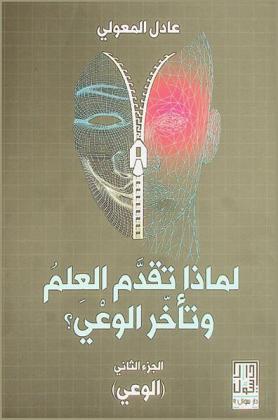
لماذا تقدم العلم وتأخر الوعي ؟ /
لماذا تقدم العلم، وتأخر الوعي؟ هذا عنوان لكتاب صدر حديثا، قد يبدو العنوان غريبا للبعض، ومدهشا للبعض الآخر، ولكنه يبقى عنوانا يحمل سؤالا عميقا ومهما على كل حال، لأنه سؤال اللحظة الراهنة. والمؤلف في هذا الكتاب كأنه امتثل لنصح الحكمة القائلة: \"لا يؤلف أحدا كتابا إلا في أقسام سبعة: يؤلف في شيء لم يسبق إليه ـ يخترعه، أو في شيء ناقص يتممه، أو في شيء مستغلق يشرحه، أو في شيء طويل يختصره، أو في شيء مختلط يرتبه، أو في شيء أخطأ فيه مصنفه يبينه ثم يصححه، أو في شيء مفرق يجمعه\". والكتاب الذي نحن بصدد التعريف عنه (لماذا تقدم العلم وتأخر الوعي؟ الجزء الأول: العقل) كادت فصوله وأبوابه تحوز النصائح السبع التي حثت عليها تلك الحكمة، لأن المؤلف ابتعد عن تكرار الأفكار والمفاهيم المكررة، بل سعى إلى استحداث إيقونات فكرية يغلب عليها طابع التساؤل.
Book

Integration of Target, Local and International Cultures in Action Pack Textbooks in Jordan
This study aimed to investigate the inclusion of target, local and international cultural terms and pictures in the 11th grade EFL Action Pack textbook in Jordan. A content analysis of the 11th grade English textbook in Jordan was conducted. The terms and the pictures were units of analysis. The target culture was the culture English speakers, while the local culture was considered the Jordanian culture, and the international culture referred to other cultures of the world. The entire body of terms was (27546) cultural terms. The number of pictures was calculated and it was (192). The body of terms and pictures was analyzed using Cortazzi and Jin's (1999) dimensions in addition to Byram's (1993) checklist. These dimensions were target, local, and international culture. Results revealed 46% reflected international terms, 42.2% local, and 11.8% target terms. The results also revealed that the cultural pictures depicting international culture was 33.3%, while the local culture was depicted by 50%, and the target culture was depicted by 16.7%. Based on these results, the study recommended that textbook designers in Jordan need to add additional target culture terms and pictures in Action Pack textbooks due to its importance to foreign language.
Journal Article
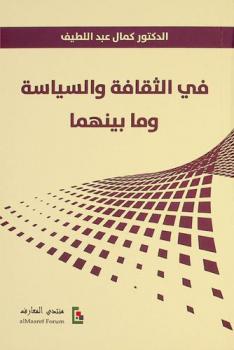
في الثقافة والسياسة وما بينهما /
من الباب الأول العرب في عالم متغير إلى الباب الثالث في موضوع اليسار وقضاياه، ومرورا بمآلات الإسلام السياسي وقضايا التحديث والدمقرطة في البابين الثالث والرابع، واجهنا أسئلة متشابهة بؤرتها المركزية التفكير في سبل تجاوز التآخر التاريخي العربي، وتجاوز الإرتباك الذي يحدد أبرز سمات المشهد السياسي العربي كما حاول الكاتب إبراز أهمية مواصلة الجهود الفكرية والسياسية الرامية إلى مزيد من توطين قيم التحديث وترسيخها في مجتمعنا.
Book

Racism Pictured
The study argues that through illustrations The Proudest Blue tends to write back to the western discourses in terms of veil's representations. The study also remonstrates violence and discrimination against veiled women. It concludes that misperceptions and misconceptions rooted in the West without knowledge of the Islamic perspective induce hatred and hostility. This study aims to arch understanding and promote confabulation between the non-Islamic culture and the Islamic one. Ultimately, this study is paramount as it triggers the critical need for understanding, harmony, and tolerance. This study is assumed to contribute to the analysis of picture books as a kind of literature. The study scrutinizes the picture book as a hybrid literary work that uses pictures and words to conjure up an emotional reaction. The study accentuates the idea that it is necessary to trespass dismissing picture books for the maintenance and development of creativity in the world of literature.
Journal Article

From Legacy to Uncertainty
Nigeria has long recognized Arabic Village in Ngala, Maiduguri, as a pivotal hub for Arabic language education. As a center for linguistic and cultural immersion, it has shaped generations of Arabic scholars and contributed significantly to Arabic literacy and Islamic scholarship. The village's unique environment provided students with the opportunity to experience Arabic in a native-like setting, enhancing their linguistic proficiency and cultural understanding. However, the emergence of Boko Haram and the ensuing insurgency have severely disrupted educational activities in Ngala. The once-thriving village has faced challenges such as infrastructure destruction, displacement of educators and students, and widespread fear. These challenges have stunted Arabic education's growth in the region and reduced participation nationwide, particularly in the south. Parents and institutions hesitate to send students to Ngala due to security concerns, limiting immersion opportunities. Although the Nigerian government's language policies support Arabic studies, they have struggled to address the insurgency's impact. The paper calls for strategic interventions, including security measures, infrastructure rebuilding, and adaptive policies, to revitalize Arabic education and restore confidence in the region's educational offerings.
Journal Article

An Analytical Reading of Algerian Dress between the Duality of Authenticity and Modernity
Traditional clothing in Algerian society holds significant importance for researchers in sociology, anthropology, psychology, and art studies. This topic explores various aspects of human heritage across eras, focusing on socialisation's role in preserving traditional attire. Algerian clothing, jewellery, and textiles embody aesthetic values rooted in folk heritage, carrying symbols of cultural belonging. This heritage provides researchers with rich topics inspired by cultural, historical, aesthetic, and social values. Algerian heritage emphasizes the material legacy that preserves culture amid social changes. Traditional fashion varies by region, influenced by evolving social and cultural systems, customs, and traditions. Beyond its primary function, clothing serves as a cultural tool widely explored by researchers.
Journal Article