
Catalogue Search | MBRL


Are you sure you want to remove the book from the shelf?

{{itemTitle}}
400
result(s) for
"الجفاف"
Sort by:

Drought in the Middle East, Causes, Effects, and Challenges
The Middle East is currently in front of a continuing complex drought crisis. In addition to effects on natural resources, there were noticed in different aspects including society, and the economy, and even more on the political situation. The drought disaster in the Middle East is complicated and interdependent. It includes many factors such as weak water management, geopolitical tensions, and local weather variation. This study aims to provide a comprehensive understanding of the escalating drought crisis in the Middle East. It investigates the current situation and potential prospects by examining the causes, effects, and challenges associated with it. This study also highlights the possible strategies for mitigating and adapting to the current drought conditions in the Middle East. This includes water conservation and management, planning environment-friendly irrigation systems, the use of choice water sources, and adopting drought-tolerant crops. It is necessary to identify the causes of drought in the Middle East and to promote mitigation and adaptation techniques and methods to decrease the consequences of this challenge.
Journal Article

Use of Regression Method In Prediction of Drought in Five Areas in Sudan
This paper aimed to explore the possibility of the use of logistic regression in the prediction of drought in Sudan. In this paper Regression models were used to predict drought in 5 states in Sudan. Results showed that the average prediction error for above-average and below-average years is reported for each station. Area-specific statistics are listed in Table 1. Correlations between predictions and observations range from r = −0.31 to r = −0.68, with the model performing slightly better in predicting the number of wet days in drier years. In general, however, the simple linear model displays an average absolute error ranging between 9 and 22 days.
Journal Article
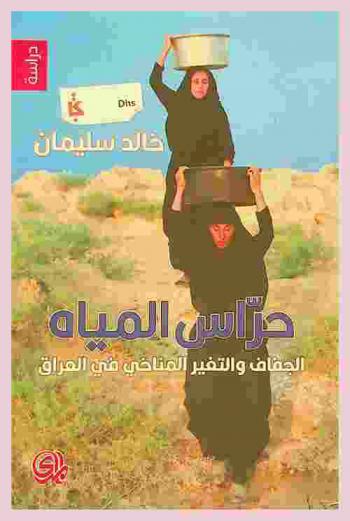
حراس المياه : الجفاف والتغير المناخي في العراق = Water guards : drought and climate change in Iraq
لا ضفاف للعلاقة بين المخيلة العراقية والمياه. ولا يمكن أن نفهم الفنان ناظم الغزالي حين يقول، \"غابت شمسنا والحلو ما جانا\" دون التوقف في تخوم هذه العلاقة التي تتوزع مضامينها ليس على ضفاف الأنهار، بل حتى على ضفاف السواقي أو الجداول المتفرعة من الأنهر. كما لا يمكن التفكير بأنسنة دجلة دون العودة لقصائد الجواهري أو مقاربات الروائي والقاص محمد خضير بين حركية الأنهار ولغة العراقيين، ناهيك عن تراث إنساني هائل لم تمحوه آلاف السنين بعد السومريين. لكل هذه الأسباب أجدني هنا متوقفا على ضفة الفنون والآداب من مواقف و حكایات ونصوص تغوص في المياه قبل الغوص في اللغة. خالد سليمان كاتب وصحفي متخصص في القضايا المتعلقة بالتغير المناخي والمياه. بدأ العمل في الصحافة الكردية في إقليم کردستان أواسط تسعينيات القرن المنصرم. یکتب لوسائل إعلام عراقية، عربية دولية. نشرت له كتب باللغة العربية في كل من دمشق وبيروت وبغداد من بينها : حوارات مع المفكر العراقي الراحل هادي العلوي، حالات كردية جدا وظاهرة صدام في المخيلة العربية. إضافة إلى المقالات والتحقيقات الصحفية عن المياه في العراق ومنطقة الشرق الأوسط في الصحافة العربية، نشرت له كتب باللغة الكردية منها كتاب عن استخدام المياه كسلاح لفرض تغیرات سكانية بعنوان : استعمار المياه.
Book

Anti- Transpirants Impact on Pepper Cultivated under Different Drought Stress Levels
Drought is one of the most limiting factors for agricultural productivity worldwide (Hamdi et al., 2020). Drought stress can be simply defined as a shortage of water that causes significant changes in plant morphology, physiology, and biochemistry (Liang et al., 2020), and the most environmental stress that affect both crop production and quality (Biareh et al., 2022). Approximately, 95-98% of the water absorbed by the plant is lost via transpiration (Singh et al., 2021), so that reducing the transpiration rate could be considered as an important strategy for combating with drought conditions. This could be achieved by using compounds called anti-transpirants (ATs) which are chemicals that reduces the loss of water from plant leaves by decreasing both the size and number of stomata (Sow and Ranjan, 2021). The research was carried out at the 2ed faculty of agriculture and at the laboratory of plant physiology during years 2021 and 2022. Chili pepper was used as plant material under two levels of deficit irrigation (50 and 70 of field capacity) in addition to control (100% of field capacity). Under each irrigation level, three types of ATs compounds were applied ten days after drought stress treatments. Plants were sprayed with salicylic acid at two different concentrations 1 and 0.5 mMol (as a stomata closing AT type), flaxseed oil emulsion at 20% concentration (that combines two types of ATs: a film forming and a reflective AT type) and glycerol at 6% concentration (as a film forming AT type). 120 days after planting, following parameters were determined: plant height, root length, number of roots per plant, leaf area (dm2), plant dry weight (g), fruit diameter and weight (g) and total soluble solids (TSS %). Relative water content RWC (%), leaf content of total chlorophyll (mg/ g fresh weight) and water use efficiency WUE (g/l) were determined as well. The experiment was performed as completely randomized design (CRD) in a factorial system. The results showed a reduction in all growth parameters by increasing drought stress level as compared to the control (100% of field capacity). Foliar application of ATs showed a significant effect in improving growth parameters under drought stress conditions. Application of flaxseed oil increased plant growth and fruit quality with significant difference as compared to drought stress treatment. While SA exceeded significantly drought stress treatments concerning root length, number of leaves per plant, leaf area and TTS. Additionally, SA and flaxseed oil application increased RWC and WUE with significant deference compared to drought stress treatments. A reduction in chlorophyll content and plant dry weight was recorded in all ATs application, but no significant differences were recorded in comparison to irrigation levels applied.
Journal Article

Application of Two Meteorological Drought Indices in Central Sudan
Three climatic variables, namely daily rainfall, maximum and minimum temperature values, for the period of 30 years from 1988 to 2017, were considered for nine observation stations throughout Sudan. Two methods of Aridity Index (AI) were utilized based on monthly/seasonal and annual rainfall and temperature values to obtain the aridity conditions in Sudan during the study period. Furthermore, the main objective of this study is to measure drought aridity in Sudan. Other objectives are to measure monthly/seasonal or annual aridity and humidity conditions over the same area to identify climatic classification for the nine stations, which are included in this study. Finally, to create a map, which represented all drought, aspects to show the most affected areas throughout the study period and to help decision makers in the natural resources sectors. For this reason, two meteorological drought indices were applied based on climatic variables. Thus, the monthly/seasonal Aridity Index was estimated by using Thornthwaite method, and the study area was classified into five categories, namely, Arid conditions (< 16), are recorded at Atbara and Khartoum around the 30 years, whereas, Semi-arid are observed at Fasher, El Obaied and Kassala during spring, autumn and winter, and Humid conditions (16-31), observed for the same stations in summer. Very humid (> 128), recorded at Kadogli, Genena and Gadarif during summer seasons. The annual AI was applied by using De Martonne method. Therefore, the results outlined into four categories mainly, Arid (values < 5) at Khartoum and Atbara stations, Semi-Arid (values -5) at Fasher and Kassala stations, Sub-Humid (- 10) represented by Genena, Obaied and Kosti and Very Humid (values 30) are represented by Kadogli, and Gadarif. These results indicate that drought in the study area has occurred frequently, and it has spreaded quickly southwards.
Journal Article


الجفاف في المتخيل اليهودي بمغرب العصر الوسيط
يهدف هذا المقال إلى تتبع جانب من التاريخ الذهني ليهود مغرب العصر الوسيط، والمرتبط بكارثة الجفاف التي تعد من أعظم الرزايا التي اكتوى بنارها اليهود المغاربة خلال العصر الوسيط، خاصة وأنه كان ينجم عنه الكثير من التحولات الطبيعية والاقتصادية والرجات الذهنية. ولأنها تحولات كانت تتم بشكل فجائي وتتعدى إمكانيات وقدرات يهود المرحلة على مجابهتها ومعاركتها بطرائق علمية وبآليات مادية، فقد ابتدعوا طرائقا وممارسات مستمدة من نماذج أصلية بمرجعيات ثقافية، دينية على وجه التحديد، بهدف الهروب من ذلك الواقع أو للتخفيف من آثاره، وهو ما أفرز ألوانا من التفسيرات الغيبية والمواقف الذهنية. وقد توصلت الدراسة إلى أن الجفاف أضحى أمراً مألوفًا عند المغاربة إلا أن الآليات والتقنيات التي تم التوصل إليها زمن الدراسة لم تكن كفيلة بمواجهته بطرائق علمية، وهو ما كان يندر بأيام صعبة، حيث يصبح الجوع وشبح الموت أقرب إلى الإنسان من أي وقت آخر، لذلك، ينتصب المتخيل اليهودي مخترقا المألوف ومتجاوزا حدود الذهن باحثا عن الخلاص.
Journal Article