
Catalogue Search | MBRL


Are you sure you want to remove the book from the shelf?

{{itemTitle}}
6
result(s) for
"الفن الصخري عمان (سلطنة)"
Sort by:
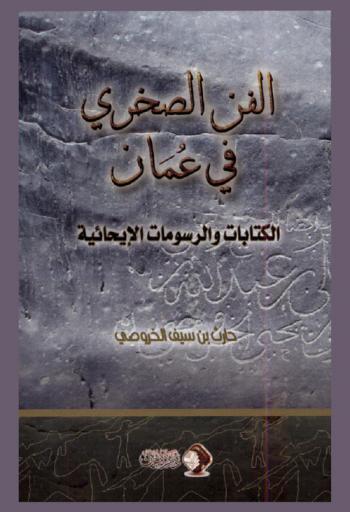

Rock Art in Jebel Akhdar
This study explores the rock art of Jebel Akhdar in the Sultanate of Oman, considering it as an integral part of the region's cultural and anthropological heritage. The research is based on the premise that examining these carvings provides deeper insights into the social, religious, and economic dimensions of the ancient communities that inhabited the area. The paper offers a detailed description of the rock art sites, classifying the carvings into themes such as depictions of wild animals (ibex, camels), geometric shapes, hunting scenes, and symbols of ritual or religious significance. A descriptive-analytical methodology was employed, combining field surveys, high-resolution photography, and comparative analysis with similar sites across Arabia and East Africa. Findings indicate that the carvings date back to multiple periods, ranging from prehistoric times to the early Islamic era, reflecting continuous human presence in the region. The study also highlights the variety of artistic techniques used, from deep engravings to fine incisions, demonstrating technological and stylistic evolution over time. The conclusion emphasizes that the rock art of Jebel Akhdar is not merely aesthetic expression but visual documentation of human interaction with the environment, belief systems, and daily life activities. The paper recommends incorporating these sites into international preservation programs to protect them from erosion and human damage. Abstract Written by Dar AlMandumh, 2025, Using AI
Journal Article
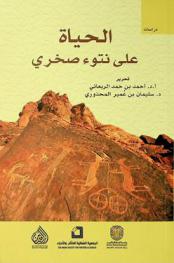
الحياة على نتوء صخري = Life on an outcrop
جاءت فكرة هذا الكتاب ليكون أحد روافد رصد التراث الثقافي العماني، وثمرة علمي ثقافي بين الجمعية العمانية للكتاب والأدباء، ومركز الدراسات العمانية بجامعة السلطان قابوس، من خلال عقد ندوة مشتركة تعني بالرسوم والنقوش والكتابات الصخرية بتاريخ 30 مارس 2022 م. وذلك بالتركيز على نماذج من النقوش والرسومات الأثرية التي تتوزع على مناطق مختلفة من الجغرافيا العمانية تمثل حلقة الوصل بين الماضي والحاضر والمستقبل، بل وتساعد على فهم كيفية تعايش الإنسان العماني مع بيئته بفكر متوقد من ناحية وكيف ينبغي على الأجيال الحالية والمستقبلية التعامل مع هذه الكنوز التاريخية.
Book

Rock Scenes of Goats and Herders in Dhofar
This study aims to address goat scenes in the rock art in Dhofar region and looks for any similarity with the practices of present goatherds in the same region. The researcher investigates and compares images presented in this rock art with the traditional goat herds management practices in Dhofar. Al Shari (1994) has documented rock scenes of goats in the mountains of Dhofar in southern Oman. The study revealed some similarity between the goat rock scenes examined and the present-day conditions. Consequently, it is achievable to establish a reasonable analogy with the current traditional goat management in Dhofar. The similarity in some respects between the rock scenes and the traditional practices is in fact a form of reasoning based on the assumption that if two things are known to be alike in some respects, then they are probably alike in others. The details of these characteristics show that goats are always guarded and in the company of men. Moreover, the rock scenes portray prominent goat udders and small number of goats depicted on the rock scenes.
Journal Article
المهددات الطبيعية والبشرية للفن الصخري في ولاية العامرات بسلطنة عمان
يهدف البحث إلى التعرف على العوامل الطبيعية والبشرية التي تهدد مواقع الفن الصخري في ولاية العامرات بمحافظة مسقط بسلطنة عمان، والذي أجرى فيه الباحثون مسحا ميدانيا لمواقع الفن الصخري خلال الفترة (2019-2021 م)، حيث تم العثور على (7) مواقع عامة تضمنت (21) موقعا فرعيا للفن الصخري. وارتكز البحث في منهجيته على جمع البيانات الكمية والنوعية من خلال المسح الميداني لجميع مواقع الفن الصخري بالعامرات، وقد أشارت نتائج البحث إلى أن أكثر العوامل الطبيعية تهديدا لمواقع الفن الصخري هي: التجوية والتعرية والتفتت الحبيبي، والرطوبة، والأملاح والرواسب الكلسية، والأمطار، والغبار والأتربة، والغطاء النباتي، والحيوانات البرية، والأعاصير والسيول والفيضانات، بينما أكثر العوامل البشرية تهديدا هي: إمداد شبكات الطرق، والعبث والتخريب، والأنشطة السياحية، والرعي وحركة الماشية، والوعي المجتمعي والمؤسسي، وقد تباينت تلك المهددات في درجة تأثيرها على الفن الصخري من موقع إلى آخر. وقدم البحث مجموعة من التوصيات التي يمكن أن تسهم في الحد من المخاطر التي تهدد الفن الصخري، والتوعية بأهمية الحفاظ على الفن الصخري وتوظيفه في التنمية المستدامة.
Journal Article

The Rock Art of Wadi Al-Jifr in Eastern Oman
This paper presents an extensive archaeological and analytical study of the rock art of Wadi al-Jifr in Eastern Oman, viewing it as a visual archive that records human activities, beliefs, and identity across millennia. Nasser Said Al-Jahwari and Ali Tigani ElMahi argue that these engravings are not merely artistic expressions but symbolic communications reflecting the evolving relationship between humans and their natural environment. Through systematic field surveys and stylistic documentation, the researchers catalogued a wide range of rock carvings-hunting scenes with wild animals, depictions of camels, cattle, and horses, as well as geometric and abstract motifs suggestive of rituals or ownership marks. Stratigraphic and stylistic variations reveal multiple phases of artistic production, indicating continuous human presence and interaction in the area from prehistory to more recent historical periods. The study situates Wadi al-Jifr within a broader cultural network linking Arabian Peninsula rock art traditions, emphasizing its role in tracing early human mobility and social organization. The authors conclude by stressing the need for preservation and digital documentation of this fragile heritage to safeguard it against natural erosion and modern encroachment, and to position it within the global corpus of cultural heritage studies. Abstract Written by Dar AlMandumh, 2025, Using AI
Journal Article