
Catalogue Search | MBRL


Are you sure you want to remove the book from the shelf?

{{itemTitle}}
734
result(s) for
"اللغة المقارنة"
Sort by:

اسم الفاعل في اللغتين الروسية والعربية
The article is devoted to the problem of the name of subject in Russian and Arabic languages by terminology, methods of transformation and explain the main similarities and differences between these languages.
Journal Article
El Sintagma Verbal en Àrabe y en Español
This paper studies, from a morphosyntactic point of view, the verb phrase in Spanish and in Arabic. We are comparing the verb and the nominal components that function as part of the verb phrase. This study focuses on the constituents of the verb phrase in both languages. As for Spanish, the main elements of the verb phrase (the verb and the selected complements) and the marginal elements (the circumstantial complements) are studied. At the same time we study the verb and its complements in Arabic. The verb expresses both the action and the time it takes. Therefore we can consider the verb as an essential element to express any action especially in Spanish, because in Arabic there is a type of nominal sentence in which the verb can disappear.
Journal Article

Pragmatically Motivated Non Canonical Syntax in English and Arabic Preposing as a Case Study
This study investigates non-canonical syntactic structures in English and Arabic, focusing on preposing as a pragmatically driven linguistic phenomenon. The research posits that language structure is not purely grammatical but also shaped by contextual and communicative motivations that determine word order and emphasis. By analyzing authentic samples from literary and journalistic texts, the author demonstrates that preposing serves several pragmatic functions-such as focus marking, topicalization, and contrastive emphasis-which reflect the speaker's intention and the discourse situation. The findings show that English tends to restrict non-canonical syntax within grammatical boundaries, often relying on intonation or auxiliary verbs to convey focus, while Arabic exhibits greater syntactic flexibility due to its inflectional system and ability to encode meaning through morphology rather than word order. The study also explores the stylistic impact of preposing as a rhetorical device used to create rhythm, anticipation, or emotional resonance in discourse. It concludes that examining preposing through the lens of pragmatics reveals the interplay between syntax, meaning, and context, demonstrating that both languages employ structural variation not as grammatical deviation but as a strategic resource for discourse coherence and expressive precision. Abstract Written by Dar AlMandumh, 2025, Using AI.
Journal Article
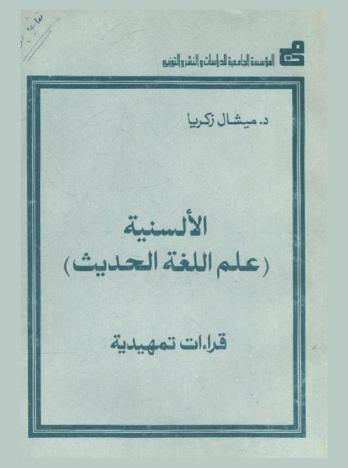
الألسنية : (علم اللغة الحديث) : قراءات تمهيدية
تكتسب الدراسات الألسنية أهمية خاصة في كونها تتناول اللغة من حيث هي ميزة إبداعية خاصة بالإنسان تحتل مكانا بارزا في حياته الفكرية وفي نشاطاته المختلفة ويزيد من أهمية الدراسات كون الألسنية لا تزال علما جديدا في العالم العربي، وقد شعر الدكتور ميشال زكريا، أثر صدور كتابه الألسنية علم اللغة الحديث : المبادئ و الإعلام، بحاجة القارئ العربي إلى قراءات ألسنية مختارة تساعده في مجال استيعاب علم الألسنية الحديث، وتلبية لهذه الحاجات بالذات، قام بإعداد هذا الكتاب الذي يقدم فيه قراءات أساسية تمثل النتاج الألسني المتنوع وتعرف القارئ العربي بصورة مباشرة على هذا النتاج، عدد هذه القراءات 40 قراءة مختارة من مؤلفات 24 ألسنيا : تسلط هذه القراءات المختارة الأضواء على مبادئ الألسنية وآراء روادها وتطورها ودقة منهجيتها وتقدم الصورة الواضحة والجلية عن واقع الألسنية الحالي.
Book

الترتيب الأبجدي بين اللغة العربية واللغات الأوربية
الأبجدية هي رموز ذات أشكال سهلة تمثل نبرات الصوت، ولها ترتيب معين. وسميت بهذا أخذا من بداية كثير من الأبجديات بحروف \"أبجد\". وتاريخ الأبجدية قديم يعود إلى ما قبل القرن الخامس عشر قبل الميلاد تقريبا، وأول من اخترعها هم الأوجاريتيون الذين كانوا يعيشون في بلاد الشام بالقرب من مدينة اللاذقية. وتعد الأبجدية العربية آخر الأبجديات السامية ظهورا. ولم تظهر الأبجدية إلا بعد وصول الكتابة مرحلة متقدمة من التطور؛ لأن الأبجدية وسيلة لتعليم الكتابة. والملاحظ أن بين ترتيب الأبجدية في اللغة العربية واللغات الأوربية تشابها، مثل: \"أبجد\" في العربية و:\"A,B,C,D\" في اللغات الأوروبية، و:\"كلمن\" في العربية و: \"\"K,L,M,N في اللغات الأوروبية، على الرغم من أن اللغة العربية من اللغات السامية وموطنها الجزيرة العربية، واللغات الأوروبية من اللغات الهندروبية، وموطنها الجزيرة العربية، واللغات والأوربية من اللغات الهندوربية، ومطنها قارة أوروبا، فبينهما بعد في الأصل والموطن. وأثبتت الدراسة أن هناك اتفاقا شبه تام بين الأبجديات السامية - ومنها العربية - والأبجديات الغربية في ترتيب الأبجدية، وهذا يدل على وحدة الأصل التي أخذت منه هذه الأبجديات، وهي الأبجدية الفينيقية التي أخذت من الأبجدية الأوجاريتية، فالفينيقيون - وهم سكان السواحل الشرقية لحوض البحث الأبيض المتوسط، وكانوا أصحاب تجارة عظيمة امتدت من الشام إلى المغرب وأجزاء من أوروبا - طوروا الأبجدية ونشروها فأخذتها عنهم أغلب الأمم، أما بطريق مباشر أو غير مباشر. وكانت الأبجدية اليونانية أصل لأغلب الأبجديات الغربية. وقد أدخلت بعض الأمم على الأبجدية الفينيقية شيئا من التطوير لخدمة لغتهم، أما بتغيير الترتيب، أو اتجاه الكتابة، أو زيادة حروف عليها، أو وضع رموز للحركات فيها، أما على هيئة رموز تضاف للحروف كالعربية، أو تغيير في الشكل، كالإعجام الذي اخترع في الأبجدية العربية، والذي قادهم إلى اختراع الترتيب الألفبائي من أجل أن يكون تعليم الحروف سهلا ومفيدا، وقد دعاهم الترتيب الألفبائي إلى إهمال استعمال الترتيب الأبجدي؛ لأنه لم يبن على أصول منطقية، فهو ترتيب لم يراع تعاقب الحروف المتشابهات رسما أو المتقاربات نطقا.
Journal Article
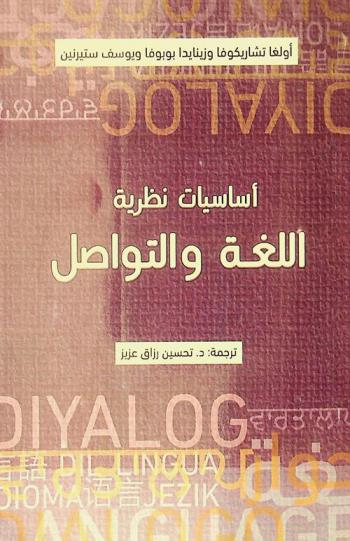
أساسيات نظرية اللغة والتواصل
يحتوي الكتاب على وصف للمسائل الأساسية في نظرية اللغة ولقضايا نظرية التواصل الأكثر أهمية للإنسان المعاصر التي عولجت وفق حساب منجزات اللسانيات الروسية والأجنبية بما في ذلك أبحاث المدرسة اللسانية النظرية لجامعة فارونيش الحكومية، وهذا الوصف سهل وبسيط وجرى وفق المستوى العلمي المعاصر. يلبي الكتاب متطلبات تكوين الكفاءات الأساسية وفق معايير مواد \"مدخل إلى عالم اللغة\" و\"علم اللغة العام\" و \"مقدمة في نظرية التواصل\". يمكن أن يستفيد من هذا الكتاب طلبة التخصصات اللغوية في الجامعات وطلبة الدراسات العليا والمتخصصون بدراسة مناهج مواد \"مدخل إلى علم اللغة\" و\"علم اللغة العام\" و\"مقدمة في نظرية التواصل.
Book
Clausal Ellipsis In English and Arabic : A Contrastive Study
This paper aims to investigate the extent and ways in which English and Arabic are similar and different in their presentation of clausal ellipsis. The English and Arabic data are analyzed on the basis of Halliday and Hasan (1976) and Abbas (2005) respectively. The two languages are then compared and contrasted, among other things, in terms of principle of ellipsis, purposes of ellipsis, extent of clausal ellipsis, and types of elliptical clauses. The analysis shows that both English and Arabic apply the same principle for ellipsis: nothing can be omitted unless it is recoverable from the context. However, it is not necessary that meaning should be recovered through the same expression in both languages. It is also attested that ellipsis is used for brevity, rhetorical, and cohesion purposes in both languages. Ellipsis in Arabic, however, is very common; it is the nature of Arabic. Ellipsis is also frequently used to achieve eloquence in Arabic. As far as clausal ellipsis is concerned, the analysis shows that one element or a whole clause can be omitted in both English and Arabic. English and Arabic have constructions where there is no missing information, yet they are considered elliptical constructions. Such constructions are not signaled by syntactic ellipsis, but rather by semantic ellipsis. Both English and Arabic display verbal identification of elided items in speech. Another major finding is that when two or more English paratactic clauses have different subjects, only the first paratactic clause constitutes the domain of the presupposition. In some reported speech sequences, instances of ambiguity are attested in English. Despite these similarities, the analysis reveals some differences between English and Arabic. Unlike Arabic, ellipsis is not satisfactorily defined in English because it involves phenomena such as syntax, lexical semantics, discourse, semantics, and stylistics. But it is nature of Arabic to use ellipsis as indicated above. Unlike English, several clauses can be ellipted at a time in Arabic, namely in the Qur'anic context with no effect on meaning.
Journal Article