
Catalogue Search | MBRL


Are you sure you want to remove the book from the shelf?

{{itemTitle}}
111
result(s) for
"المرأة الإنجليزية"
Sort by:
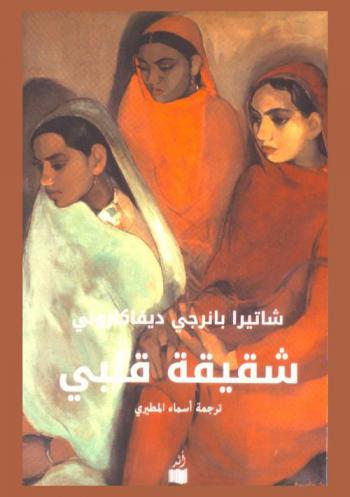
شقيقة قلبي : رواية
قصة الرواية تسردها بطلتا الرواية وهما أنجو وسدهى حيث ولدتا في نفس البيت لعائلة تعتبر ذات ثراء سابق وجاه واسم معروف وتدور أغلب أحداثها في قصر العائلة الذي يجمع الفتاتين وأمهاتهم جوري ما وناليني وعمتهم الأرملة آبا بيشي والخدم وسانقجي ذو الوجه المشوه الذي يظهر في الرواية كسائق يقبل بأي أجر ويستمر في خدمة العائلة بشكل غريب.
BOOK

أثر الموت الأسود على المجتمع الإنجليزي في النصف الثاني من القرن 14 م
يتناول هذا البحث تأثير الموت الأسود على البنية الاجتماعية للمجتمع الإنجليزي في النصف الثاني من القرن الرابع عشر؛ حيث كان له عظيم الأثر على الأسرة والفرد والجماعة ورجال الدين والساسة والفقراء والأغنياء على حد سواء، وأثر على مكانة المرأة؛ حيث فقدت الكثير من حقوقها التي قد كفلها القانون العام الإنجليزي لها قبل الموت الأسود. وكان هذا الوباء هو السبب في تدمير العلاقات والروابط داخل الأسرة الإنجليزية، فنشر الخوف والفزع والموت بين الناس، وكان السبب في التغيرات التي طرأت على الطقوس الجنائزية، وعملية دفن الموتى التي أصبحت غير إنسانية خلال تلك الفترة؛ ونتيجة لما أحدثه من زيادة في عدد الوفيات بين الطلاب في إنجلترا، توقفت الحركة التعليمة؛ حيث ترتب على الموت الأسود ارتفاع هائل في معدلات الوفيات. وكانت هناك مجموعة من العوامل التي استطاع من خلالها الموت الأسود أن يختار ضحاياه؛ فقد تسبب الموت الأسود في الشتات الذي أصاب المجتمع في صميم كيانه.
Journal Article

I Shall Stand Henceforward in thy Shadow: Pairing Women with Shadows in Victorian PoetryI Shall Stand Henceforward in thy Shadow
This study traces the symbol of the shadow and its association with women's interior position in selected Victorian poems. It shows how, in their use of the symbol, both male and female poets represent women as abandoned in the shadow of their male contemporaries. Before addressing the poems selected, the study commences by reviewing recent scholarship, which refers to the term shadow in connotation with negative attributes during the Victorian period. It also provides an overview of Victorian novels, which similarly represent female characters as being held captive in the shadows. Although the poems included in this study belong to the same historical period, they have not been linked before, to the best of our knowledge, by contemporary scholars. Furthermore, the symbol of the shadow, with its association with gloominess, darkness, grief, and isolation, has not been thoroughly explored to date. Thus, the argument presented herein is a comprehensive addition to existing literature. It offers new insights into a symbol which a number of major Victorian poets drew upon to demonstrate women's seclusion, including Alfred, Lord Tennyson, Elizabeth Barrett Browning, Emily Brontë, and Dante Gabriel Rossetti.
Journal Article


Authorial Stance in Black and Blue Novel by Anna Quindlin
The present study is concerned with the writer's ideologies towards violence against women. The study will focus on analyzing an English novel about violence against women so as to see to what extent writers are being affected and influenced by their genders. It also focuses on showing to what extent writer's ideologies are reflected in their works. Gender influence social groups ideologies; therefore, when a writer discusses an issue that concerns the other gender, they will be either subjective or objective depending on the degree of influence, i.e., gender has influenced their thoughts as well as behaviours. A single fact may be presented differently by different writers depending on the range of affectedness by ideologies. The study aims to uncover and reveal the hidden gender-based ideologies, by analyzing the discursive structure of a novel based on Van Dijk's model (2000) of ideology and racism. The selected novel is based on discussing violence against women. The study will later on reveal what the real writer's gender-based ideologies is. Is the writer feminist or anti-feminist? Is he prejudiced? Is he biased?.
Journal Article

The Impact of Microfinance on Female Empowerment in Egypt
Microfinance has become a major instrument for the alleviation of poverty in many developing economies and a tool for female empowerment. In Egypt, it has been used to fight poverty and the country is one of the largest microfinance markets in the Arab region. At year - end 2012, the Egyptian market consisted of some 1.3 million active clients and a gross loan portfolio of US$ 324 million. Between 2005 and 2010, the number of microfinance women borrowers in Egypt increased by 47% annually from 550,000 to1.3 million, placing Egypt first among Arab countries in terms of the number of microfinance women clients. However, the impact of microfinance on women in Egypt is still questionable and many researchers are sceptical about the results of these programmes on women's economic, political, social, and psychological improvement. This paper presents, therefore, the historical context in which the microfinance programmes have evolved in Egypt and explores the different affects they have on Egyptian women, based on a questionnaire survey of a convenience sample of 300 women currently receiving microfinance credit. The paper identifies the changes in the lives of these women and the results indicate that all microfinance variables (Loan value, Average income, and Project value) are significantly correlated with the different aspects of empowerment. Notably psychological empowerment has the highest correlation with microfinance variables, followed by social empowerment, economic empowerment, and finally political empowerment. The article proposes that changes are needed in how microfinance is delivered in Egypt in order to alleviate poverty and empower Egyptian women.
Journal Article

Translation and Empathy
The present paper aims to provide a habitus-oriented analysis of Lebanese writer and translator Lina Mounzer's English translation of Syrian women's trauma narratives of the Syrian civil war. These narratives are published by the Syria Stories platform. It is a project launched by The Institute for War and Peace Reporting to provide a space for Syrian women to narrate their stories of struggle in the thick of the war. The paper is based on the argument that the Bourdieusian concept of habitus can be employed as an analytical tool to reveal how Mounzer's translation strategies are imbued with her empathy which originates from a homology of painful war experiences. Mounzer's voice as a translator and the narrators' voices are argued to have coalesced due to the confluence of Mounzer's traumatic Lebanese civil war memories and the Syrian women's narratives that depict their oppression in their war-ravaged country. The analysis is divided into two parts: macro-paratextual analysis and micro-textual analysis. The macroparatextual analysis outlines Mounzer's life trajectory to scrutinize the conditions that structured her habitus and informed her perception of translation. The micro-textual analysis comprises an examination of extracts from the narratives Mounzer translated in order to highlight the strategies that mark her habitus-driven emotional engagement in and empathetic approach to the translation of Syrian women's trauma narratives.
Journal Article
Gendered Corporality and Place in Lynn Nottage's Ruined
This paper is an attempt to examine how Lynn Nottage deals with the female body and it is affected by the place in her play Ruined. It adopts a postcolonial approach to the play which represents a good exemplar to explore how corporality and the place are of great relevance to delineate the sense of identity. The paper comprises three sections. The first section offers an account of how the body and place are related. The second section tackles Nottage's views of the black women's status, and how she figures out the connection between the female corporality and the place in her chosen play. Finally, the paper concludes that Nottage tries to raise in women a spirit of change though showing the strong link of the female corporality and the place.
Journal Article
The Destruction of Gilead's Binary Thought in Atwood's the Handmaid's Tale
This paper focuses on interpreting Margret Atwood's outlook towards the affiliation of power between man and woman, and, likewise, the hidden meaning of her message(s) to women in general. These issues will be explained by interpreting or considering her novel, The Handmaid's Tale as a pattern of oppositions. The conceptual tool that is used to uncover the keys for the questions of whether Atwood is with or against women and how she visualizes women's experience and distress under the patriarchal rules are; binary oppositions and Derrida's concept of différance. Using the binary oppositions Gilead's central and restricted ideologies and the handmaids\" silent response become comprehensible. Then by reversing these binary conceptions, depending on Derrida's concept, the incompatibles will be proved. Atwood's depiction of woman is not always positive and not negative as well. Therefore, this paper assumes that women are being used and dehumanized in Gilead which gives hints for the author's view of men's inclination to imprison women and deprive them from their right to live a normal life. Furthermore, the binary thought depicts women as inert and powerless. The second part and after reversing the binary opposition we conclude that the handmaids and women in general are able to convert the hierarchical belief by taking on the same tool that has been used to oppress them.
Journal Article