Catalogue Search | MBRL


Are you sure you want to remove the book from the shelf?

{{itemTitle}}
6
result(s) for
"الملونات الغذائية"
Sort by:
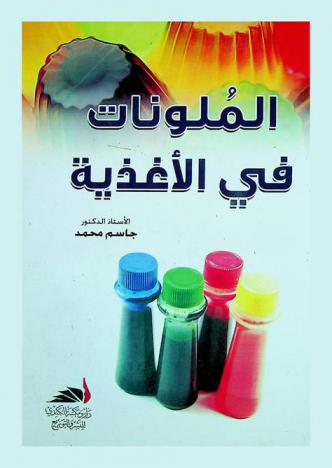

Survey Study on some Artificial Colors Intake by Children in Damietta
Food is essential for the proper growth and development of children, and excessive consumption of artificial colors in baby foods is a serious health problem that has a negative impact on the growth and health of children. The aim of this study was to evaluate a survey of artificial colors in children's foods in Damietta governorate in children aged between 1 and 7 years and its impact on the child's general health, especially anemia in children. The study included 200 children from nurseries and primary schools in Damietta Governorate, and we conducted a survey of children's sweets in the supermarket to determine the industrial colors, especially the industrial color of tartrazine (E102)and the industrial color of carmoisine (E122). Baby foods such as jelly, soft drinks, Lolita and Children's Candy. We analyzed the concentrations of the synthetic colorant tatrazine (E102) and the synthetic colorant carmosine (E122) in baby foods in (HPLC) Chromatograph. We analyzed anemia before giving the children the artificial colors in the baby sweets. Then we analyzed after giving the children sweets containing the artificial colors. The results showed that children at the age of three years ate more children's foods containing artificial colors the most consumed of food for children by a percentage of (56.71%) and then the percentage started to decline for the following are age groups. The percentage of consumption of baby food in the second year of the age stage is (33. %) and the percentage of consumption of baby food in the fourth year of the child's life stage is (12.95%)As for the percentage of consumption of baby food in the fifth year of the child's life stage, (4.85%) and the consumption rate in the seventh year of the child's age stage is (12.91%). The results showed that the percentage of the intake of children's sweets in different samples of tartarazine (102) that were analyzed on the HpLC device was less than the international permissible, as it was found that the percentage of 100 mg of Lolita, the percentage of fortification in it of the substance of tatarazine is about 33.59 micrograms and the percentage of 100 mg of soft water Maxi apple is approx.19.23μg / Likewise, jelly straw jelly, the concentration ratio is about 14.71 mg, the concentration ratio in UGO carbonated water is 13.21 μg, and the concentration ratio in Orange jelly is 17.02 mg. it becomes clear that the average concentration of tartarzine (E 102) in the foods that the children ate (the research sample) was less than the international permissible(7.5 mg per kilogram of the human body). The results of carmosine showed that it is less than the permissible limits it becomes clear that the average concentration of carmosine (E 122) in the foods that the children ate (the research sample) was less than the international permissible (4 milligrams per kilogram of the human body). The results showed That there was a significant effect of the number of intake times on hemoglobin Levels after eating children's food, where the value of \"P\"<(28.31%) and The level of significance reached (0.0001) Indicating the presence of statistically significant differences between the number Of intake and this led to a high rate of anemia among children the research sample after eating children's food However, previous research is still proving that tartrazine is a toxic pigment, and in this study we showed not a harmful effect of tartrazine and carmosine on children's anemia, and it was measured by doing an anemia test for children, and the results confirm that.
Journal Article
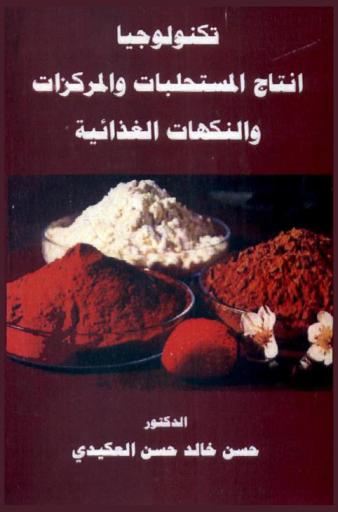
تكنولوجيا المستحلبات والمركزات والألوان والنكهات الغذائية
يتناول كتاب \"تكنولوجيا المستحلبات والمركزات والألوان والنكهات الغذائية\" الذي قام بتأليفه الدكتور \"حسن خالد حسن العكيدي\" في حوالي 406 صفحة من القطع المتوسط موضوع تكولوجيات المستحلبات مستعرضا محتوياته التالية : الفصل الأول : الزيوت الطبيعية العطرية-الزيوت العطرية من الأزهار-الزيوت العطرية من الأوراق-الزيوت العطرية من الثمار-الطرق الرئيسية للحصول على الزيوت العطرية-أهم المواد الفعالة في مستخلصات النباتات العطرية الزيوت العطرية الطيارة الكلوكوسيدات-إنتاج المطيبات المحاليل المطيبة المستحلبات المطيبة المطيبات الجافة.
Book