
Catalogue Search | MBRL


Are you sure you want to remove the book from the shelf?

{{itemTitle}}
186
result(s) for
"جائحة فيروس كورونا "كوفيد-19""
Sort by:
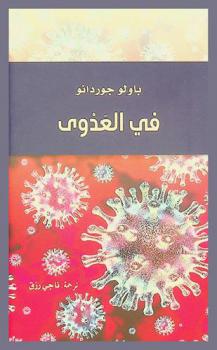
في العدوى
في إطار برنامج الترجمة أصدر“مشروع كلمة” الإماراتي ترجمة جديدة عن الإيطالية بعنوان : “في العدوى” للكاتب الإيطالي باولو جوردانو وبترجمة المترجم المصري ناجي رزق ومراجعة الأستاذ التونسي عز الدين عناية. وكما يوحي عنوان الكتاب وموعد إصداره، فهو يحدثنا عن حالة الجائحة التي شملت العالم بأكمله تقريبا، وما ترتبت عليها من عدوى. وهي أوضاع فرضها ضيف ثقيل غير منتظر، أو ربما تجاهلنا احتمال زيارته، إنه فيروس كورونا الخبيث. فقد صدر هذا الكتاب خلال المرحلة الأولى لهجوم الفيروس على إيطاليا، ومن الطبيعي أن يعكس العمل واقعا فرضته المفاجأة، إن صح اعتبارها مفاجأة، وما رافق لحظات المفاجأة الأولى من تخبط، وخوف، وذهول، وتناقض. يتألف كتاب “في العدوى” من فصول قصيرة، هي بالأحرى تأملات مقتضبة يقود كل منها إلى غيره. تطرح تساؤلات يدعونا باولو جوردانو ألا نتجاهلها، كي لا تذهب تضحياتنا وتنازلاتنا وخسائرنا خلال الوباء سدى. كما يتضمن الكتاب تأملات متعلقة بمسؤوليتنا عما يحدث، حول العدوى، حول الفيروس، خاصة مع تخبط الخبراء فيما يقولون. ورغم أن الكاتب باولو جوردانو ينقل كل هذا الواقع الذي يعيشه مثل غيره، إلا أنه اختار أن يتأمل في هذا الوضع الجديد. فلدى المؤلف قدرة في النظر إلى غور الأشياء رغم المشاعر والآراء والأفكار والرغبات المتضاربة، وكذلك رغم ما يكتنف مصير العالم من غموض جراء هذه الجائحة. فقد فرض الفيروس على الجميع وقفة لا يعرف كم وقتا تستمر. في الأثناء نشير إلى أن اختيار الكاتب كلمة“العدوى” عنوانا لعمله، لما في ذلك من ترابط وتواصل بين البشر مهما تباعدت الفضاءات وعلت الحدود الفاصلة بين الدول والمجتمعات. فالوباء ينتشر، أما العدوى فتنتقل، من شخص إلى آخر. وهو ما يجعلنا في علاقة متبادلة مع البيئة بكل ما في ذلك من معنى. إذ يكشف لنا الفيروس عن تعقد العالم الذي نسكنه، تعقد حيثياته الاجتماعية والسياسية والاقتصادية، وأيضا النفسية. فما نمر به له طابع فوق الهوية والثقافة. يجبرنا على بذل جهد خيالي لا نعتاد القيام به في الأوضاع الطبيعية : أن نرى أنفسنا مرتبطين بالآخرين بشكل غير منفصل، وأن نأخذ بعين الاعتبار وجودهم في اختياراتنا الفردية. في العدوى نحن كائن واحد، نعود لنكون جماعة. في العدوى غياب التضامن هو قبل كل شيء عيب في التخيل.
BOOK

Forecasting the Threat of Covid-19 and Ukraine War on Energy Security
Recent developments in the oil and oil-related industries have made energy security a top priority. Concerns about immediate threats to economic growth as well as long-term energy security are sparked by high costs. To maintain the life quality for everyone in the world, there is a significant shared interest in ensuring that the globe can produce and use energy in a sustainable manner. The primary aim of the present paper is to measure the impact of the dual shock of the Covid-19 pandemic and Russia's military action in Ukraine on oil and oil-related products sus as Brent Crude oil, WTI crude oil, Heating oil, Natural Gas, UK natural gas and Gasoline. To realize our investigation daily data used for the period of 1st January 2020 to 7th October 2022, the selected period covered both of Covid-19 pandemic and Ukraine war complications. The main findings of the T-GARCH model state that there is a positive shock affect on energy prices, particularly oil prices that highly increased, followed by a notable augmentation in the rest of energy products during the Russia-Ukraine conflict. This situation can positively affect the hydrocarbon revenues for oil-exporting countries, in the counterpart the importing-countries are most suffering from the high cost.
Journal Article

A Contrastive Schematic Analysis of COVID-19 Crisis Response Strategies in American, British and Egyptian Speeches from 11-14 March 2020
Crisis response strategies have been subject to a plethora of research in the field of business and management to examine how stakeholders perceive crisis and respond to it. Moreover, Van Dijk's (1985) schematic analysis has been deployed to investigate the news whether printed or broadcasted. Some articles have examined Van Dijk's news schemata framework in the context of crisis, but no article, to date, has incorporated schematic analysis with Situational Crisis Communication Theory (SCCT). The purpose of this article is to integrate Van Dijk's schematic analysis encompassing the three levels of structure: macrostructure, superstructure and microstructure with different crisis response strategies to analyze the language of the speeches of Donald Trump, the former American President, Boris Johnson, the British Prime Minister and Mostafa Mabouly, the Egyptian Prime Minister, in response to coronavirus (COVID-19) pandemic during the period form 11 March 2020 to 14 March 2020. Findings reveal that there are common semantic macrostuctures and a common superstructure among the three speeches, but a different microstructure. The Egyptian Prime Minster was the speaker who took full responsibility of dealing with the crisis through using lexical structures that denote the \"concern\" and \"internalizing information\" response strategies. The lexicon of Trump is characterized by \"self-enhancing communication\" strategies that boast his Administration, and Johnson's speech is unique in using the \"adjusting information\" strategy that unveils his psychological disturbance in dealing with the crisis. The article is an attempt to delve into the characteristics of the language of different politicians during crisis time.
Journal Article

Infodemic and Digital Literacy
Amid the spreading of COVID-19 globally since March 2020, Facebook has played a vital role in spreading information about the virus, its effects, and its consequences. However, the viral nature of Facebook and its ease of spreading the information helped in circulating the misinformation about the virus and made it hard for its users to seek the correct sources of information about COVID-19 Pandemic among the millions of misinformed posts and content on it. Hence, large populations of our world were facing the COVID-19 and an infodemic along with it. This is where digital literacy shows up as a vital skill to be possessed by the users of Facebook to find and evaluate information about COVID-19 Pandemic to help them understand the current situations and consequences of the ongoing pandemic. The paper tackles the role of digital literacy as a skill possessed by Egyptian users in combating misinformation of COVID-19 Pandemic on Facebook amid the breakthrough of the pandemic since March 2021. The paper also sheds light on the relevance of the topic on SDG no.3 (Good Health and Well-being) and SDG no.4 (Quality Education). A survey was conducted to collect primary data to test the hypotheses of the paper's suggested model. The results indicate that the chosen sample from Egyptian Facebook users have a low level of digital literacy skills despite their high level of education and income. Moreover, the results prove that information sharing, status-seeking, and information overload are associated with sharing fake news on COVID-19 Pandemic by them. The paper recommends adopting digital literacy programs for Egyptians, as it will develop needed skills to navigate and use the internet and social media safely especially during the ongoing pandemic, which will reflect positively on their quality of education and their health.
Journal Article

Higher Education's Leadership Soft Skills Reflected in Covid-19 Responses
The 2020 coronavirus pandemic and its negative consequences have become the world's most unpredictable health crisis, thereby causing the global higher education community significant challenges. Because leaders of higher education institutions have responded to the Covid-19 crisis in various ways, this study's purpose was to gather information on methods and strategies of institutional leadership and management. The study uses desk and meta-analysis, researching specifically through a review of previous research and then deriving conclusions and recommendations. The two research questions are (1) how are universities responding to the pandemic? and (2) How has the pandemic impacted university leadership? Through skilled leadership, instructors and students have mostly shifted to online distance learning. Conclusions focus on the fact that higher education leaders should prioritize safeguarding of learners' rights and promote economic growth, sustainable development, and long-lasting peace. Therefore, leading decision-makers should heed the several recommendations in regard to guaranteeing the safety of all, ensure inclusive reopening, involve all stakeholders, remove connectivity limitations, and upholding the teaching profession and teachers' preparedness and management styles.
Journal Article
A Visual Framing Analysis of COVID-19 Pandemic Outbreak in India on Washington Post, India Today, and BBC
Covid-19 pandemic has been a focusing point for media outlets especially after the negative economic and social consequences on the world and India especially, after reporting personal stories and disastrous photos about the pandemic as India has been struck hard by the second wave of the COVID-19 pandemic daily cases and deaths peaked at more than 400000 cases and 4000 deaths respectively, almost four to five times higher than the peak number of cases and deaths in the first wave. A review of literature shows that western media's coverage has highlighted negative themes when covering the issues about the pandemic in India. Visual framing research is lacking in existing research in comparison to textual analysis. This study contributes to a general lack of visual framing research in scholarly literature. In the context of a pandemic, the media's role becomes even more significant, it can be an important source to identify early outbreaks and it can inform the public about non-pharmaceutical interventions to limit the spread of the disease and its impact as the pandemic swept through India at a pace that has staggered scientists and the authorities raced to contain the deadly virus outbreak. This study explores the way in which American and Indian media visually represented the COVID-19 pandemic outbreak in India. Also, it employs visual framing analysis to interpret and understand the visual frames and messages transmitted through Washington Post and India Today websites. Data were collected from both American and Indian outlets which was further explored through a content analysis. The two media outlets were chosen because of their availability of multimedia. The findings of this study will contribute to existing literature and theories regarding the visual portrayals of the pandemic outbreak in India in the global media.
Journal Article

Adoption of Telemedicine during COVID-19 Pandemic Crisis
Digital health literature has provided significant insights into how telemedicine contributes to improving the quality of healthcare and reducing the cost of healthcare. This research focuses on factors influencing adoption of telemedicine. Moreover, the author identifies the challenges of adopting telemedicine. A total of 20 papers were systematically studied and classified. The results show that telemedicine adoption may be influenced by several factors; the results also revealed that major barriers to telemedicine include poor infrastructure of digitalization, resistance to digital transformation, lack of digital knowledge among doctors and patients.
Journal Article
The Impact of Social Networks on Marketing the Tourist Destination in Light of the Covid-19 Pandemic
The tourism sector is considered one of the sectors that benefit the most from social networks; The status of these sites has increased through the role they played in marketing the tourist destination, especially the internal tourism products of countries during the pandemic (covid-19); to achieve the objectives of the study, the descriptive analytical approach was used, and data was collected through published literature and international statistics, as well as relying on interviews. The study concluded that the use of social networks contributed to an increase in the number of clients dealing with the agencies of the research sample
Journal Article


Negative Futures Crude Prices
This article attempts to explain the various interactions of crude market agents that resulted in a negative oil price in 2020. The study examined Contango conditions and modelled onshore storage capacity and FPSO demand. The empirical results show that in a case of perfect oligopolistic competition, the marginal cost of petroleum inventories would take the position of the price-cost difference for short-term deliveries. So, we point out that the OPEP-Plus producers could serve as Stackelberg's leaders by setting production quotas in the short future.
Journal Article