Catalogue Search | MBRL


Are you sure you want to remove the book from the shelf?

{{itemTitle}}
112
result(s) for
"فقر الدم"
Sort by:

Anemia and its Main Risk Factors
Anemia is a significant public health concern that frequently affects children and women of reproductive age. However, few studies have been conducted to detect the prevalence of Anemia among Kuwaiti University students. This is a cross-sectional study that examined the association between students' sociodemographic variables and (1) their knowledge of Anemia (factors and symptoms), (2) their attitudes toward seeking treatment, (3) their lifestyle behaviors (physical activity and dietary habits), and (4) their main sources of information about Anemia. A total of 360 Kuwaiti students aged 18 to 30 years were selected. The participants completed a self-administrated survey comprised of sociodemographic characteristics, Anemia risk factor scale, the most common Anemia symptoms scale, and sources of Anemia information. Descriptive statistics, a t-test, and ANOVA were used to analyze the data. The prevalence of Anemia among the participants was 21.7%, and the incidence was more frequent among female students (18.2%). This study demonstrated the following participant responses: the family were the main sources of information about Anemia; dizziness, pallor, and hair loss were the most common symptoms of Anemia; and iron deficiency, heredity, and fast food consumption were the most common risk factors for Anemia. Moreover, the participants' sex and religious affiliations were significantly associated with hearing about Anemia, and the participants' ages and educational levels were significantly associated with deficiencies that can cause Anemia. Finally, knowledge about Anemia's risk factors was significantly associated with the participants' age, and knowledge about Anemia's common symptoms was significantly associated with the participants' sex.
Journal Article

Delayed treatment response in a neonate with multisystem langerhans cell histiocytosis : case report and review of literature
Langerhans cell histiocytosis (LCH) is a rare proliferative disorder of the Langerhans cells, which are
part of the mononuclear phagocytic system. The disorder varies in terms of the extent of the disease, its natural
course and patient outcomes. While skin rashes are a common presentation of neonatal LCH, other systems or
organs may also be involved. Delays in the diagnosis of neonatal LCH may occur due to its non-specific presentation
and a lack of awareness of the condition among doctors. We report a two-month-old male neonate who presented
to the Chacha Nehru Bal Chikitsalya hospital, New Delhi, India, in 2016 after the onset of pulmonary symptoms.
He had been noted to have a generalised rash which had progressively worsened from 15 days of age. Following a
skin biopsy and chest imaging, he was diagnosed with multisystem LCH with risk organ involvement. There was a
delayed response to combined chemotherapy with no major side-effects
Journal Article
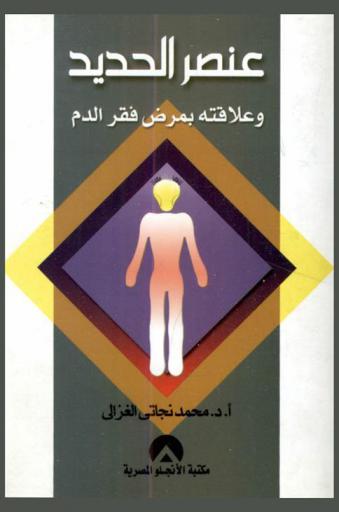
عنصر الحديد وعلاقته بمرض فقر الدم
يعتبر عنصر الحديد من العناصر المهمة في غذائنا ويتواجد الحديد في كل من الأغذية النباتية والحيوانية ويحتاج الفرد العادي إلى 10 ملجرام للذكور بينما يحتاج الإناث إلى كمية أكبر تتراوح بين 15 ملجرام إلى 20 ملجرام وهي الجرعة المقترحة يومياً، ويدخل في تكوين هيموجلوبين الدم وهو المسئول عن نقل الأكسجين، وأي نقص حاد في عنصر الحديد يؤدي إلى نقص في الهيموجلوبين وبالتالي نقصه في الدم وحدوث مرض فقر الدم. وفي هذا الكتاب سوف نسلط الضوء على عنصر الحديد وعلاقته بمرض فقر الدم وكعنصر من العناصر الأساسية في تركيب الجسم وفي العمليات الحيوية اللازمة للنمو والحياة بجانب أعراض نقصه ومصادره الغذائية وتغذية بعض الفئات الحساسة له ومرض فقر الدم الناتج عن قلته ونقصه، مع الأخذ في الاعتبار اختيار الأغذية المتنوعة التي تزيد من معدل امتصاصه وليس الأغذية الغنية به فقط. وسوف نناقش أيضاً صور عنصر الحديد في الجسم والعوامل التي تساعد على امتصاصه أو تقللها أو تعوقها ووضائفه والاحتياجات اليومية منه وفوائده واعراض نقصه وزيادته وبصفة خاصة أنيميا نقص الحديد أو فقر الدم والوجبات الغذائية الغنية بعنصر الحديد، وأخيرا أهمية عنصر الحديد في التغذية والمقررات الغذائية المقترحة وتغذية الفئات الحساسة لعنصر الحديد وخاصة الحوامل والمرضعات والأطفال والمراهقين وكبار السن والرياضيين، وكذلك الأغذية التي تم تدعيمها بعنصر الحديد للقضاء على مرض فقر الدم وخاصة أغذية الأطفال.
Book

Effect of Moringa Oleifera Leaves Powder on Haematological and Biochemical Parameters in Obese Anemic Rats
Anemia is a public health problem and related to malnutrition, may cause serious complications. Obesity has been related with disordered iron homeostasis and cause anemia. Moringa oleifera is rich in iron and can be used as an alternative therapy in iron deficiency. The aim of this study was conducted to investigate the effect of M. oleifera leaves powder on obese anemic rats. Thirty five adult female rats were divided into two main groups the first main group (n= 7); were fed on basal diet only and served as negative control group, the second main group (n=28); were fed on high-fat diet with 10% tannic acid with iron-removed from the mineral mixture during all the experimental period to cause obese anemic model, and were divided into 4 subgroups, one of them was fed on high-fat diet only and kept as positive control group, while the other three subgroups were fed on high-fat diet supplemented with dried M.oleifera leaves at the concentration of (5,7.5,10%) respectively. The results indicated that, supplementation with M. oleifera leaves powder can help overcome iron deficiency anemia and obesity, due to the improvement in mean hematocrit, hemoglobin, red blood cells and platelets of the treated groups as compared to the positive control group. Moreover, significant (p <0.05) weight reduction as well as an improvement in liver, kidney functions and lipid profile of the tested rats were observed. So, M. oleifera leaves are recommended to obese anemic patients.
Journal Article