
Catalogue Search | MBRL


Are you sure you want to remove the book from the shelf?

{{itemTitle}}
317
result(s) for
"مصر حضارة تاريخ قديم"
Sort by:

エジプトにおける世界遺産保護問題アラブの春以降
Egypt (Arab Republic of Egypt) retains many material cultures from the early ancient civilization to the Islamic civilization and has a deep connection with the universal world religion, but since modern times, it has become a border with Western colonialism. The aim of this study is to consider the relationship between world heritage and the nation by unraveling a part of the cultural administration of Egypt, recognizing that the problems that Egyptian society has are not those of the past, but are deeply related to the course of the present society. In this paper, I will present Egypt as the case of study, focus on trends after 2011, and explore their position. First of all, I would like to look back on the big flow of the World Heritage Conservation Administration and position the recent trends. Next, examples of the Arab spring and the looting and damage of world heritage sites are shown. Then, considering the modem Egyptian awareness of the affiliation of World Heritage Sites and the latest movements to protect Egyptian World Heritage Sites, the researcher has proposed that the protection of World Heritage Sites would not be possible without the cooperation of local residents and Egyptians.
Journal Article
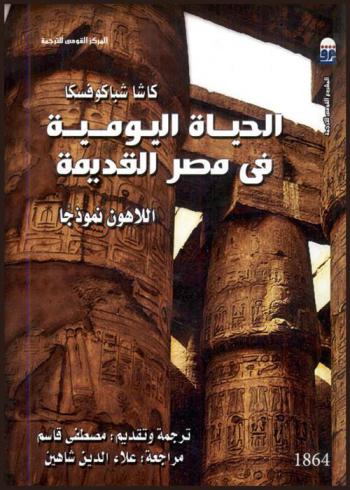
الحياة اليومية في مصر القديمة : اللاهون نموذجا
يعيد هذا الكتاب من خلال التركيز على خبرة فتاة صغيرة وأسرتها ، بناء الحياة اليومية لسكان الطبقة الوسطى ببلدة اللاهون القديمة أثناء عصر الدولة الوسطى المصرية أو العصر الكلاسيكى لمصر. وبعد وضع البلدة فى سياقها التاريخي والجغرافي الدقيق تؤرخ المؤلفة للحياة اليومية لسكانها في جميع المناحي وقد أعيد بناء هذه اللقطة التمثيلية بالرجوع إلى أحدث البيانات النصية المنشورة والاكتشافات الأثرية من بلدة اللاهون والمستوطنات والمواقع الجنائزية المعاصرة ويعد الكتاب تصويرا علميا لعصر مصر الكلاسيكى وعالما مصغرا للحياة اليومية فى بلدة مصرية قديمة.
Book

تراث مصر القديمة
يتناول كتاب (تراث مصر القديمة) في حوالي (137) صفحة من القطع المتوسط موضوع (تاريخ مصر) مستعرضا المحتويات التالية : جيمز هنري برستد للأستاذ مصطفى عامر، التراث العلمي لمصر القديمة للدكتور حسن كمال، تراث مصر اللغوي للأستاذ الدكتور جورجي صبحي بك، التراث القانوني لمصر القديمة للدكتور زكي عبد المتعال، تراث مصر الفني والمعماري للأستاذ محرم كمال، تراث مصر الفكري والفلسفي للأستاذ سلامة موسى، مظاهر الفكر عند قدماء المصريين للأستاذ سامي جبرة، الأدب المصري القديم لجمال الدين الشيال.
Unknown
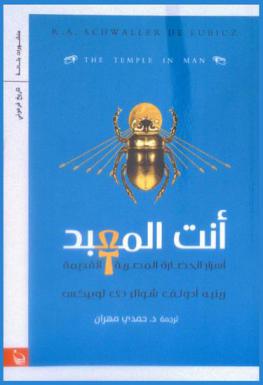
أنت المعبد : أسرار الحضارة المصرية القديمة
يأخذنا هذا الكتاب في رحلة شيقة إلى قلب العقلية الفرعونية، ويوجه أنظارنا نحو الرموز والإشارات التي تذخر بها الصروح الفرعونية، والتي هي في حقيقتها رسائل خفية يرسلها لنا الأجداد، رسائل تنتظر من لديه الملكة والقدرة على قراءتها واستيعابها. أطراف خيوط تتشابك وتتداخل لتصنع فلسفة متكاملة، وضعها المصري القديم عندما ربط الكون الأكبر بالكون الأصغر (الإنسان).
BOOK
Des Portraits Egypto-Romaines \Anonymes\ Identifies Leurs Secteurs a Partir les Bijoux
Many of the paintings discovered in Egypt date back to the Roman era with unknown sources, because they were taken from unauthorized excavations, so they did not have any official documents. Those portraits dating back to the Roman era - from the first century to the fourth century AD - had different artistic characteristics from those of previous periods, combining the function of masks made of cardboard at the ancient Egyptians to protect the deceased, and the role of Roman funerary memorial images. Some researchers believe that the images were painted during a person's life and were kept in the home until his death, and then were used in their funeral works. The painting of those portraits spread widely in Roman times, more precisely those wrongly known as \"Portraits of Fayum\", in the same way in Roman times, also in Rome from the first century BC, which became popular throughout the Roman Empire. The artists painted these portraits on various materials, such as wood, linen, and a plaster mask made of cardboard or plaster that was then covered with mummy strips. In addition, they used various techniques on wood, sometimes painted or plastered. What distinguishes these images are the decorations, hairstyles and clothing influenced by Roman fashion. Therefore, this research aims to explore the locations of the discoveries of these portraits through a deep study of the ornaments of portraits of known source from different regions.
Journal Article