
Catalogue Search | MBRL


Are you sure you want to remove the book from the shelf?

{{itemTitle}}
572
result(s) for
"يوم القيامة"
Sort by:


Facial Expressions as Paralinguistic Cues of Destiny
By relying on meticulous and precise readings of the Glorious Qur'an and Al-Suyuti's (2020) Qur'anic interpretation, this study extracts the noble verses that describe the faces of humans on the Day of Judgment. It analyzes the semiotic signs that intricately depict human faces during this crucial event, which will suddenly befall humankind. The study identifies sixteen locations in the Glorious Qur'an that exhibit signs of faces on that inescapable day. These locations are equally divided into two categories, with eight indicating blissful faces and the remaining eight indicating tormented faces. The semiotic units signifying blessed faces display signs of felicity manifested on the faces of true believers. These signs include whiteness, radiance, clarity, laughter, and delight. On the other hand, the semiotic units signifying tormented faces reveal signs of fear, anxiety, sorrow, anger, regret, and loss that appear on the faces of disbelievers. These signs encompass darkness, frowning, distortion, humiliation, engagement in hard labor, and evident fatigue on their faces.
Journal Article

Ellipsis in the Translation of Meaning of the Holy Quran
This study focuses on the rhetorical analysis of translation of meaning in the Quranic text which is a rich area of investigation particularly of Quranic translation of meaning in English language. The specific level of analysis is ellipsis which is the emphasis of the current study. A handful verses of the Quranic text have been selected and analyzed based on their elliptical use. The data analysis process goes through three main areas of analysis: semantic, syntactic and context levels of analysis which shapes the whole process of investigation. Finally, the findings suggest how those three aspects of analysis collaborate in creating meaning with a special reference to ellipsis. Also, the findings provide answers to the three research questions of the current study.
Journal Article

Phonemes Activating Visual Perception when Reading Three Doomsday Chapters of the Holy Qur'an
The present study intends to explore the phonemes that activate visual perception in reading three chapters of the Holy Quran. The aim is to incorporate the usage-based approach in phonological analysis of more contextually informed measures. The premise is that visual perception emerges out of distinctive usage patterns of parts of speech that share distinctive phonemic categories and sound meaning. The data demonstrated the linguistic structure of the chapters followed a scheme of contrastive network of specific phonemic categories that were salient for morphemic functions and sound-meaning associations. It was observed that the scheme was induced from the dominance of the voiceless category in forming content words that reiterated the descriptive type of these texts. The phonemic properties of this category led to visual perception. The variation of frequencies indicated the usage of top phonemes for prosodic features, morphemic functions, and sound-symbolism associ ation. It is hoped that realizing the minute units composing the context of the chapters gives reading a new perception. ews.
Journal Article
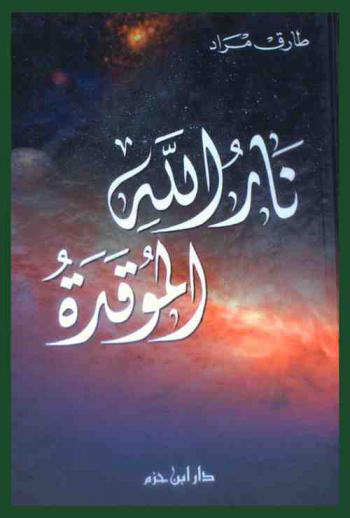
نار الله الموقدة
يتناول كتاب (نار الله الموقدة) والذي قام بتأليفه (طارق مراد) في حوالي (236) صفحة من القطع المتوسط موضوع (الثواب والعقاب) مستعرضا المحتويات التالية : الفصل الأول بعنوان النار، الفصل الثاني بعنوان صفات النار، الفصل الثالث بعنوان أين مكان النار ؟، الفصل الرابع بعنوان من يدخل النار ؟ وما يلاقيه من العذاب ؟، الفصل الخامس والأخير بعنوان أهل النار وحياتهم.
Book

כינויי יום הדין בתרגום העברי למשמעויות הקוראן
The present study discusses the names of the Day of Resurrection in Uri Rubin's translations of the Holy Qur'an. To identify the translation difficulties and complications and to find out the Hebrew equivalence, the study, through the application of a comparative analytical approach, aims at analyzing the linguistic structures of Day of Resurrection names cited in the Holy Qur'an. Heavenly religions are rich with distinct and unique terms that distinguish and reflect their specificity of other religions; something requires a great accuracy in the translation of such terminology. By investigating selected examples of the names of the Day of Resurrection in Arabic and Hebrew, the present study sheds light on the morphological and semantic description of the terms of the Day of Resurrection. The study concludes that translation fails to convey the Arabic designations precise meaning, given the absence of such an appropriate linguistic equivalent in the Hebrew, especially since, with the exception of the term \"Day of judgment\"; Jewish religious dictionaries lack the terminology that describes this concept.
Journal Article


مصطلحا \الدنيا\ و\الحياة الدنيا\ في سورة البقرة
وهو يهدف إلى بيان الفرق بين هذين المصطلحين، من خلال المعنى المستنبط من سياق الآيات التي ورد فيها هذين المصطلحين. وقد استخدمت المنهجين الوصفي القائم على الاستقراء والتحليل، والمقارن للوصول إلى الفروق الدقيقة بين المصطلحين، وهو ما يهدف إليه البحث؛ حيث استقري الآيات القرآنية التي ورد فيها هذان المصطلحين في سورة البقرة. وأقف على أقوال العلماء في تفسير تلك الآيات، وأقارن بين المصطلحين من خلال سياق الآيات التي اشتملت عليهما. وقد اقتضت طبيعة البحث أن ينتظم في: مقدمة، ومبحثين، وخاتمة، وثبت بالمصادر والمراجع، والفهرس. وجاءت عناوين المباحث كالتالي: المبحث الأول: مصطلح (الدنيا) في سورة البقرة. المبحث الثاني: مصطلح (الحياة الدنيا) في سورة البقرة. وقد خرجت من هذا البحث بعدة نتائج أهمها: ١- لم يرد مصطلح \"الدنيا\" في موضع الذم مطلقا، بينما ورد مصطلح: \"الحياة الدنيا\" في موضع الذم دائما. ٢- لم يرد مصطلح \"الدنيا\" إلا واقترن بمصطلح \"الآخرة\" في نفس الآية، بينما مصطلح \"الحياة الدنيا\" يرد أحيانا منفردا، وأحيانا مقترنا بمصطلح \"الآخرة\"، وأحيانا مقترنا بمصطلح \"يوم القيامة\".
Journal Article