
Catalogue Search | MBRL


Are you sure you want to remove the book from the shelf?

{{itemTitle}}
580
result(s) for
"中华人民共和国"
Sort by:
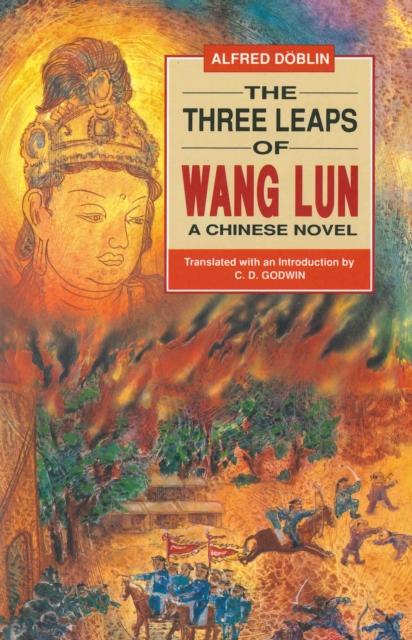
The Three Leaps of Wang Lun
In 1915, fourteen years before Berlin Alexanderplatz, Alfred Doblin published his first novel, an extensively researched Chinese historical extravaganza: The Three Leaps of Wang Lun. Even more remarkably, given its subject matter, the book was written in Expressionist style and is now considered the first modern German novel, as well as the first Western novel to depict a China untouched by the West. It is virtually unknown in English. Based on actual accounts of a doomed rebellion during the reign of Emperor Qianlong in the late 18th century, the novel tells the story of Wang Lun, a historical martial arts master and charismatic leader of the White Lotus sect, who leads a futile revolt of the “Truly Powerless.\" Densely packed cities and Tibetan wastes, political intrigue and religious yearning, imperial court life and the fate of wandering outcasts are depicted in a language of enormous vigor and matchless imagination, unfolding the theme of timidity against force, and a mystical sense of the world against the realities of power.
eBook

Chinese Economic Statecraft
In Chinese Economic Statecraft , William J. Norris
introduces an innovative theory that pinpoints how states employ
economic tools of national power to pursue their strategic
objectives. Norris shows what Chinese economic statecraft is, how
it works, and why it is more or less effective. Norris provides an
accessible tool kit to help us better understand important economic
developments in the People's Republic of China. He links domestic
Chinese political economy with the international ramifications of
China's economic power as a tool for realizing China's strategic
foreign policy interests. He presents a novel approach to studying
economic statecraft that calls attention to the central challenge
of how the state is (or is not) able to control and direct the
behavior of economic actors.
Norris identifies key causes of Chinese state control through
tightly structured, substate and crossnational comparisons of
business-government relations. These cases range across three
important arenas of China's grand strategy that prominently feature
a strategic role for economics: China's efforts to secure access to
vital raw materials located abroad, Mainland relations toward
Taiwan, and China's sovereign wealth funds. Norris spent more than
two years conducting field research in China and Taiwan during
which he interviewed current and former government officials,
academics, bankers, journalists, advisors, lawyers, and
businesspeople. The ideas in this book are applicable beyond China
and help us to understand how states exercise international
economic power in the twenty-first century.
In Chinese Economic Statecraft , William J. Norris
introduces an innovative theory that pinpoints how states employ
economic tools of national power to pursue their strategic
objectives. Norris shows what Chinese economic statecraft is, how
it works, and why it is more or less effective. Norris provides an
accessible tool kit to help us better understand important economic
developments in the People's Republic of China. He links domestic
Chinese political economy with the international ramifications of
China's economic power as a tool for realizing China's strategic
foreign policy interests. He presents a novel approach to studying
economic statecraft that calls attention to the central challenge
of how the state is (or is not) able to control and direct the
behavior of economic actors.Norris identifies key causes of Chinese
state control through tightly structured, substate and
crossnational comparisons of business-government relations. These
cases range across three important arenas of China's grand strategy
that prominently feature a strategic role for economics: China's
efforts to secure access to vital raw materials located abroad,
Mainland relations toward Taiwan, and China's sovereign wealth
funds. Norris spent more than two years conducting field research
in China and Taiwan during which he interviewed current and former
government officials, academics, bankers, journalists, advisors,
lawyers, and businesspeople. The ideas in this book are applicable
beyond China and help us to understand how states exercise
international economic power in the twenty-first century.
eBook

Following the leader
With unique access to Chinese leaders at all levels of the party and government, best-selling author David M. Lampton tells the story of China’s political elites from their own perspectives. Based on over five hundred interviews, Following the Leader offers a rare glimpse into how the attitudes and ideas of those at the top have evolved over the past four decades. Here China’s rulers explain their strategies and ideas for moving the nation forward, share their reflections on matters of leadership and policy, and discuss the challenges that keep them awake at night. As the Chinese Communist Party installs its new president, Xi Jinping, for a presumably ten-year term, questions abound. How will the country move forward as its explosive rate of economic growth begins to slow? How does it plan to deal with domestic and international calls for political reform and to cope with an aging population, not to mention an increasingly fragmented bureaucracy and society? In this insightful book we learn how China’s leaders see the nation’s political future, as well as about its global strategic influence.
eBook
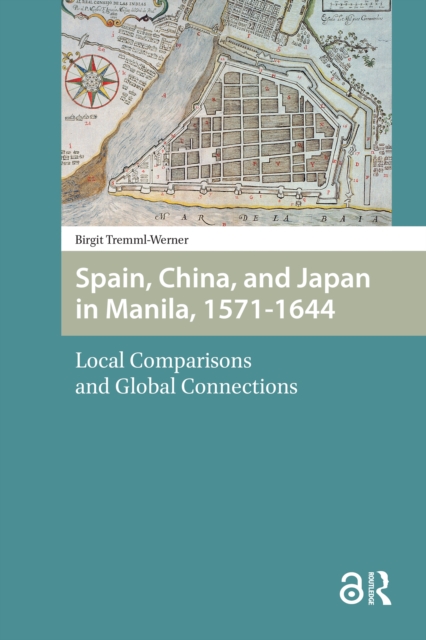
Spain, China, and Japan in Manila, 1571-1644
This book offers a new perspective on the connected histories of Spain, China, and Japan as they emerged and developed following Manila’s foundation as the capital of the Spanish Philippines in 1571. Examining a wealth of multilingual primary sources, Birgit Tremml-Werner shows that crosscultural encounters not only shaped Manila’s development as a “Eurasian” port city, but also had profound political, economic, and social ramifications for the three premodern states. Combining a systematic comparison with a focus on specific actors during this period, this book addresses many long-held misconceptions and offers a more balanced and multifaceted view of these nations’ histories.
eBook

China and Africa
The People's Republic of China once limited its involvement in African affairs to building an occasional railroad or port, supporting African liberation movements, and loudly proclaiming socialist solidarity with the downtrodden of the continent. Now Chinese diplomats and Chinese companies, both state-owned and private, along with an influx of Chinese workers, have spread throughout Africa. This shift is one of the most important geopolitical phenomena of our time.China and Africa: A Century of Engagementpresents a comprehensive view of the relationship between this powerful Asian nation and the countries of Africa. This book, the first of its kind to be published since the 1970s, examines all facets of China's relationship with each of the fifty-four African nations. It reviews the history of China's relations with the continent, looking back past the establishment of the People's Republic of China in 1949. It looks at a broad range of areas that define this relationship-politics, trade, investment, foreign aid, military, security, and culture-providing a significant historical backdrop for each. David H. Shinn and Joshua Eisenman's study combines careful observation, meticulous data analysis, and detailed understanding gained through diplomatic experience and extensive travel in China and Africa.China and Africademonstrates that while China's connection to Africa is different from that of Western nations, it is no less complex. Africans and Chinese are still developing their perceptions of each other, and these changing views have both positive and negative dimensions.
eBook

Uncovering African Agency
China's engagement in Africa is generally portrayed simply as African countries being exploited for their mineral wealth by a wealthy political and economic superpower. Is this always the case?
Certain African countries have been able to use China's involvement in the region to grow their economies and solicit renewed interest from previously disengaged foreign powers by using their relationship with China to bolster their political capital. In this thought provoking and original work Lucy Corkin demonstrates how Angola has been amongst the most successful of African nations in this role. The concept of 'African agency' covers a wide range of different countries with very different capabilities and experiences of engaging with China. In each individual county there are a myriad of actors all with increasingly discernible agencies. Uncovering African Agency; Angola's Management of China's Credit Lines casts a fascinating new light on China's involvement with her largest African trading partner and through this shows how different African states and the governmental actors within them are able to exploit the relationship to their best advantage.
eBook

Ginkgo Village
Ginkgo Village provides an original and powerfully intimate bottom-up perspective on China's recent tumultuous history. Drawing on ethnographic and life-history research, the book takes readers deep into a village in a mountainous region of central-eastern China known as Eyuwan. In the twentieth and early twenty-first centuries, villagers in this region experienced terrible trauma and far-reaching socio‑economic and political change. In the civil war (1927–1949), they were slaughtered in fighting between Nationalist and Communist forces. During the Great Leap Forward (1958–1961), they suffered appalling famine. Since the 1990s, mass labour outmigration has lifted local villagers out of poverty and fuelled major transformations in their circumstances and practices, social and family relationships, and values and aspirations. At the heart of this book are eight tales that recreate Ginkgo Village life and the interactions between villagers and the researchers who visit them. These tales use storytelling to engender an empathetic understanding of Ginkgo Villagers’ often traumatic life experiences; to present concrete details about transformations in everyday village life in an engaging manner; and to explore the challenges and rewards of fieldwork research that attempts empathetic understanding across cultures.
eBook

Rising Inequality in China
This book, a sequel to Inequality and Public Policy in China (2008), examines the evolution of inequality in China from 2002 to 2007, a period when the new 'harmonious society' development strategy was adopted under Hu Jintao and Wen Jiabao. It fills a gap in knowledge about the outcomes of this development strategy for equity and inequality. Drawing on original information collected from the recent two waves of nationwide household surveys conducted by the China Household Income Project, this book provides a detailed overview of recent trends in income inequality and cutting-edge analysis of key factors underlying such trends. Topics covered include inequality in education, changes in homeownership and the distribution of housing wealth, the evolution of the migrant labor market, disparities between public and non-public sectors, patterns of work and non-work, gender, ethnicity, and the impacts of public policies such as reforms in taxation and social welfare programs.
eBook

Africa's silk road : China and India's new economic frontier
New horizons are opening for Africa, with a growing number of Chinese andIndian businesses fostering its integration into advanced markets. However,significant imbalances will have to be addressed on both sides of the equation to support long-term growth.
eBook

Canton Trade, The
This study utilizes a wide range of new source materials to reconstruct the day-to-day operations of the port of Canton during the eighteenth and first half of the nineteenth centuries. Using a bottom-up approach, it provides a fresh look at the successes
eBook