
Catalogue Search | MBRL


Are you sure you want to remove the book from the shelf?

{{itemTitle}}
1,952
result(s) for
"共和国"
Sort by:

Illegality, inc
In this groundbreaking ethnography, Ruben Andersson, a gifted anthropologist and journalist, travels along the clandestine migration trail from Senegal and Mali to the Spanish North African enclaves of Ceuta and Melilla. Through the voices of his informants, Andersson explores, viscerally and emphatically, how Europe's increasingly powerful border regime meets and interacts with its target–the clandestine migrant. This vivid, rich work examines the subterranean migration flow from Africa to Europe, and shifts the focus from the \"illegal immigrants\" themselves to the vast industry built around their movements. This fascinating and accessible book is a must-read for anyone interested in the politics of international migration and the changing texture of global culture.
eBook

Death and the crown
In May 1774, Louis XV died, triggering a sequence of rituals unseen in fifty-nine years. This book explores how these one-in-a-reign rituals unfolded fifteen years before the Revolution. From the deathbed of Louis XV, the book covers his funeral, the lit de justice of November 1774, and the coronation of Louis XVI and related ceremonies in June 1775, relating them all to the politics of the day. Threads of continuity emerge from this closely woven narrative to form a compelling picture of these ceremonies in the dynamic culture of 1770s France. Light is shed on the place of monarchy, the recall of the parlements and the conduct of the coronation. This study provides an overview of the current state of the field of ritual studies in English and French, situating ritual in relation to court studies as well as political history. It covers court life, the relationship between the monarch and the parlement, the preparation of large-scale rituals and the ways in which those outside the court engaged with these events, providing rich detail on this under-researched period. Written in a clear, lively style, this book is the ideal text for the non-specialist and, as each chapter deals with one ritual, it lends itself readily to undergraduate teaching of topics around monarchy, court society, ritual, and politics, including the Maupeou coup. More advanced students and specialists on the period will find new perspectives and information presented in an engaging manner.
eBook
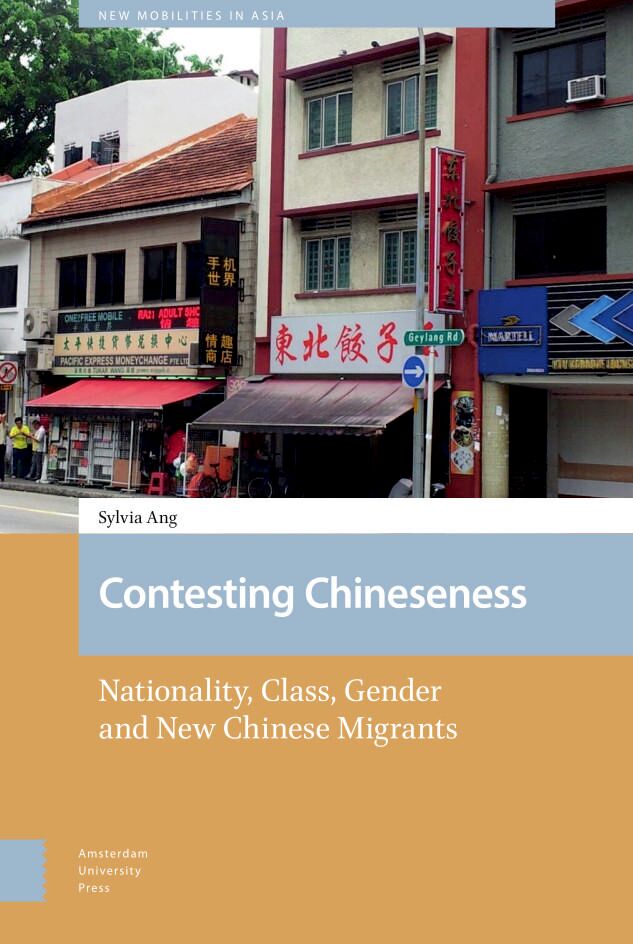
Contesting Chineseness
Nearly eleven million Chinese migrants live outside of China. While many of these faces of China's globalization headed for the popular Western destinations of the United States, Australia and Canada, others have been lured by the booming Asian economies. Compared with pre-1949 Chinese migrants, most are wealthier, motivated by a variety of concerns beyond economic survival and loyal to the communist regime. The reception of new Chinese migrants, however, has been less than warm in some places. In Singapore, tensions between Singaporean-Chinese and new Chinese arrivals present a puzzle: why are there tensions between ethnic Chinese settlers and new Chinese arrivals despite similarities in phenotype, ancestry and customs? Drawing on rich empirical data from ethnography and digital ethnography, Contesting Chineseness: Nationality, Class, Gender and New Chinese Migrants investigates this puzzle and details how ethnic Chinese subjects negotiate their identities in an age of contemporary Chinese migration and China's ascent.
eBook

Italian Courts and European Culture
Between the fifteenth and the eighteenth century, princely courts dominated the Italian political scene. These courts were effervescent centers of cultural production. As such, they became a model for European monarchies who imported Italian courtly forma del vivere (‘style of life’) to legitimize their power and to define social status. This phenomenon included architecture and painting, theater and music, manners and aesthetics, and all the objects, behaviors and beliefs that contributed to homogenize European culture in the age of the Old Regime. It involved a hemorrhage of art and a continuous circulation of people, texts and symbols. The foundational material for this process was classicism and its purpose was political. This delineates a new geography and chronology of a truly European cultural history. It also provides the key traits for the European cultural identity.
eBook

Excavating Modernity
The cultural and material legacies of the Roman Republic and Empire in evidence throughout Rome have made it the \"Eternal City.\" Too often, however, this patrimony has caused Rome to be seen as static and antique, insulated from the transformations of the modern world. In Excavating Modernity, Joshua Arthurs dramatically revises this perception, arguing that as both place and idea, Rome was strongly shaped by a radical vision of modernity imposed by Mussolini's regime between the two world wars.
Italian Fascism's appropriation of the Roman past-the idea of Rome, or romanità- encapsulated the Fascist virtues of discipline, hierarchy, and order; the Fascist \"new man\" was modeled on the Roman legionary, the epitome of the virile citizen-soldier. This vision of modernity also transcended Italy's borders, with the Roman Empire providing a foundation for Fascism's own vision of Mediterranean domination and a European New Order. At the same time, romanità also served as a vocabulary of anxiety about modernity. Fears of population decline, racial degeneration and revolution were mapped onto the barbarian invasions and the fall of Rome. Offering a critical assessment of romanità and its effects, Arthurs explores the ways in which academics, officials, and ideologues approached Rome not as a site of distant glories but as a blueprint for contemporary life, a source of dynamic values to shape the present and future.
eBook

Emerging Memory
This incisive volume brings together postcolonial studies, visual culture and cultural memory studies to explain how the Netherlands continues to rediscover its history of violence in colonial Indonesia. Dutch commentators have frequently claimed that the colonial past and especially the violence associated with it has been 'forgotten' in the Netherlands. Uncovering 'lost' photographs and other documents of violence has thereby become a recurring feature aimed at unmasking a hidden truth. The author argues that, rather than absent, such images have been consistently present in the Dutch public sphere and have been widely available in print, on television and now on the internet. Emerging Memory: Photographs of Colonial Atrocity in Dutch Cultural Remembrance shows that between memory and forgetting there is a haunted zone from which pasts that do not fit the stories nations live by keep on emerging and submerging while retaining their disturbing presence.
eBook

The Starving Empire
The Starving Empire traces the history of famine in the modern French Empire, showing that hunger is intensely local and sweepingly global, shaped by regional contexts and the transnational interplay of ideas and policies all at once. By integrating food crises in Algeria, West and Equatorial Africa, and Vietnam into a broader story of imperial and transnational care, Yan Slobodkin reveals how the French colonial state and an emerging international community took increasing responsibility for subsistence, but ultimately failed to fulfill this responsibility.
Europeans once dismissed colonial famines as acts of god, misfortunes of nature, and the inevitable consequences of backward races living in harsh environments. But as Slobodkin recounts, drawing on archival research from four continents, the twentieth century saw transformations in nutrition, scientific racism, and international humanitarianism that profoundly altered ideas of what colonialism could accomplish. A new confidence in the ability to mitigate hunger, coupled with new norms of moral responsibility, marked a turning point in the French Empire's relationship to colonial subjects—and to nature itself.
Increasingly sophisticated understandings of famine as a technical problem subject to state control saddled France with untenable obligations. The Starving Empire not only illustrates how the painful history of colonial famine remains with us in our current understandings of public health, state sovereignty, and international aid, but also seeks to return food—this most basic of human needs—to its central place in the formation of modern political obligation and humanitarian ethics.
eBook

Defending the Border
This book, one of the first in English about everyday life in the Republic of Georgia, describes how people construct identity in a rapidly changing border region. Based on extensive ethnographic research, it illuminates the myriad ways residents of the Caucasus have rethought who they are since the collapse of the Soviet Union.
Through an exploration of three towns in the southwest corner of Georgia, all of which are situated close to the Turkish frontier, Mathijs Pelkmans shows how social and cultural boundaries took on greater importance in the years of transition, when such divisions were expected to vanish. By tracing the fears, longings, and disillusionment that border dwellers projected on the Iron Curtain, Pelkmans demonstrates how elements of culture formed along and in response to territorial divisions, and how these elements became crucial in attempts to rethink the border after its physical rigidities dissolved in the 1990s.
The new boundary-drawing activities had the effect of grounding and reinforcing Soviet constructions of identity, even though they were part of the process of overcoming and dismissing the past. Ultimately, Pelkmans finds that the opening of the border paradoxically inspired a newfound appreciation for the previously despised Iron Curtain as something that had provided protection and was still worth defending.
eBook

Empire of refugees : North Caucasian Muslims and the late Ottoman state
Between the 1850s and World War I, about one million North Caucasian Muslims sought refuge in the Ottoman Empire. This resettlement of Muslim refugees from Russia changed the Ottoman state. Circassians, Chechens, Dagestanis, and others established hundreds of refugee villages throughout the Ottoman Balkans, Anatolia, and the Levant. Most villages still exist today, including what is now the city of Amman. Muslim refugee resettlement reinvigorated regional economies, but also intensified competition over land and, at times, precipitated sectarian tensions, setting in motion fundamental shifts in the borderlands of the Russian and Ottoman empires.
Empire of Refugees reframes late Ottoman history through mass displacement and reveals the origins of refugee resettlement in the modern Middle East. Vladimir Hamed-Troyansky offers a historiographical corrective: the nineteenth-century Ottoman Empire created a refugee regime, predating refugee systems set up by the League of Nations and the United Nations. Grounded in archival research in over twenty public and private archives across ten countries, this book contests the boundaries typically assumed between forced and voluntary migration, and refugees and immigrants, rewriting the history of Muslim migration in the nineteenth and early twentieth centuries.
eBook

The Political Economy of Virtue
Political economy, John Shovlin asserts, can illuminate the social and economic contexts out of which a revolutionary impulse developed in France. Beyond the role of political economy in political life, massive public engagement with problems of economic order mediated an enduring cultural transformation. Economic activity was reimagined as a patriotic pursuit, and economic agents-farmers, merchants, and manufacturers-came to be viewed as potential citizens.
Drawing on hundreds of political economic tracts published in France between the 1740s and the early nineteenth century, Shovlin shows how mid-level French elites (magistrates, clerics, lawyers, soldiers, landed gentlemen) sought to balance their interests and values with the need to regenerate a nation that had seemingly entered a period of decline. In their view, France's moral, political, and economic power depended not simply on expanding the national wealth but also on reviving civic spirit. The \"political economy of virtue\" held that luxury was the cause of the nation's economic and moral degeneration. When the monarchy failed to reform its political economic structures in the 1760s and 1770s, mid-level elites sought to eliminate the stranglehold of the plutocracy.
Shovlin argues that the Revolution grew out of a debate on how to establish a commercial society capable of fostering both wealth and virtue, and the revolutionaries sought to create such a society by destroying the institutions that channeled modern wealth into the hands of courtiers and financiers.
eBook