
Catalogue Search | MBRL


Are you sure you want to remove the book from the shelf?

{{itemTitle}}
3
result(s) for
"可持续性发展"
Sort by:

野生动物友好型农业研究与实践进展
全球人口增长带来的粮食需求增加,导致农业用地不断扩张与农药化肥过量使用,这是造成野生动物生境丧失、破碎化及质量下降的主要原因之一。野生动物友好型农业(wildlife-friendly farming, WFF)作为一种新兴农业模式,为缓解农业发展与野生动物保护之间的矛盾提供了可行路径。本研究综述了国内外相关研究和实践经验,梳理了WFF的起源与概念,分析了其在实践中的进展,并详细阐述了通过改造农业景观为野生动物提供栖息地的多种策略、借助经济激励手段促进野生动物保护与控制农药化肥过度使用所形成的正反馈循环,以及野生动物智慧监测技术在WFF的应用前景,并总结了当前国内外WFF的经济和社会实践。尽管WFF在小范围内的成功案例已展现出明显优势,但在更广泛的实施过程中仍面临诸多挑战,包括农业景观中野生动物监测技术落后、欠缺对气候变化的考量,以及市场机制低效、政策支持和公众意识不足等。未来,WFF需充分利用人工智能监测设备、区块链等先进技术,增强其实际应用的可行性;应因地制宜,结合不同地理区域的生态与经济需求,在政策、经济和社会层面加强协调合作,以支持可持续农业和野生动物保护的协同目标,最终实现农业地区经济利益与野生动物保护的双赢。
Journal Article
Fish genome manipulation and directional breeding
Aquaculture is one of the fastest developing agricultural industries worldwide. One of the most important factors for sustaina- ble aquaculture is the development of high performing culture strains. Genome manipulation offers a powerful method to achieve rapid and directional breeding in fish. We review the history of fish breeding methods based on classical genome ma- nipulation, including polyploidy breeding and nuclear transfer. Then, we discuss the advances and applications of fish direc- tional breeding based on transgenic technology and recently developed genome editing technologies. These methods offer in- creased efficiency, precision and predictability in genetic improvement over traditional methods.
Journal Article
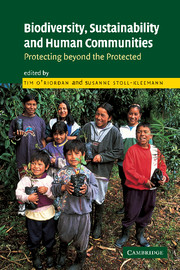
Biodiversity, Sustainability and Human Communities
Biodiversity is the key indicator of a healthy planet and healthy society. Losses of biodiversity have now become widespread and current rates are potentially catastrophic for species and habitat integrity. Biodiversity, Sustainability and Human Communities, first published in 2002, advocates both the preservation of the best remaining habitats and the enhancement of new biodiverse habitats to ensure that they cope with human impact, climate change and alien species invasion. The authors argue that these aims can be achieved by a mix of strict protection, inclusive involvement of people inside and adjacent to reserves, and by combining livelihoods and social well-being in all future biodiversity management. Case studies from regions around the world, including Europe, the United States, Latin America and Africa are examined and discussed, and the contributors include political scientists, economists and ecologists.
eBook