
Catalogue Search | MBRL


Are you sure you want to remove the book from the shelf?

{{itemTitle}}
32
result(s) for
"1 Peter 1:2"
Sort by:

Die funksionering van die frase κατὰ πρόγνωσιν θεοῦ πατρὸς as verwysing in die argument van 1 Petrus
The function of the prepositional phrase κατὰ πρόγνωσιν θεοῦ πατρὸς as a reference within the argument of 1 Peter. A recent study has demonstrated that the author of 1 Peter refers to Exodus 19:3–8 through the prepositional phrase κατὰ πρόγνωσιν θεοῦ πατρὸς in 1:2. With this phrase, Peter introduces a theme that he further develops in the letter, namely God’s plan of salvation. This article examines the function of the phrase κατὰ πρόγνωσιν θεοῦ πατρὸς as a reference to Exodus 19:3–8 within the argument of 1 Peter. The phrase’s role within 1 Peter is examined exegetically, employing the grammatical-historical method as practiced in the Reformed tradition. Attention is firstly given to the circumstances of the readers and the distinctive position of the introduction within the letter. God’s plan of salvation as presented in 1 Peter 1:1–2, 10–12, 20, and 2:4–10 is then investigated, followed by an analysis of the divine plan as it appears in Exodus 19:3–8. It becomes evident that Peter brings to the fore various components of God’s plan of salvation indicated in Exodus 19:3–8. Both Israel and the readers are portrayed as God’s elect and included in his divine salvation plan; for both Israel and the readers, God’s decisive victory is emphasised; God’s mercy is shown to be the reason for Israel and the readers inclusion in his plan; God’s faithful preservation is emphasised for both; and the relationship between God and his elect, whether Israel or the readers, is depicted as a covenant relationship marked by his nearness. According to God’s plan of salvation, both Israel and Peter’s readers receive glorious assurances from God regarding their future. The remarkable parallels between the divine plan as revealed to Israel in Exodus 19:3–8 and as articulated in 1 Peter show that Peter regards the historical events at Sinai as prophetic in nature. The plan of salvation in Exodus 19:3–8 serves a type, fulfilled in the antitype that Peter outlines in his letter. Alongside the similarities between the plan in Exodus 19:3–8 and that in 1 Peter, there is also an escalation. In 1 Peter, Christ is placed at the centre of God’s plan and the significance of what happens to God’s elect is heightened.ContributionThis article has shown how Peter, through his use of Exodus 19:3–8, presents God’s plan of salvation as an escalating redemptive event with Christ at its centre and believers identified as God’s chosen ones. This identity offers profound comfort and steadfast hope for believers in a world of suffering – a message that remains relevant today.
Journal Article
Die gebruik van Eksodus 19–24 in 1 Petrus 1:2 – ’n Eksegetiese ondersoek
The use of Exodus 19–24 in 1 Peter 1:2 – An exegetical investigation. 1 Peter shows an exceptional number of quotations from and references to the Old Testament. Although much has already been written about the author of 1 Peter’s use of the Old Testament, little attention is given to the possibility that the author already has the Old Testament in mind in 1 Peter 1:2. This article investigates whether Peter, with the three prepositional phrases in 1:2, has specific Old Testament passages in mind. Greater clarity regarding Peter’s intention with the three prepositional phrases in 1:2 is achieved by placing the phrases within the context of 1 Peter. It is then examined whether Peter refers to specific Old Testament passages with each of the three phrases. The grammatical-historical model of exegesis, as practiced within the Reformed tradition, is followed in this article. Peter’s three prepositional phrases in 1:2 refer to the covenant events as described in Exodus 19–24. With the prepositional phrase κατὰ πρόγνωσιν θεοῦ πατρὸς, he refers to God’s redemptive plan as outlined in Exodus 19:3–8. The prepositional phrase, ἐν ἁγιασμῷ πνεύματος, reflects both God’s holiness and Israel’s holiness as recorded in Exodus 19–24. The prepositional phrase, εἰς ὑπακοὴν καὶ ῥαντισμὸν αἵματος Ἰησοῦ Χριστοῦ, refers to Israel’s obedience and the confirmation of the covenant between God and Israel as described in Exodus 24:3–8.ContributionThe importance of research on the New Testament authors’ use of the Old Testament is widely acknowledged by exegetes. This article indicates that in 1 Peter 1:2, the three prepositional phrases refer to the covenant events in Exodus 19–24. By identifying the reference to the Old Testament in 1 Peter 1:2, the groundwork is laid in this article for further research on Peter’s use of Exodus 19–24. For example, recognising Peter’s reference to Exodus 19–24 in the salutation of his letter provides the opportunity for closer examination of Peter’s interpretive, theological, and rhetorical use of the covenant events as recorded in Exodus 19–24 in 1 Peter 1:2 and throughout the remainder of the letter.
Journal Article
Eksegese van 2 Petrus 3:1–2 en die hermeneuse daarvan met spesifieke verwysing na standpunte van die sogenaamde Nuwe Ateïste
Exegesis of 2 Peter 3:1–2 and its significance for contemporary Christians with specific reference to views of the so-called New Atheists. Die Bybel: 2020-vertaling, in Afrikaans translation of the Bible, has been introduced at a time when the Bible, the God of the Bible and believers who accept the Bible as the Word of God are seriously under suspicion. The question is how Christians are supposed to act and react in the light of these developments. The religious conviction of Peter’s first readers was under great pressure as a result of false teachers. This article exegetically indicates the guidance that Peter gives to his readers according to 2 Peter 3:1–2 and points out its significance for contemporary Christians. The exegesis in the article is concentrated on 2 Peter 3:1–2 within the context of the letter and is done according to the grammatical-historical model as practised in the Reformed tradition. The article cites examples of the New Atheists’ questioning of the Christian faith. Reference is then made to 2 Peter 3:1–2, regarding what believers must do when their faith is questioned. The article found that Christians today, like Peter’s first readers, are still under great pressure because of atheists’ hostile actions. Like Peter’s first readers, modern-day believers need guidance so that they do not succumb to the pressures on their steadfastness. Christians must think purely of the Old Testament prophets and the apostles of Jesus Christ and the revelation they received from God and Jesus Christ. When Christians think purely about prophets and apostles, they will understand the meaning of these people’s message in their present circumstances and will be able to act appropriately. 2 Peter 3:1–2 provides guidance to Christians whose faith is under pressure due to the hostile actions of unbelievers. Contribution: The article contributes to the understanding of the guidance that Peter gave to his first readers according to 2 Peter 3:1–2 and provides guidance to Christians whose faith, like Peter’s first readers, is being questioned.
Journal Article

Deificational Hermeneutics as Theological Interpretation: A Theological Exegesis on 2 Peter 1:1–11
This paper explores the parallel emergence of two theological movements that share ecumenical insights: Theological Interpretation of Scripture (TIS) and deification. It identifies their intrinsic connections to creeds and draws upon their recent scholarly convergence. By highlighting the absence of a robust deificational hermeneutics within the realm of theological interpretation, this paper aims to address that gap by advocating for a deificational hermeneutics that serves the interests of theological interpretation. This argument is founded on three vital theological insights: (1) similar to creeds, the theology of deification is essential to Christian theology with significant ecumenical value, (2) the imago Dei acts as a unifying framework, and (3) readerly formation is central to theological interpretation. Furthermore, through exegetical analysis of 2 Peter 1:1–11, this essay reveals aspects that would remain obscured without the “prism” of deification.
Journal Article
Die betroubaarheid van die apostels en hulle getuienis volgens 2 Petrus 1:3-4 en die betekenis daarvan vir die geskrifte van die Nuwe Testament: ‘n Eksegetiese studie
The reliability of the apostles and their testimony according to 2 Peter 1:3–4 and its significance for the writings of the New Testament: An exegetical study. In this exegetical article, it is shown that, in 2 Peter 1:3–4, Peter indicates that the apostles were reliable witnesses of Jesus Christ. As the New Testament writings are bearers of the apostolic testimony, 2 Peter 1:3–4 also provides important testimony regarding the Bible and, in particular, regarding the New Testament. The aim of this article is to show that, according to 2 Peter 1:3–4, the apostles and their testimony are reliable and that these testimonies are significant for the writings of the New Testament. This study follows an exegetical method and follows the grammatical-historical model. From 2 Peter 1:3–4, it is clear that the reliability of the apostles is the result of divine power. Jesus Christ worked through his Spirit with divine power in the apostles. Through the Holy Spirit, Jesus Christ provides the apostles with everything that leads to true life, as well as to godliness. To the apostles, this was all given within their intimate and personal relationship with the glorified Christ. According to 2 Peter 1:3–4, Jesus Christ himself called his apostles to proclaim the message of God’s grace. As eye- and earwitnesses of Jesus Christ’s divine power, they could reliably reveal the meaning of what they witnessed of him. In 2 Peter 1:3–4, Peter testifies that the apostles received promises from Jesus Christ. These are great promises that have profound significance for anyone who accepts them in faith. Contribution: The contribution of this article is to show that 2 Peter 1:3–4 gives important information about the reliability of the apostles and their testimony.
Journal Article

Some issues in apocalyptic in the exegetical literature of the last ten years
In 1989 there was a follow-up meeting on the 1979 Uppsala Colloquium on apocalypticism. The results were published in a small volume edited by Collins and Charlesworth in 1991. Since then interest in apocalyptic has continued and this survey intends to give an overview of the literature on this issue since that time. The article focuses particularly on the following aspects: apocalyptic: literary genre or theological concept; the apocalyptic genre; eschatological or cosmological in content; apocalyptic movements; social context and function; apocalypses and mysticism; the sources of Jewish apocalyptic; Jesus, Q and apocalyptic traditions; apocalyptic views and wisdom; apocalyptic traditions and the Book of Revelation; apocalyptic and the rest of the New Testament; apocalyptic literature and biblical interpretation.
Journal Article
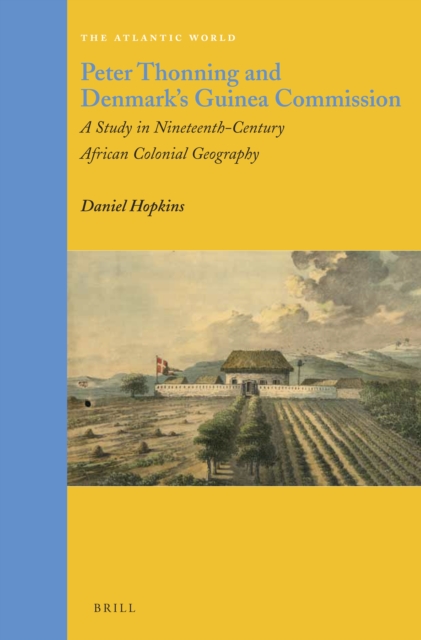
Peter Thonning and Denmark’s Guinea Commission
The rich archival record of Denmark's nineteenth-century African colonial undertakings, and particularly the work of the natural historian and colonial administrator Peter Thonning of the Guinea Commission, opens fresh perspectives on the broader history and geography of European colonialism.
eBook