
Catalogue Search | MBRL


Are you sure you want to remove the book from the shelf?

{{itemTitle}}
43,633
result(s) for
"10"
Sort by:

التدوين التاريخي (من سنة 1 هجرية إلى 400 هجرية)
يتناول كتاب \"التدوين التاريخي (من سنة 1 هجرية إلى 400 هجرية)\" والذي قام بتأليفه \"د. رشيد لطيف إبراهيم الحشماوي\" في حوالي (207) صفحة من القطع المتوسط موضوع (التاريخ عند العرب) يبين هذا الكتاب مراحل التدوين التاريخي في القرون الأربعة الأولى ويدرسها دراسة تحليلية نقدية مقارنة بين مدرسة المدنية ومدارس العراق.
BOOK

The Map3k12 (Dlk)/JNK3 signaling pathway is required for pancreatic beta-cell proliferation during postnatal development
Unveiling the key pathways underlying postnatal beta-cell proliferation can be instrumental to decipher the mechanisms of beta-cell mass plasticity to increased physiological demand of insulin during weight gain and pregnancy. Using transcriptome and global Serine Threonine Kinase activity (STK) analyses of islets from newborn (10 days old) and adult rats, we found that highly proliferative neonatal rat islet cells display a substantially elevated activity of the mitogen activated protein 3 kinase 12, also called dual leucine zipper-bearing kinase (Dlk). As a key upstream component of the c-Jun amino terminal kinase (Jnk) pathway, Dlk overexpression was associated with increased Jnk3 activity and was mainly localized in the beta-cell cytoplasm. We provide the evidence that Dlk associates with and activates Jnk3, and that this cascade stimulates the expression of Ccnd1 and Ccnd2, two essential cyclins controlling postnatal beta-cell replication. Silencing of Dlk or of Jnk3 in neonatal islet cells dramatically hampered primary beta-cell replication and the expression of the two cyclins. Moreover, the expression of Dlk,Jnk3,Ccnd1 and Ccnd2 was induced in high replicative islet beta cells from ob/ob mice during weight gain, and from pregnant female rats. In human islets from non-diabetic obese individuals, DLK expression was also cytoplasmic and the rise of the mRNA level was associated with an increase of JNK3,CCND1andCCND2 mRNA levels, when compared to islets from lean and obese patients with diabetes. In conclusion, we find that activation of Jnk3 signalling by Dlk could be a key mechanism for adapting islet beta-cell mass during postnatal development and weight gain.
Journal Article

الحياة الدينية في القوقاز وأرمينيا وأذربيجان حتى نهاية القرن 4 هـ. / 10 م. : دراسة تاريخية
يسلط الضوء على الجانب الديني في بلاد القوقاز وأرمينيا وأذربيجان من منظور تاريخي، وقد حرص الباحث على عدم الابتعاد عن الجوانب التاريخية مثل إيراد الحوادث التاريخية ذات الدلالات الدينية، أو تاريخ دين ما في المنطقة، وتقديم الخطوط العريضة والصورة الإجمالية للأديان في تلك المنطقة. وقد قسم المؤلف كتابه إلى تمهيد وثلاثة فصول، فجعل التمهيد في التعريف الجغرافي للمنطقة، فيما اشتمل الفصل الأول على أبرز المعتقدات الوثنية فيها، وجاء الفصل الثاني لدراسة الديانة المسيحية وانتشارها في المنطقة، فيما اشتمل الفصل الثالث على وضعية دخول الإسلام وانتشاره في القوقاز وأرمينيا وأذربيجان.
Book

Distribution of EGFR amplification, combined chromosome 7 gain and chromosome 10 loss, and TERT promoter mutation in brain tumors and their potential for the reclassification of IDHwt astrocytoma to glioblastoma
EGFR amplification (EGFRamp), the combination of gain of chromosome 7 and loss of chromosome 10 (7+/10−), and TERT promoter mutation (pTERTmut) are alterations frequently observed in adult IDH-wild-type (IDHwt) glioblastoma (GBM). In the absence of endothelial proliferation and/or necrosis, these alterations currently are considered to serve as a surrogate for upgrading IDHwt diffuse or anaplastic astrocytoma to GBM. Here, we set out to determine the distribution of EGFRamp, 7+/10−, and pTERTmut by analyzing high-resolution copy-number profiles and next-generation sequencing data of primary brain tumors. In addition, we addressed the question whether combinations of partial gains on chromosome 7 and partial losses on chromosome 10 exhibited a diagnostic and prognostic value similar to that of complete 7+/10−. Several such combinations proved relevant and were combined as the 7/10 signature. Our results demonstrate that EGFRamp and the 7/10 signature are closely associated with IDHwt GBM. In contrast, pTERTmut is less specific for IDHwt GBM. We conclude that, in the absence of endothelial proliferation and/or necrosis, the detection of EGFRamp is a very strong surrogate marker for the diagnosis of GBM in IDHwt diffuse astrocytic tumors. The 7/10 signature is also a strong surrogate marker. However, care should be taken to exclude pleomorphic xanthoastrocytoma. pTERTmut is less restricted to this entity and needs companion analysis by other molecular markers to serve as a surrogate for diagnosing IDHwt GBM. A combination of any two of EGFRamp, the 7/10 signature and pTERTmut, is highly specific for IDHwt GBM and the combination of all three alterations is frequent and exclusively seen in IDHwt GBM.
Journal Article


Comparison of Met Office regional model soil moisture with COSMOS‐UK field‐scale in situ observations
The UK Met Office state‐of‐the‐art, deterministic, convection‐permitting, coupled land‐atmosphere, regional weather forecasting system, known as the UKV or UK Variable resolution model (Tang et al. Meteorological Applications, 2013; 20:417–426), has been operational since 2015. Science updates are regularly made to the UKV land surface data assimilation scheme when those updates improve predictions of screen temperature and humidity, since these quantities have a direct impact on atmospheric states and weather forecasts. Less attention has been paid to whether UKV soil moisture analyses are close to independent, in‐situ soil moisture observations, partly because it is difficult to make meaningful comparisons between 1.5 km2 gridded model outputs and traditional point sensor measurements. Soil moisture is recognized to be important when hydrological forecasts for runoff and rivers are required. This is because soil moisture controls the extent to which rainfall can infiltrate the soil, and the amount of surface runoff affects the timing of peak river flows (Ward & Robinson, Principles of Hydrology. McGraw‐Hill Publishing Company; 2000; Singh et al. Water Resources Research, 2021, 57, e2020WR028827). Gómez et al. (Remote Sensing, 2020; 12:3691) report benefits to river flow forecasts when using soil moisture data assimilation in the UKV system instead of a daily downscaled product from the Met Office global model. The Met Office measures soil temperature and soil moisture at Cardington (Osborne & Weedon, Journal of Hydrometeorology, 2021, 22:279–295); there is no other UK Met Office site at which soil moisture is measured. In this study, we use field‐scale (~200 m radius) soil moisture measurements from the UK Centre for Ecology and Hydrology's (UKCEH's) COSMOS‐UK network to provide independent verification and analysis of UKV soil moisture during summer 2018, an unusually dry period in the United Kingdom. We find that the match to COSMOS‐UK soil moisture observations is generally good, and that changes made to the land data assimilation approach during a recent operational upgrade had a generally beneficial impact on UKV soil moisture analyses under very dry conditions. Field‐scale observations of soil moisture from cosmic‐ray neutron sensors in the COSMOS‐UK network are compared to soil moisture analyses from the Met Office's operational regional modelling system. Results show that the model did a good job in the dry summer of 2018 at sites across the United Kingdom.
Journal Article
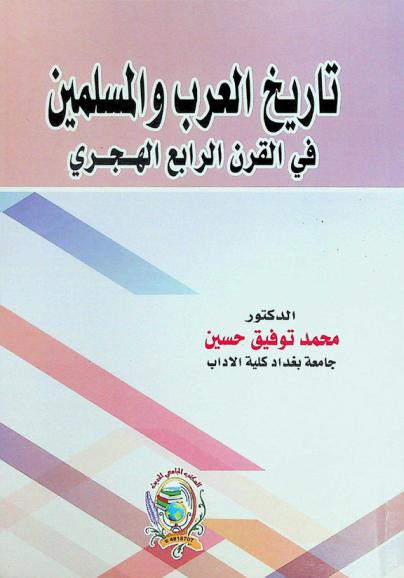
تاريخ العرب والمسلمون في القرن الرابع الهجري
يتناول هذا الكتاب تاريخ العالم العربي والإسلامي في القرن الرابع الهجري، حيث شهدت الحضارة العربية ازدهارا وتطورا كبيرين مع تداخل الأحداث السياسية والاجتماعية والدينية. يستعرض الكتاب تحولات مركز الخلافة العباسية، وتراجع قوتها أمام الخلافة الأموية في الأندلس والخلافة الفاطمية في المغرب العربي، إلى جانب صعود الدولة السامانية والدولة الغزنوية ودولة بني بويه وغيرها من الإمارات العربية المستقلة. كما يعرض تحركات القبائل العربية التي فرضت سلطتها على مناطق واسعة من الأرض العربية، ونشوء حركات محلية كحركة قارمط البحرين. ويبرز الكتاب تأثير الاحتلال البويهي في العراق وأهمية هذه المرحلة كأول مرة يسيطر فيها حكم أعجمي على عاصمة الخلافة، مما شكل منعطفا تاريخيا في تاريخ العرب والمسلمين بعد الإسلام. يتناول الكتاب مناطق مختلفة تشمل الأندلس، المغرب، مصر، بلاد الشام، المشرق، بلاد الديلم، وطبرستان، ليقدم رؤية شاملة ومتكاملة عن هذا العصر الحيوي.
BOOK

Efficient Arsenic Metabolism — The AS3MT Haplotype Is Associated with DNA Methylation and Expression of Multiple Genes Around AS3MT
Arsenic is a very potent toxicant. One major susceptibility factor for arsenic-related toxicity is the efficiency of arsenic metabolism. The efficiency, in turn, is associated with non-coding single nucleotide polymorphisms (SNPs) in the arsenic methyltransferase AS3MT on chromosome 10q24. However, the mechanism of action for these SNPs is not yet clarified. Here, we assessed the influence of genetic variation in AS3MT on DNA methylation and gene expression within 10q24, in people exposed to arsenic in drinking water. DNA was extracted from peripheral blood from women in the Argentinean Andes (N = 103) and from cord blood from new-borns in Bangladesh (N = 127). AS3MT SNPs were analyzed with Sequenom or Taqman assays. Whole genome epigenetic analysis with Infinium HumanMethylation450 BeadChip was performed on bisulphite-treated DNA. Whole genome gene expression analysis was performed with Illumina DirectHyb HumanHT-12 v4.0 on RNA from peripheral blood. Arsenic exposure was assessed by HPLC-ICPMS. In the Argentinean women, the major AS3MT haplotype, associated with more efficient arsenic metabolism, showed increased methylation of AS3MT (p = 10(-6)) and also differential methylation of several other genes within about 800 kilobasepairs: CNNM2 (p<10(-16)), NT5C2 (p<10(-16)), C10orf26 (p = 10(-8)), USMG5 (p = 10(-5)), TRIM8 (p = 10(-4)), and CALHM2 (p = 0.038) (adjusted for multiple comparisons). Similar, but weaker, associations between AS3MT haplotype and DNA methylation in 10q24 were observed in cord blood (Bangladesh). The haplotype-associated altered CpG methylation was correlated with reduced expression of AS3MT and CNNM2 (r(s) = -0.22 to -0.54), and with increased expression of NT5C2 and USMG5 (r(s) = 0.25 to 0.58). Taking other possibly influential variables into account in multivariable linear models did only to a minor extent alter the strength of the associations. In conclusion, the AS3MT haplotype status strongly predicted DNA methylation and gene expression of AS3MT as well as several genes in 10q24. This raises the possibility that several genes in this region are important for arsenic metabolism.
Journal Article


Increased thermal stability of FGF10 leads to ectopic signaling during development
Fibroblast growth factors (FGFs) control organ morphogenesis during development as well as tissue homeostasis and repair in the adult organism. Despite their importance, many mechanisms that regulate FGF function are still poorly understood. Interestingly, the thermodynamic stability of 22 mammalian FGFs varies widely, with some FGFs remaining stable at body temperature for more than 24 h, while others lose their activity within minutes. How thermodynamic stability contributes to the function of FGFs during development remains unknown. Here we show that FGF10, an important limb and lung morphogen, exists as an intrinsically unstable protein that is prone to unfolding and is rapidly inactivated at 37 °C. Using rationally driven directed mutagenesis, we have developed several highly stable (STAB) FGF10 variants with a melting temperature of over 19 °C more than that of wildtype FGF10. In cellular assays in vitro, the FGF10-STABs did not differ from wildtype FGF10 in terms of binding to FGF receptors, activation of downstream FGF receptor signaling in cells, and induction of gene expression. In mouse embryonal lung explants, FGF10-STABs, but not wildtype FGF10, suppressed branching, resulting in increased alveolarization and expansion of epithelial tissue. Similarly, FGF10-STAB1, but not FGF10 wildtype, inhibited the growth of mouse embryonic tibias and markedly altered limb morphogenesis when implanted into chicken limb buds, collectively demonstrating that thermal instability should be considered an important regulator of FGF function that prevents ectopic signaling. Furthermore, we show enhanced differentiation of human iPSC-derived lung organoids and improved regeneration in ex vivo lung injury models mediated by FGF10-STABs, suggesting an application in cell therapy.
Journal Article