
Catalogue Search | MBRL


Are you sure you want to remove the book from the shelf?

{{itemTitle}}
140
result(s) for
"1327"
Sort by:


Structure and Distribution of an Unrecognized Interstitium in Human Tissues
Confocal laser endomicroscopy (pCLE) provides real-time histologic imaging of human tissues at a depth of 60–70 μm during endoscopy. pCLE of the extrahepatic bile duct after fluorescein injection demonstrated a reticular pattern within fluorescein-filled sinuses that had no known anatomical correlate. Freezing biopsy tissue before fixation preserved the anatomy of this structure, demonstrating that it is part of the submucosa and a previously unappreciated fluid-filled interstitial space, draining to lymph nodes and supported by a complex network of thick collagen bundles. These bundles are intermittently lined on one side by fibroblast-like cells that stain with endothelial markers and vimentin, although there is a highly unusual and extensive unlined interface between the matrix proteins of the bundles and the surrounding fluid. We observed similar structures in numerous tissues that are subject to intermittent or rhythmic compression, including the submucosae of the entire gastrointestinal tract and urinary bladder, the dermis, the peri-bronchial and peri-arterial soft tissues, and fascia. These anatomic structures may be important in cancer metastasis, edema, fibrosis, and mechanical functioning of many or all tissues and organs. In sum, we describe the anatomy and histology of a previously unrecognized, though widespread, macroscopic, fluid-filled space within and between tissues, a novel expansion and specification of the concept of the human interstitium.
Journal Article

إدوارد الثاني : مسرحية شعرية
مسرحية شعرية من روائع المسرح الإليزابيثي كتبها \"كريستوفر مارلو\" وهو من أهم شعراء المسرح الإنجليزي، وهي معالجة مسرحية لثلاثية إيسخيلوس أوريستييا التي تحكي عن الأمير الذي قتل أمه وعشيقها اللذين تآمرا على قتل أبيه ويتميز مسرح \"مارلو\" بالحبكة المسرحية المشوقة والحوار البناء والتراكيب اللغوية المتنوعة والصور الفنية البليغة والإيقاعات الشعرية الموسيقية والبساطة في التعبير والعمق في التفكير واتساع الرؤية والمعالجات الأسطورية الرائعة غير المسبوقة.
BOOK
Transpapillary tissue sampling of biliary strictures: balloon dilatation prior to forceps biopsy improves sensitivity and accuracy
The early and definitive diagnosis of malignant bile duct stenoses is essential for a timely and adequate therapy. However, tissue sampling with transpapillary brush cytology (BC) or forceps biopsy (FB) remains challenging. With this study, we aimed to compare the effectiveness and safety of different tissue sampling modalities (BC, FB without/after previous balloon dilatation). Standardized database research identified all patients, who underwent endoscopic retrograde cholangiography with BC and/or FB for indeterminate bile duct stenosis between January 2010 and April 2018 and with a definitive diagnosis. 218 patients were enrolled (149 cases with malignant and 69 with benign disease). FB had a significant higher sensitivity than BC (43% vs. 16%, p < 0.01). Prior balloon dilatation of the stenosis improved the sensitivity of FB from 41 to 71% (p = 0.03), the NPV from 36 to 81% (p < 0.01) and the accuracy from 55 to 87% (p < 0.01). The complication rates did not differ significantly between the modalities. In our center FB turned out to be the diagnostically more effective procedure. Balloon dilatation of the stenosis before FB had a significant diagnostic benefit and was not associated with a higher complication rate.
Journal Article

Paracrine cellular senescence exacerbates biliary injury and impairs regeneration
Cellular senescence is a mechanism that provides an irreversible barrier to cell cycle progression to prevent undesired proliferation. However, under pathological circumstances, senescence can adversely affect organ function, viability and regeneration. We have developed a mouse model of biliary senescence, based on the conditional deletion of Mdm2 in bile ducts under the control of the Krt19 promoter, that exhibits features of biliary disease. Here we report that senescent cholangiocytes induce profound alterations in the cellular and signalling microenvironment, with recruitment of myofibroblasts and macrophages causing collagen deposition, TGFβ production and induction of senescence in surrounding cholangiocytes and hepatocytes. Finally, we study how inhibition of TGFβ-signalling disrupts the transmission of senescence and restores liver function. We identify cellular senescence as a detrimental mechanism in the development of biliary injury. Our results identify TGFβ as a potential therapeutic target to limit senescence-dependent aggravation in human cholangiopathies.
Senescence has been suggested as causing biliary cholangiopathies but how this is regulated is unclear. Here, the authors generate a mouse model of biliary senescence by deleting Mdm2 in bile ducts and show that inhibiting TGFβ limits senescence-dependent aggravation of cholangiopathies.
Journal Article

The apothecary rose
In the year of our Lord 1363, two suspicious deaths in the infirmary of St. Mary's Abbey catch the attention of the powerful John Thoresby, Lord Chancellor of England and Archbishop of York. One victim is a pilgrim, while the second is Thoresby's ne'er-do-well ward, both apparently poisoned by a physic supplied by Master Apothecary Nicholas Wilton. In the wake of these deaths, the archbishop dispatches one-eyed spy Owen Archer to York to find the murderer. Under the guise of a disillusioned soldier keen to make a fresh start, Owen insinuates himself into Wilton's apothecary as an apprentice. But he finds Wilton bedridden, with the shop being run by his lovely, enigmatic young wife, Lucie. As Owen unravels a tangled history of scandal and tragedy, he discovers at its center a desperate, forbidden love twisted over time into obsession. And the woman he has come to love is his prime suspect.
Book
EUS-guided biliary drainage versus ERCP for first-line palliation of malignant distal biliary obstruction: A systematic review and meta-analysis
Endoscopic retrograde cholangiopancreatography (ERCP) with transpapillary metal stenting is the standard palliation method for malignant distal biliary obstruction (MDBO); however, post-ERCP pancreatitis are not uncommon. Endoscopic ultrasonography-guided biliary drainage (EUS-BD) with transmural metal stenting has emerged as an option for primary palliation of MDBO. We compared the efficacy and safety of these procedures as first-line MDBO treatment. We searched for relevant English-language articles in PubMed, Embase, and Cochrane databases. The outcomes of interest were technical success, clinical success, adverse events, stent patency, reintervention rates, and procedure time. Subgroup analysis was performed for patients without duodenal invasion (eg, endoscopically accessible papilla; EUS-choledochoduodenostomy [CDS] vs. ERCP). Ten studies (3 randomized trials and 7 retrospective studies) with 756 patients were included. The cumulative technical and clinical success rates were high for both procedures (EUS-BD: 94.8% [294/310] and 93.8% [286/305], ERCP: 96.5% [386/400] and 95.7% [377/394]). The cumulative adverse event rates were 16.3% (54/331) for EUS-BD and 18.3% (78/425) for ERCP. In subgroup analysis for patients without duodenal invasion, EUS-CDS showed similar cumulative technical and clinical success rate with ERCP (technical success rate, EUS-CDS vs. ERCP: 94.2% [146/155] vs. 97.8% [237/242]; clinical success rate, EUS-CDS vs. ERCP: 94.2% [145/154] vs. 93.0% [225/242]). The cumulative rate of adverse events for EUS-CDS and ERCP was also comparable (15.5% [24/155] for EUS-CDS and 18.6% [45/242] for ERCP). As first-line palliation of MDBO, EUS-BD was similar to ERCP in technical and clinical success and safety; however, larger randomized trials comparing EUS-CDS and ERCP in this setting with endoscopically accessible papilla may be required.
Journal Article
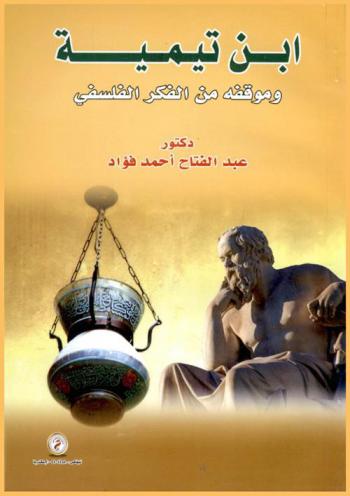
ابن تيمية وموقفه من الفكر الفلسفي
يتضمن هذا الكتاب التعريف بشيخ الإسلام ابن تيمية وأعماله وموقفه من الفكر الفلسفي الذي اشتغلت به بعض الطوائف الإسلامية وعلى وجه التحديد المتكلمة من معتزلة وأشعرية وشيعة وفلاسفة كالفارابي وابن سينا وابن رشد وصوفية من الزهاد الأوائل ومن تلاهم كالحارث المحاسبي والغزالي ومتفلسفتهم كابن عربي وابن سبعين ويبين الكتاب أن ابن تيمية كان غيورا على العقيدة وذا روح نقدية عميقة ومنصفا لخصومه.
BOOK

The Self-Emptying Subject
The result is an elaboration of a theory of ethics different from the two dominant modern conceptions: Foucault's ethics of the self and Levinas's ethics of the other.
Against the two dominant ethical paradigms of continental philosophy-Emmanuel Levinas's ethics of the Other and Michel Foucault's ethics of self-cultivation-The Self-Emptying Subjecttheorizes an ethics of self-emptying, orkenosis, that reveals the immanence of an impersonal and dispossessed life \"without a why.\" Rather than aligning immanence with the enclosures of the subject,The Self-Emptying Subjectengages the history of Christian mystical theology, modern philosophy, and contemporary theories of the subject to rethink immanence as what precedes and exceeds the very difference between the (human) self and the (divine) other, between the subject and transcendence. By arguing that transcendence operates and subjects life in secular no less than in religious domains, this book challenges the dominant distribution of concepts in contemporary theoretical discourse, which insists on associating transcendence exclusively with religion and theology and immanence exclusively with modern secularity and philosophy.
The Self-Emptying Subjectargues that it is important to resist framing the relationship between medieval theology and modern philosophy as a transition from the affirmation of divine transcendence to the establishment of autonomous subjects. Through an engagement with Meister Eckhart, G.W.F. Hegel, and Georges Bataille, it uncovers a medieval theological discourse that rejects the primacy of pious subjects and the transcendence of God (Eckhart); retrieves a modern philosophical discourse that critiques the creation of self-standing subjects through a speculative re-writing of the concepts of Christian theology (Hegel); and explores a discursive site that demonstrates the subjecting effects of transcendence across theological and philosophical operations and archives (Bataille). Taken together, these interpretations suggest that if we suspend the antagonistic relationship between theological and philosophical discourses, and decenter our periodizing assumptions and practices, we might encounter a yet unmapped theoretical fecundity of self-emptying that frees life from transcendent powers that incessantly subject it for their own ends.
Dubilet is a very lucid writer who does an excellent job of explaining philosophically sophisticated material without oversimplifying.Recovers a major but neglected concept drawn from Paul's letters, that underlies theories of subjectivity across a wide range of Western thought, from medieval mysticism to Hegel, to Bataille, confounding the conventional religious/secular divide.
eBook