
Catalogue Search | MBRL


Are you sure you want to remove the book from the shelf?

{{itemTitle}}
74
result(s) for
"1492-1648"
Sort by:

The Thirty Years War : Europe's tragedy
A deadly continental struggle, the Thirty Years War devastated seventeenth-century Europe, killing nearly a quarter of all Germans and laying waste to towns and countryside alike. In a major reassessment, Wilson argues that religion was not the catalyst, but one element in a lethal stew of political, social, and dynastic forces that fed the conflict--a conflict that ultimately transformed the map of the modern world.
Book

Spain, Europe and the Wider World 1500-1800
When J. H. Elliott publishedSpain and Its World, 1500-1700some twenty years ago, one of many enthusiasts declared, \"For anyone interested in the history of empire, of Europe and of Spain, here is a book to keep within reach, to read, to study and to enjoy\" (Times Literary Supplement). Since then Elliott has continued to explore the history of Spain and the Hispanic world with originality and insight, producing some of the most influential work in the field. In this new volume he gathers writings that reflect his recent research and thinking on politics, art, culture, and ideas in Europe and the colonial worlds between 1500 and 1800.
The volume includes fourteen essays, lectures, and articles of remarkable breadth and freshness, written with Elliott's characteristic brio. It includes an unpublished lecture in honor of the late Hugh Trevor-Roper. Organized around three themes-early modern Europe, European overseas expansion, and the works and historical context of El Greco, Velázquez, Rubens, and Van Dyck-the book offers a rich survey of the themes at the heart of Elliott's interests throughout a career distinguished by excellence and innovation.
eBook


The politics of female households : ladies-in-waiting across early modern Europe
The Politics of Female Households is the first collection that seeks to integrate ladies-in-waiting into the master narrative of early modern court studies. Presenting evidence and analysis of the multifarious ways in which 'women above stairs' shaped the European courts of the sixteenth and seventeenth centuries, it argues for a re-assessment of their political influence. The cultural agency of ladies-in-waiting is viewed in the reflection of portraiture, pamphlets and masques: their political dealings and patronage are revealed through analysis of letters, family networks, career patterns, gift exchange and household structures, as well as their activities in the fields of intelligence-gathering and espionage.By concentrating on a previously neglected area of female agency, this collection demonstrates clearly that the political climate of Europe was often shaped outside the male-dominated institutions of government and administration.Contributors include: Helen Graham-Matheson, Hannah Leah Crummé, Katrin Keller, Vanessa de Cruz, Birgit Houben, Dries Raeymaekers, Janet Ravenscroft, Una McIlvenna, Rosalind K. Marshall, Oliver Mallick, Cynthia Fry, Nadine Akkerman, Sara J. Wolfson, Fabian Persson, and Jeroen Duindam.
eBook

A sourcebook of early modern European history : life, death, and everything in between
\"A Sourcebook of Early Modern European History not only provides instructors of early modern European history with primary sources of a manageable length and translated into English, it also provides students with a concise explanation of their context and meaning.It is ideal for students of early modern history, and of early modern Europe in particular\"-- Provided by publisher.
Book
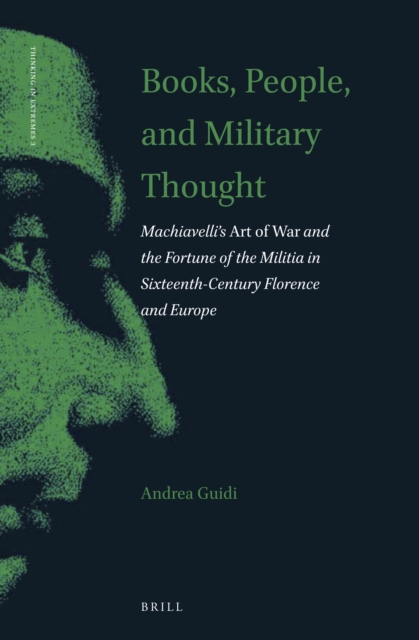
Books, people, and military thought : Machiavelli's Art of War and the fortune of the militia in sixteenth-century Florence and Europe
Machiavelli's experience in organizing a Florentine militia shaped the composition of his Art of War (1521), a book that is now less well known than The Prince, but that had a huge impact on sixteenth-century cultures of warfare.
eBook

The Crusades and the Expansion of Catholic Christendom, 1000-1714
The Crusades and the Expansion of Catholic Christendom, 1000-1714 is a fascinating and accessible survey that places the medieval Crusades in their European context, and examines, for the first time, their impact on European expansion.
Taking a unique approach that focuses on the motivation behind the Crusades, John France chronologically examines the whole crusading movement, from the development of a ‘crusading impulse’ in the eleventh century through to an examination of the relationship between the Crusades and the imperialist imperatives of the early modern period.
France provides a detailed examination of the first Crusade, the expansion and climax of crusading during the twelfth and thirteenth centuries and the failure and fragmentation of such practices in the fourteenth and fifteenth centuries.
Concluding with an assessment of the influence of the Crusades across history, and replete with illustrations, maps, timelines, guides for further reading, and a detailed list of rulers across Europe and the Muslim world, this study provides students with an essential guide to a central aspect of medieval history.
John France is Professor of History and Dean of the Faculty of Arts and Social Sciences at the University of Wales, Swansea. His previous publications include Western Warfare in the Age of the Crusades, 1000-1300 (1999).
\"A study that is both wide ranging and refreshingly insightful, which pulls together historical episodes that are often accorded insufficient attention and traces the fortunes of a developing political matrix in which piety and greed, loyalty and aggression, self-interest and faith, went hand in hand.\" - Professor Peter Edbury, Cardiff University
eBook

Horrible jobs of the Renaissance
Presents several of the most dangerous, dirty, and otherwise unpleasant jobs done during the Renaissance, including bilge boys, woad dyers, artists' assistants, and grooms.
Book

Fictions of Embassy
Historians of early modern Europe have long stressed how new practices of diplomacy that emerged during the period transformed European politics. Fictions of Embassy is the first book to examine the cultural implications of the rise of modern diplomacy. Ranging across two and a half centuries and half a dozen languages, Timothy Hampton opens a new perspective on the intersection of literature and politics at the dawn of modernity. Hampton argues that literary texts-tragedies, epics, essays-use scenes of diplomatic negotiation to explore the relationship between politics and aesthetics, between the world of political rhetoric and the dynamics of literary form. The diplomatic encounter is a scene of cultural exchange and linguistic negotiation. Literary depictions of diplomacy offer occasions for reflection on the definition of genre, on the power of representation, on the limits of rhetoric, on the nature of fiction making itself. Conversely, discussions of diplomacy by jurists, political philosophers, and ambassadors deploy the tools of literary tradition to articulate new theories of political action. Hampton addresses these topics through a discussion of the major diplomatic writers between 1450 and 1700-Machiavelli, Grotius, Gentili, Guicciardini-and through detailed readings of literary works that address the same topics-works by Shakespeare, More, Rabelais, Montaigne, Tasso, Corneille, Racine, and Camoens. He demonstrates that the issues raised by diplomatic theorists helped shape the emergence of new literary forms, and that literature provides a lens through which we can learn to read the languages of diplomacy.
eBook