
Catalogue Search | MBRL


Are you sure you want to remove the book from the shelf?

{{itemTitle}}
490
result(s) for
"1544-1595"
Sort by:

The Quest for Epic
Translated here for the first time into English, Sergio Zatti'sThe Quest for Epicis a selection of studies on the two major poets of the Italian Renaissance, Ludovico Ariosto and Torquato Tasso, by one of the most important literary critics writing in Italy today. An original and challenging work,The Quest for Epicdocuments the development of Italian narrative from the chivalric romance at the end of the fifteenth century to the genre of epic in the sixteenth century.
Zatti focuses on Ariosto'sOrlando Furioso, written in the early 1500s, and progresses to Tasso'sJerusalem Delivered, written at the end of the century, but also touches briefly on Boiardo, Ariosto's great predecessor at the Estense court in Ferrara, as well as on Pulci, Trissino, and many other Italian writers of the period. Zatti highlights the critical debates over narrative form in the sixteenth century that become signposts on the way to literary modernity and the eventual rise of the modern novel. Albert Russell Ascoli's introduction provides context by mapping Zatti's criticism and situating it among Italian and Anglo-American literary critical studies, making a case for the contribution this book will have for English-language readers.
eBook
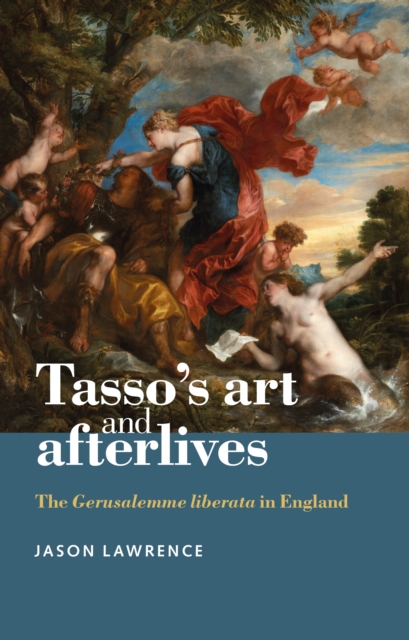
Tasso's art and afterlives
This interdisciplinary study examines the literary, artistic and
biographical afterlives in England of the great sixteenth-century
Italian poet Torquato Tasso, from before his death to the end of
the nineteenth century. Focusing on the lasting impact of his once
famous poem Gerusalemme liberata across a spectrum of
arts, it aims to stimulate a revival of interest in a neglected
poetic masterpiece and its author, some fifty years after the last
account of the poet in English. The influence of Tasso's poem is
traced and analysed in the literary works of Spenser, Milton,
Shakespeare and Daniel, and consideration is also given to its
impact on the visual and musical arts in England, in works by Van
Dyck, Poussin and Handel. A second strand focuses on English
responses to Tasso's troubled life in the eighteenth and nineteenth
centuries, exemplified in Byron's memorable impersonation of the
poet's voice in The Lament of Tasso .
eBook

Letter to the Editor
Perhaps this is what the Rolling Stones enacted by Sympathy for the Devil inspired by Bulgakov's (not Nabokov's!) novel The Master and Margarita. From the classical period to modern pop-culture, and in line with Freud's concept of the death drive, we seem to be confronted with the question of to what extent human striving acts out destructivity or creatively transforms destructivity.
Journal Article

The Romance Epics of Boiardo, Ariosto, and Tasso
InThe Romance Epics of Boiardo, Ariosto, and Tasso, Jo Ann Cavallo attempts a new interpretation of the history of the renaissance romance epic in northern Italy, focusing on the period's three major chivalric poets. Cavallo challenges previous critical assumptions about the trajectory of the romance genre, especially regarding questions of creative imitation, allegory, ideology, and political engagement.
In tracing the development of the romance epic against the historical context of the Ferrarese court and the Italian peninsula, Cavallo moves from a politically engaged Boiardo, whose poem promotes the tenets of humanism, to an individualistic Tasso, who opposed the repressive aspects of the counter-reformation culture he is often thought to represent. Ariosto is read from the vantage of his predecessor Boiardo, and Cavallo describes his cynicism and later mellowing attitude toward the real-world relevance of his and Boiardo's fiction.The Romance Epics of Boiardo, Ariosto, and Tassois the first critical study to bring together the three poets in a coherent vision that maps changes while uncovering continuities.
eBook

Recensione.“Breve storia della medicina”
Sì, perché questo ebreo polacco vissuto tra il 1920 e il 2019 fu in prevalenza uomo di lettere e di storia, insegnò letteratura francese alla Johns Hopkins University di Baltimora, a Basilea e a Ginevra. «Senza dubbio […] è stato, durante tutto il corso della sua vita, e ad ogni livello, più che vicino alla medicina – scrive Vincent Barras nelle prime pagine del volume – e i suoi titoli in questo ambito sono tutt’altro che modesti». Questo il quadro del volume. Signori, è la nascita della medicina, della visita medica. «Non si ripeterà mai abbastanza – scrive l’autore – quanto il progresso della medicina sia dipeso dallo sviluppo delle scienza della natura […]» Il libro, in un certo senso, è “lo Starobinski dei non lettori di Starobinski”: «Non sono uno specialista in nulla – si giustificava l’autore – o meglio cerco di essere uno specialista nel non specialismo, nell’allargare il contesto verso la letteratura, verso campi diversi dalla conoscenza medica, verso il panorama di sfondo offerto dal passato».
Journal Article

La disperazione di giuda: suggestioni epico-cavalleresche in un poemetto di Giulio Liliano falsamente attribuito a Torquato Tasso
Nel 1621, il libraio veneziano Giacomo Scaglia ebbe fra le mani una copia anonima del manoscritto di Giulio Liliani Impertinenza di Giuda in ottava rima, poemetto di novanta stanze, stampato nel 1601; egli lo attribuì erroneamente a Torquato Tasso e come tale lo fece pubblicare da Francesco Baba nel 1627. L’importanza di un poemetto che deve la sua ampia diffusione alla falsa paternità tassiana è per noi legata all’eccezionalità di un’opera interamente incentrata sulla figura di Giuda. La risemantizzazione del personaggio neotestamentario, inviso all’intransigenza dogmatica della Controriforma al punto da essere accostato a Lutero (Aretino, Sarpi), è compiuta da Liliani mediante il ricorso al registro epico. L’episodio di Giuda che si introduce in una selva asettica e priva di connotati geografici, tormentato dalle furie e dal rimorso, è chiaramente costruito in suggestiva antitesi alla follia del paladino Orlando per il quale è prevista una riabilitazione che a Giuda però sarà negata.
Journal Article

Donizetti's Self-Borrowings as an Artistic Practice
Gaetano Donizetti's versatile production unfolded over three decades (1818–43) and was staged in the foremost Italian and European theatres. In this article I question his self-borrowing as a chiefly economic practice, offering novel keys to reading his re-use of existing materials. In the introductory section, I offer a preliminary discussion of the coeval discourse on Donizetti's self-imitation as it surfaces in the press, which appears to follow in the footsteps of that on Rossini's. I then look at his self-borrowings across genres, dwelling on the ways in which he re-functionalized earlier serious passages within comic frames, almost inevitably to achieve a parodic effect. After discussing the links between parody and diegetic music – one of his favourite contexts for employing older materials – I turn to Donizetti's serious production, advancing the hypothesis that his recourse to self-borrowing could take on semantic connotations. In so doing, in the second part of the article I focus on selected case studies grouped into three thematic areas, which – similarly to, and occasionally in connection with diegetic music – all involve the suspension of a character's habitual idioms: deception, rituals and madness. The article includes extended examples from the composer's Linda di Chamounix (Vienna, Kärntnertortheater, 1842), Sancia di Castiglia (Naples, Teatro San Carlo, 1832), Il paria (Naples, Teatro San Carlo, 1829), Marino Faliero (Paris, Théâtre-Italien, 1835), Enrico di Borgogna (Venice, Teatro San Luca, 1818), and Anna Bolena (Milan, Teatro Carcano, 1830). My ultimate concern is to demonstrate that Donizetti's use of self-borrowing could perform a dramatic function, deliberately connoting the altered modes of expression of the characters to which the earlier piece is associated.
Journal Article

ADDENDA AGLI AUTOGRAFI DI TORQUATO TASSO: DUE DOCUMENTI DALL'ARCHIVIO DRAGONETTI-DE TORRES
L'articolo presenta due documenti autografidi Torquato Tasso, sfuggiti al recente censimento dei documenti scritti di mano proprio dal poeta risalente al 2022, precisandone la tradizione manoscritta e a stampa. A margine della notizia del ritrovamento, lo studio dei due autografioffre l'occasione di approfondire le dinamiche relazionali e contestuali in cui si calano le lettere, aprendo uno scorcio sulle problematiche di natura filologica e critica che pongono i documenti epistolari di Tasso e rendono precaria la datata sistemazione testuale e cronologica dell'edizione delle lettere curate da Cesare Guasti (1852-1855).
Journal Article
PER LE RIME DI TORQUATO TASSO: UNO SCONOSCIUTO MANOSCRITTO AMBROSIANO (Y 241 SUP.)
La segnalazione da notizia di un nuovo manoscritto di Rime tassiane, conservato presso la Veneranda Biblioteca Ambrosiana con segnatura Y 241 sup. Il codice, estraneo alla collezione di Pinelli, contiene una raccolta di versi cinquecenteschi, tra cui spiccano alcuni componimenti di Tasso, perlopiu sonetti. Laccordo con altri testimoni, in particolare con il postillato aldino alla stampa di Rime del 1581, riconduce i testi a una fase redazionale primitiva, facendo del manoscritto un testimone interessante per lo studio della tradizione testuale delle Rime.
Journal Article

Paradisi Pericolosi: I Giardini di Armida Come Spazi Morali e teatrali Nella Gerusalemme liberata di Tasso e Nell’ Armide di Lully
This thesis aims to examine the depiction, influences on, and impact of the literary garden space on an audience’s lasting reception of the women who inhabit it. The argument takes up the story of Armida and her gardens in Torquato Tasso's \"Gerusalemme liberata\" as a particularly fitting case study, given the work's position as a pinnacle of Renaissance epic. Of the list of epic women like her (among them Circe, Calypso, and Alcina), Armida is the most consistently identified with botanical spaces. As such, Tasso describes Armida’s various gardens extensively, providing us with a great deal of material to analyze in light of the real-life Medieval and Renaissance garden culture in which the poet and his readers operated. Further, the immediate popularity of Tasso’s masterwork and its dispersion through Europe has provided us with a number of artistic (painting, musical, and theatrical) examples of how audiences and readers actually perceived and interpreted Armida and her gardens. Considering this, the thesis moves on to analyze Jean-Baptiste Lully's 1686 opera, \"Armide\", as an example of how Tasso's Armida was received and reinterpreted over time, taking particular interest in Lully's careful use of tonality to depict the enchanted environments Armide creates and inhabits— or fails to inhabit.
Dissertation