
Catalogue Search | MBRL


Are you sure you want to remove the book from the shelf?

{{itemTitle}}
75
result(s) for
"1590-1657"
Sort by:

New world, known world : shaping knowledge in early Anglo-American writing
New World, Known World examines the works of four writers closely associated with the early period of English colonization, from 1624 to 1649: John Smith's Generall Historie of Virginia, William Bradford's Of Plymouth Plantation, Thomas Morton's New English Canaan, and Roger Williams's A Key into the Language of America (in conjunction with another of Williams's major works, The Bloudy Tenent of Persecution). David Read addresses these texts as examples of what he refers to as \"individual knowledge projects\"- the writers' attempts to shape raw information and experience into patterns and narratives that can be compared with and assessed against others from a given society's fund of accepted knowledge.
eBook
Mayflower Compact
The \"Mayflower Compact was a written agreement for self-government signed by 41 adult male members of the Plymouth Colony.\" (World Book Student) Read more about the Mayflower Compact.
Reference
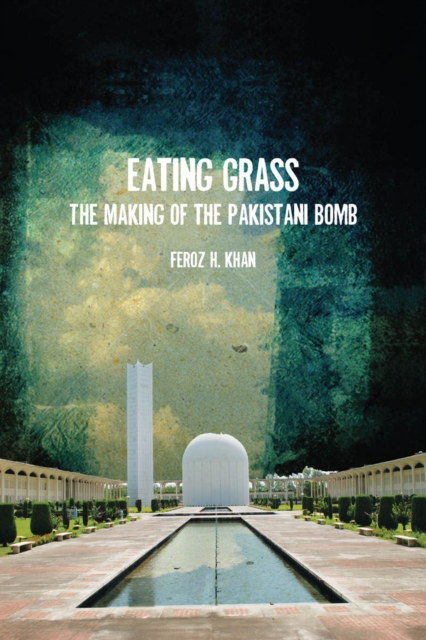
Eating grass : the making of the Pakistani bomb
The history of Pakistan's nuclear program is the history of Pakistan. Fascinated with the new nuclear science, the young nation's leaders launched a nuclear energy program in 1956 and consciously interwove nuclear developments into the broader narrative of Pakistani nationalism. Then, impelled first by the 1965 and 1971 India-Pakistan Wars, and more urgently by India's first nuclear weapon test in 1974, Pakistani senior officials tapped into the country's pool of young nuclear scientists and engineers and molded them into a motivated cadre committed to building the 'ultimate weapon.' The tenacity of this group and the central place of its mission in Pakistan's national identity allowed the program to outlast the perennial political crises of the next 20 years, culminating in the test of a nuclear device in 1998. Written by a 30-year professional in the Pakistani Army who played a senior role formulating and advocating Pakistan's security policy on nuclear and conventional arms control, this book tells the compelling story of how and why Pakistan's government, scientists, and military, persevered in the face of a wide array of obstacles to acquire nuclear weapons. It lays out the conditions that sparked the shift from a peaceful quest to acquire nuclear energy into a full-fledged weapons program, details how the nuclear program was organized, reveals the role played by outside powers in nuclear decisions, and explains how Pakistani scientists overcome the many technical hurdles they encountered. Thanks to General Khan's unique insider perspective, it unveils and unravels the fascinating and turbulent interplay of personalities and organizations that took place and reveals how international opposition to the program only made it an even more significant issue of national resolve. Listen to a podcast of a related presentation by Feroz Khan at the Stanford Center for International Security and Cooperation at cisac.stanford.edu/events/recording/7458/2/765 [http://cisac.stanford.edu/events/recording/7458/2/765].
eBook

\As Dying, Yet Behold We Live\: Catastrophe and Interiority in Bradford's \Of Plymouth Plantation\
William Bradford, the most famous chronicler of colonial settlement, provides several moments in his history whereby a bodily un-settlement is the crucial vehicle through which coloniality emerges. His detailed annals trace the intricate workings of the twin hands Divine Regulation and Worldly Transaction as they shape the rise and fall of Plymouth Colony.
Journal Article

William Bradford: Plymouth Colony's Inspiration
\"William Bradford was the longest-serving and most well-known governor of the Plymouth Colony, one of Britain's earliest settlements in what is now the United States of America. A religious separatists like the other Pilgrims, Bradford served as Plymouth governor four different times, for a total of 30 years, and kept a record of the colony's goings-on that has been handed down as Of Plymouth Plantation.\" (Social Studies for Kids) Read more about the life and work of William Bradford.
Web Resource
The Mayflower Compact
\"The Mayflower Compact, thought to be one of the forerunners of the Constitution, was signed on November 11, 1620, by 41 men aboard the Mayflower, the ship that had brought the Pilgrims to America.\" (Social Studies for Kids) Read more about the creation and signing of this document.
Web Resource
Colonial America: Pilgrims of Plymouth Plantation
\"In 1620, another migration of English settlers reached the New World. They came to be called the 'Pilgrims.' It is a word used to describe anyone who travels to a place for reasons of faith. And though those early English settlers never called themselves 'Pilgrims,' that’s what we call them now.\" (Colonial America and the Revolutionary War) Learn more about the pilgrims.
Journal Article