
Catalogue Search | MBRL


Are you sure you want to remove the book from the shelf?

{{itemTitle}}
10
result(s) for
"1730-1830"
Sort by:
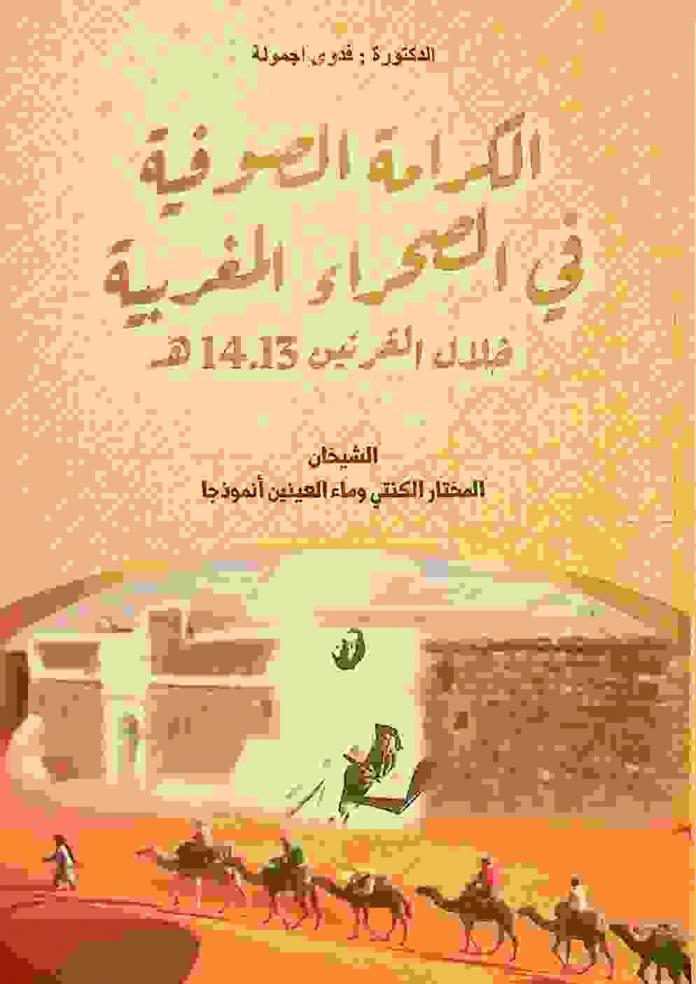
الكرامة الصوفية في الصحراء المغربية خلال القرنين 13-14 : الشيخان المختار الكنتي وماء العينين أنموذجا
في الكتاب قامت الكاتبة الدكتورة فدوى اجمولة بتوثيق ودراسة وتأريخ لحركة التصوف في الصحراء المغربية حيث وقفت على تراث وكرامة الشيخين والقطبين الشيخ سيدي المختار الكنتي والشيخ ماء العنين الذي كان مدفونا في بطون الكتب والأسفار التي دونت وقائع كرامات الشيخين. وأثارت الكاتبة الدكتورة فدوى اجمولة قضايا شائكة وذات إشكال في علم التصوف ألا وهي : \"الكرامة الصوفية وتجلياتها بالصحراء\" وقد كشفت عن الدلالات والأبعاد التي تحملها وتبعاتها وتشعباتها التي أدت إلى طروحات مشكلة كلما زاد البحث والتعمق. حيث إن الكرامة هي: أمر خارق للعادة يجريه الله تعالى على يد نبي أو رسول أو ولي، وليست الكرامة أخبار وخطب ولكنها حسب مفهومة الكاتبة : \"خطاب صوفي له خصوصيته وأثر كبير في الحركات الاجتماعية وفي التأثير على الحياة العامة والمشهد الثقافي وإيجاد نماذج نصية حية بجماليات بسيطة معروفة وقد استنطقت الكاتبة النصوص وردتها إلى جذورها ومرجعيتها الصوفية من خلال منهج التحليل والدراسة القائم على إظهار وإيضاح الوظائف والدلالات والأبعاد مما نتج عنه تفكيك وسبر بنية الكرامة.
BOOK

Safety at Sea during the Industrial Revolution
Shipping, central to the rise of the Atlantic economies, was an extremely hazardous activity. Between the 1780s and 1820s, a safety revolution occurred that saw shipping losses and insurance rates on oceanic routes almost halved thanks to steady improvements in shipbuilding and navigation. Copper sheathing, iron reinforcing, and flush decks were the major innovations in shipbuilding. Navigation improved, not through chronometers, which remained too expensive and unreliable for general use, but through radically improved charts, accessible manuals of basic navigational techniques, and improved shore-based navigational aids. “Curse thee, thou quadrant!” dashing it to the deck, “no longer will I guide my earthly way by thee; the level ship’s compass, and the level dead-reckoning, by log and by line; these shall conduct me, and show me my place on the sea.” Captain Ahab in Moby Dick, Ch. CXIII
Journal Article

Review of Elizabeth Eger (ed.), Bluestockings Displayed: Portraiture, Performance and Patronage, 1730-1830
Review of Elizabeth Eger's edited collection, Bluestockings Displayed: Portraiture, Performance and Patronage, 1730-1830 (Cambridge UP 2013).
Journal Article

The Cambridge Companion to British Theatre, 1730–1830
This Companion offers a wide-ranging and innovative guide to one of the most exciting and important periods in British theatrical history. The scope of the volume extends from the age of Garrick to the Romantic transformation of acting inaugurated by Edmund Kean. It brings together cutting-edge scholarship from leading international scholars in the long eighteenth century, offering lively and original insights into the world of the stage, its most influential playwrights and the professional lives of celebrated performers such as James Quin, George Anne Bellamy, John Philip Kemble, Dora Jordan, Fanny Abington and Sarah Siddons. The volume includes essential chapters about eighteenth-century acting, production and audiences, important surveys of key theatrical forms such as tragedy, comedy, melodrama and pantomime as well as a range of exciting thematic essays on subjects such as private theatricals, 'black' theatre and the representation of empire.
eBook

Disorderly Women in Eighteenth-Century London
This is the first full-length study of prostitution in London during the eighteenth and early nineteenth centuries. It is a compelling account, exposing the real lives of the capital's prostitutes, and also shedding light on London society as a whole, its policing systems and its attitudes towards the female urban poor. Drawing on the archives of London's parishes, jury records, reports from Southwark gaol as well as other sources which have been overlooked by historians, it provides a fascinating study for all those interested in Georgian society.
1. Introduction. 2. The Experience of Prostitution. 3. The Geography of Prostitution in London. 4. Prostitution and the Law. 5. Policing the Streets. 6. Policing Disorderly Houses. 7. Attitudes towards Prostitution. 8. Conclusion. Bibliography
\"This is an excellent book which would repay the attention of all social and cultural historians, and will remain the standard work on eighteenth century prostitution for the foreseeable future.\"
Albion
eBook

Selling beauty : cosmetics, commerce, and French society, 1750-1830
Rather than disappearing along with the Old Regime, the commerce of cosmetics, reimagined and redefined, flourished in the early 19th century, as political ideals and Enlightenment philosophies radically altered popular sentiment.
eBook

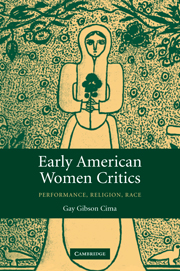
Early American Women Critics
Early American Women Critics demonstrates that performances of various kinds - religious, political and cultural - enabled women to enter the human rights debates that roiled the American colonies and young republic. Black and white women staked their claims on American citizenship through disparate performances of spirit possession, patriotism, poetic and theatrical production. They protected themselves within various shields which allowed them to speak openly while keeping the individual basis of their identities invisible. Cima shows that between the First and Second Great Religious Awakenings (1730s–1830s), women from West Africa, Europe, and various corners of the American colonies self-consciously adopted performance strategies that enabled them to critique American culture and establish their own diverse and contradictory claims on the body politic. This book restores the primacy of religious performances - Christian, Yoruban, Bantu and Muslim - to the study of early American cultural and political histories, revealing that religion and race are inseparable.
eBook

Way of death : merchant capitalism and the Angolan slave trade, 1730-1830
This acclaimed history of Portuguese and Brazilian slaving in the southern Atlantic is now available in paperback. With extraordinary skill, Joseph C.Miller explores the complex relationships among the separate economies of Africa, Europe, and the South Atlantic that collectively supported the slave trade.
eBook

Rates of Industrial Growth during the Industrial Revolution
Recent estimates by Crafts, Leybourne, and Mills suggest that the rate of growth of British industrial production per head did not accelerate until after 1815. This is consistent with Harley's 1982 estimates but conflicts with Craft's 1985 estimates which show a transition to faster per caput growth in the late eighteenth century. This article argues that both the Harley and the Crafts, Leybourne, and Mills estimates are likely to understate industrial growth before 1815. Crafts appears to be nearer the mark though his estimates also have serious weaknesses. A new index is calculated for the period 1730-1830. Like its predecessors, the index is conjectural and rests on a slight foundation.
Journal Article