
Catalogue Search | MBRL


Are you sure you want to remove the book from the shelf?

{{itemTitle}}
17
result(s) for
"1750-1815"
Sort by:


Nobility Lost
With Nobility Lost , Christian Ayne Crouch
offers a radical reconsideration of the significance of the Seven
Years' War for Atlantic history and memory. Deftly drawing on a
sweeping range of archival and literary sources, she has crafted a
compelling account of clashing martial cultures and in so doing,
has reinterpreted the war's legacy in indigenous consciousness as
well as its erasure from France's national and imperial
narratives. -Sophie White, author of Wild Frenchmen and
Frenchified Indians
Nobility Lost is a cultural history of
the Seven Years' War in French-claimed North America, focused on
the meanings of wartime violence and the profound impact of the
encounter between Canadian, Indian, and French cultures of war and
diplomacy. This narrative highlights the relationship between
events in France and events in America and frames them
dialogically, as the actors themselves experienced them at the
time. Christian Ayne Crouch examines how codes of martial valor
were enacted and challenged by metropolitan and colonial leaders to
consider how those acts affected French-Indian relations, the
culture of French military elites, ideas of male valor, and the
trajectory of French colonial enterprises afterwards, in the second
half of the eighteenth century. At Versailles, the conflict
pertaining to the means used to prosecute war in New France would
result in political and cultural crises over what constituted
legitimate violence in defense of the empire. These arguments
helped frame the basis for the formal French cession of its North
American claims to the British in the Treaty of Paris of 1763.
While the French regular army, the troupes de terre (a
late-arriving contingent to the conflict), framed warfare within
highly ritualized contexts and performances of royal and personal
honor that had evolved in Europe, the troupes de la marine
(colonial forces with economic stakes in New France) fought to
maintain colonial land and trade. A demographic disadvantage forced
marines and Canadian colonial officials to accommodate Indian
practices of gift giving and feasting in preparation for battle,
adopt irregular methods of violence, and often work in cooperation
with allied indigenous peoples, such as Abenakis, Hurons, and
Nipissings.
Drawing on Native and European perspectives, Crouch shows the
period of the Seven Years' War to be one of decisive transformation
for all American communities. Ultimately the augmented strife
between metropolitan and colonial elites over the aims and means of
warfare, Crouch argues, raised questions about the meaning and cost
of empire not just in North America but in the French Atlantic and,
later, resonated in France's approach to empire-building around the
globe. The French government examined the cause of the colonial
debacle in New France at a corruption trial in Paris (known as
l'affaire du Canada ), and assigned blame. Only colonial
officers were tried, and even those who were acquitted found
themselves shut out of participation in new imperial projects in
the Caribbean and in the Pacific.
By tracing the subsequent global circumnavigation of Louis
Antoine de Bougainville, a decorated veteran of the French
regulars, 1766-1769, Crouch shows how the lessons of New France
were assimilated and new colonial enterprises were constructed
based on a heightened jealousy of French honor and a corresponding
fear of its loss in engagement with Native enemies and allies.
Nobility Lost is a cultural history of the Seven Years'
War in French-claimed North America, focused on the meanings of
wartime violence and the profound impact of the encounter between
Canadian, Indian, and French cultures of war and diplomacy. This
narrative highlights the relationship between events in France and
events in America and frames them dialogically, as the actors
themselves experienced them at the time. Christian Ayne Crouch
examines how codes of martial valor were enacted and challenged by
metropolitan and colonial leaders to consider how those acts
affected French-Indian relations, the culture of French military
elites, ideas of male valor, and the trajectory of French colonial
enterprises afterwards, in the second half of the eighteenth
century. At Versailles, the conflict pertaining to the means used
to prosecute war in New France would result in political and
cultural crises over what constituted legitimate violence in
defense of the empire. These arguments helped frame the basis for
the formal French cession of its North American claims to the
British in the Treaty of Paris of 1763.While the French regular
army, the troupes de terre (a late-arriving contingent to
the conflict), framed warfare within highly ritualized contexts and
performances of royal and personal honor that had evolved in
Europe, the troupes de la marine (colonial forces with
economic stakes in New France) fought to maintain colonial land and
trade. A demographic disadvantage forced marines and Canadian
colonial officials to accommodate Indian practices of gift giving
and feasting in preparation for battle, adopt irregular methods of
violence, and often work in cooperation with allied indigenous
peoples, such as Abenakis, Hurons, and Nipissings.Drawing on Native
and European perspectives, Crouch shows the period of the Seven
Years' War to be one of decisive transformation for all American
communities. Ultimately the augmented strife between metropolitan
and colonial elites over the aims and means of warfare, Crouch
argues, raised questions about the meaning and cost of empire not
just in North America but in the French Atlantic and, later,
resonated in France's approach to empire-building around the globe.
The French government examined the cause of the colonial debacle in
New France at a corruption trial in Paris (known as l'affaire
du Canada ), and assigned blame. Only colonial officers were
tried, and even those who were acquitted found themselves shut out
of participation in new imperial projects in the Caribbean and in
the Pacific. By tracing the subsequent global circumnavigation of
Louis Antoine de Bougainville, a decorated veteran of the French
regulars, 1766-1769, Crouch shows how the lessons of New France
were assimilated and new colonial enterprises were constructed
based on a heightened jealousy of French honor and a corresponding
fear of its loss in engagement with Native enemies and allies.
eBook


The Twelve Months in the Second Year of the Republican Calendar, 1793-94
As part of a series of articles offering information on prints and drawings acquired by the Rijks Museum, these 11 engravings by Salvatore Tresca after Louis Lafitte are discussed. The Twelve Months in the Second Year of the Republican Calendar by Salvatore Tresca were made as illustrations for the Republican calendar, a replacement for the Gregorian calendar that was used from 1793 to 1806 and for a short period in 1871. The year was divided up differently and the months were given new names based on the French climate or associated with agriculture and horticulture. After the French Revolution, the Republicans wanted to turn their backs on the ancient regime. Imagery was consequently no longer dominated by religion and politics, but rather by nature as the symbol of the bright, harmonious future that the French people could look forward to under the new regime.
Journal Article

The Indian world of George Washington : the first President, the first Americans, and the birth of the nation
\"An authoritative, sweeping, and fresh new biography of the nation's first president, Colin G. Calloway's book reveals fully the dimensions and depths of George Washington's relations with the First Americans.\"--Provided by publisher.
BOOK
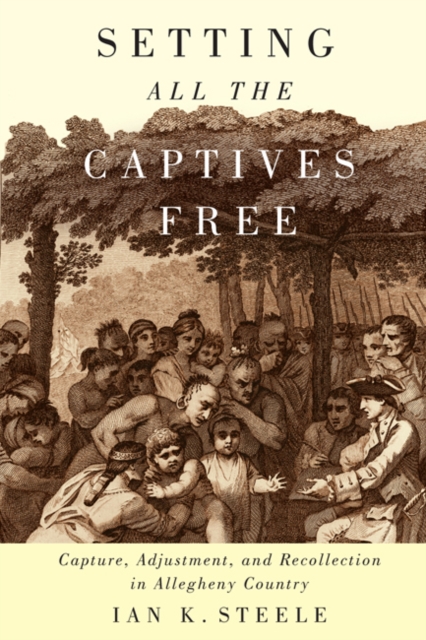
Setting All the Captives Free
Among the many upheavals in North America caused by the French and Indian War was a commonplace practice that affected the lives of thousands of men, women, and children: being taken captive by rival forces. Most previous studies of captivity in early America are content to generalize from a small selection of sources, often centuries apart. In Setting All the Captives Free, Ian Steele presents, from a mountain of data, the differences rather than generalities as well as how these differences show the variety of circumstances that affected captives’ experiences. The product of a herculean effort to identify and analyze the captives taken on the Allegheny frontier during the era of the French and Indian War, Setting All the Captives Free is the most complete study of this topic. Steele explores genuine, doctored, and fictitious accounts in an innovative challenge to many prevailing assumptions and arguments, revealing that Indians demonstrated humanity and compassion by continuing to take numerous captives when their opponents took none, by adopting and converting captives into kin during the war, and by returning captives even though doing so was a humiliating act that betrayed their societies' values. A fascinating and comprehensive work by an acclaimed scholar, Setting All the Captives Free takes the study of the French and Indian War in America to an exciting new level.
eBook

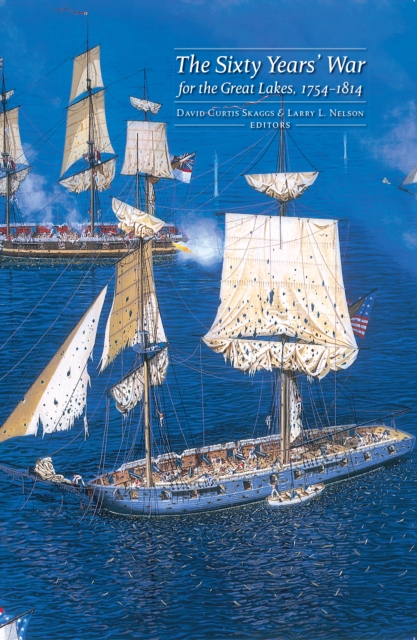
Sixty Years' War for the Great Lakes, 1754-1814
The Sixty Years' War for the Great Lakescontains twenty essays concerning not only military and naval operations, but also the political, economic, social, and cultural interactions of individuals and groups during the struggle to control the great freshwater lakes and rivers between the Ohio Valley and the Canadian Shield. Contributing scholars represent a wide variety of disciplines and institutional affiliations from the United States, Canada, and Great Britain.Collectively, these important essays delineate the common thread, weaving together the series of wars for the North American heartland that stretched from 1754 to 1814. The war for the Great Lakes was not merely a sideshow in a broader, worldwide struggle for empire, independence, self-determination, and territory. Rather, it was a single war, a regional conflict waged to establish hegemony within the area, forcing interactions that divided the Great Lakes nationally and ethnically for the two centuries that followed.
eBook

European and Native American Warfare 1675-1815
Challenging the historical tradition that has denigrated Indians as ‘savages’ and celebrated the triumph of European ‘civilization’, Armstrong Starkey presents military history as only one dimension of a more fundamental conflict of cultures, and re-examines the European invasion of North America in the 17 th and 18 th centuries. Combining the perspectives of ethno-history and military history, this book provides an evaluation of the evolution and influence of both Indian and European ways of war during the period. Significant conflicts are analysed including King Philip’s war in New England (1675-1676) notable due to the number of armed Indians, the American War of Independence, and the conquest of the old Northwest, 1783-1815.
eBook