
Catalogue Search | MBRL


Are you sure you want to remove the book from the shelf?

{{itemTitle}}
138
result(s) for
"1800-1859"
Sort by:


The Tie That Bound Us
John Brown was fiercely committed to the militant abolitionist cause, a crusade that culminated in Brown's raid on the Federal armory at Harpers Ferry in 1859 and his subsequent execution. Less well known is his devotion to his family, and they to him. Two of Brown's sons were killed at Harpers Ferry, but the commitment of his wife and daughters often goes unacknowledged. InThe Tie That Bound Us, Bonnie Laughlin-Schultz reveals for the first time the depth of the Brown women's involvement in his cause and their crucial roles in preserving and transforming his legacy after his death.
As detailed by Laughlin-Schultz, Brown's second wife Mary Ann Day Brown and his daughters Ruth Brown Thompson, Annie Brown Adams, Sarah Brown, and Ellen Brown Fablinger were in many ways the most ordinary of women, contending with chronic poverty and lives that were quite typical for poor, rural nineteenth-century women. However, they also lived extraordinary lives, crossing paths with such figures as Frederick Douglass and Lydia Maria Child and embracing an abolitionist moral code that sanctioned antislavery violence in place of the more typical female world of petitioning and pamphleteering.
In the aftermath of John Brown's raid at Harpers Ferry, the women of his family experienced a particular kind of celebrity among abolitionists and the American public. In their roles as what daughter Annie called \"relics\" of Brown's raid, they tested the limits of American memory of the Civil War, especially the war's most radical aim: securing racial equality. Because of their longevity (Annie, the last of Brown's daughters, died in 1926) and their position as symbols of the most radical form of abolitionist agitation, the story of the Brown women illuminates the changing nature of how Americans remembered Brown's raid, radical antislavery, and the causes and consequences of the Civil War.
eBook

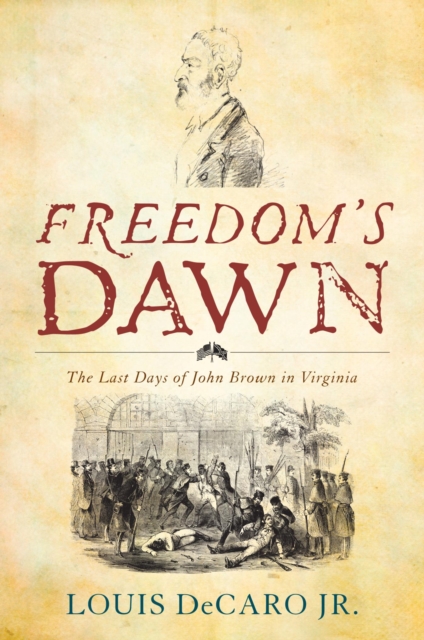
Freedom's dawn : the last days of John Brown in Virginia
John Brown's failed raid on the federal armory in Harper's Ferry Virginia served as a vital precursor to the Civil War, but its importance to the struggle for justice is free standing and exceptional in the history of the United States.
eBook


The Afterlife of John Brown
The Afterlife of John Brown explores the impact of the uncompromising abolitionist John Brown since his execution in 1859. The essays in this collection examine this divisive figure, lauded as a principled hero and demonized as a home-grown terrorist. The essays trace his presence in a variety of narrative and artistic forms, including poetry, the visual arts, children's literature, biography, and political polemic. John Brown is a figure whose status within the cultural imagination of the United States has never been settled. This book is the first to explore the diversity of artistic response that such unsettling has evoked.
eBook


John Brown Still Lives
From his obsession with the founding principles of the United States to his cold-blooded killings in the battle over slavery's expansion, John Brown forced his countrymen to reckon with America's violent history, its checkered progress toward racial equality, and its resistance to substantive change. Tracing Brown's legacy through writers and artists like Thomas Hovenden, W. E. B. Du Bois, Robert Penn Warren, Jacob Lawrence, Kara Walker, and others, Blake Gilpin transforms Brown from an object of endless manipulation into a dynamic medium for contemporary beliefs about the process and purpose of the American republic.Gilpin argues that the endless distortions of John Brown, misrepresentations of a man and a cause simultaneously noble and terrible, have only obscured our understanding of the past and loosened our grasp of the historical episodes that define America's struggles for racial equality. By showing Brown's central role in the relationship between the American past and the American present, Gilpin clarifies Brown's complex legacy and highlights his importance in the nation's ongoing struggle with the role of violence, the meaning of equality, and the intertwining paths these share with the process of change.
eBook

A volcano beneath the snow : John Brown's war against slavery
Examines the life of abolitionist John Brown and the raid he led on the United States arsenal at Harpers Ferry, West Virginia, in 1859, exploring his religious fanaticism and belief in \"righteous violence,\" --and committment to domestic terrorism.
Book

Fire From the Midst of You
John Brown is usually remembered as a terrorist whose unbridled hatred of slavery drove him to the ill-fated raid on Harper's Ferry, Virginia, in 1859. Tried and executed for seizing the arsenal and attempting to spur a liberation movement among the slaves, Brown was the ultimate cause celebre for a country on the brink of civil war.Fire from the Midst of You situates Brown within the religious and social context of a nation steeped in racism, showing his roots in Puritan abolitionism. DeCaro explores Brown's unusual family heritage as well as his business and personal losses, retracing his path to the Southern gallows. In contrast to the popular image of Brown as a violent fanatic, DeCaro contextualizes Brown's actions, emphasizing the intensely religious nature of the antebellum U.S. in which he lived. He articulates the nature of Brown's radical faith and shows that, when viewed in the context of his times, he was not the religious fanatic that many have understood him to be. DeCaro calls Brown a Protestant saint - an imperfect believer seeking to realize his own perceived calling in divine providence.In line with the post-millennial theology of his day, Brown understood God as working through mankind and the church to renew and revive sinful humanity. He read the Bible not only as God's word, but as God's word to John Brown. DeCaro traces Brown's life and development to show how by forging faith as a radical weapon, Brown forced the entire nation to a point of crisis. Fire from the Midst of You defies the standard narrative with a new reading of John Brown. Here is the man that the preeminent Black scholar W.E.B. Du Bois called a \"mighty warning\" and the one Malcolm X called a real white liberal.
eBook