
Catalogue Search | MBRL


Are you sure you want to remove the book from the shelf?

{{itemTitle}}
637
result(s) for
"1848"
Sort by:

Gauguin
Paul Gauguin achieved a high public profile during his lifetime, and was one of the first artists of his generation to achieve international recognition. But his prominence has always had as much to do with the dramatic events of his life - his self-imposed exile on a remote South Sea island, his turbulent relationships with his peers - as with the appeal of his art. Belinda Thomson gives a comprehensive and accessible account of the life and work of one of the most original artists of the late 19th century. Gauguin's work - painting, sculpture, prints and ceramics - is discussed in the light of his public persona, his relations with his contemporaries, his exhibitions and their critical reception. Belinda Thomson reveals Gauguin's private world, beliefs and aspirations through his extensive cache of journals, letters and other writings. Fully updated throughout, drawing on the insights of thirty years of scholarship since its first edition, Thomson's text remains the best introduction of this controversial and often contradictory artist.
BOOK

Weber, Irrationality, and Social Order
Despite immediate appearances, this book is not primarily a hermeneutical exercise in which the superiority of one interpretation of canonical texts is championed against others. Its origin lies elsewhere, near the overlap of history, psychoanalysis, aesthetics, and social theory of the usual kind. Weber, Pareto, Freud, W. I. Thomas, Max Scheler, Karl Mannheim, and many others of similar stature long ago wondered and wrote much about the interplay between societal rationalization and individual rationality, between collective furor and private psychopathology-in short, about the strange and worrisome union of \"character and social structure\" (to recall Gerth and Mills). Pondering the history of social thought in this century can lead to the unpleasant realization that such large-scale questions slipped away, especially from sociologists, sometime before World War II. Or, if not entirely lost, they were so transformed in range and rhetoric that a gap opened between contemporary theorizing and its European background. Perhaps this partly explains Weber's continuing appeal. By dealing with him, one might again broach topics long at odds with \"social science\" of the last forty years.-From the Preface This title is part of UC Press's Voices Revived program, which commemorates University of California Press's mission to seek out and cultivate the brightest minds and give them voice, reach, and impact. Drawing on a backlist dating to 1893, Voices Revived makes high-quality, peer-reviewed scholarship accessible once again using print-on-demand technology. This title was originally published in 1988.
eBook

The Cambridge companion to Frege
\"Gottlob Frege (1848-1925) was unquestionably one of the most important philosophers of all time. He trained as a mathematician, and his work in philosophy started as an attempt to provide an explanation of the truths of arithmetic, but in the course of this attempt he not only founded modern logic but also had to address fundamental questions in the philosophy of language and philosophical logic. Frege is generally seen (along with Russell and Wittgenstein) as one of the fathers of the analytic method, which dominated philosophy in English-speaking countries for most of the twentieth century. His work is studied today not just for its historical importance but also because many of his ideas are still seen as relevant to current debates in the philosophies of logic, language, mathematics and the mind. The Cambridge Companion to Frege provides a route into this lively area of research\"-- Provided by publisher.
Book

PI16+ reticular cells in human palatine tonsils govern T cell activity in distinct subepithelial niches
Fibroblastic reticular cells (FRCs) direct the interaction and activation of immune cells in discrete microenvironments of lymphoid organs. Despite their important role in steering innate and adaptive immunity, the age- and inflammation-associated changes in the molecular identity and functional properties of human FRCs have remained largely unknown. Here, we show that human tonsillar FRCs undergo dynamic reprogramming during life and respond vigorously to inflammatory perturbation in comparison to other stromal cell types. The peptidase inhibitor 16 (PI16)-expressing reticular cell (PI16
+
RC) subset of adult tonsils exhibited the strongest inflammation-associated structural remodeling. Interactome analysis combined with ex vivo and in vitro validation revealed that T cell activity within subepithelial niches is controlled by distinct molecular pathways during PI16
+
RC–lymphocyte interaction. In sum, the topological and molecular definition of the human tonsillar stromal cell landscape reveals PI16
+
RCs as a specialized FRC niche at the core of mucosal immune responses in the oropharynx.
De Martin, Ludewig and colleagues define the topology and molecular identity of human tonsillar stromal cells and show that PI16-expressing fibroblastic reticular cells shape subepithelial niches for efficient T cell activation and differentiation.
Journal Article

Thomas Cole's journey : Atlantic crossings
Thomas Cole (1801-1848), arguably the greatest American landscape artist of his generation, is presented here in a new light: as an international figure, born in England, and in dialogue with the major landscape painters of the age, including J.M.W. Turner and John Constable. Cole traveled in Europe from 1829 to 1832. Thomas Cole's Journey reexamines his seminal works of 1832-36--notably The Oxbow and Course of Empire--as a culminating response to his experiences of British art and society and of Italian landscape painting. These, combined with Cole's passion for the American wilderness and his horror of the industrial revolution in Britain, led him to create works that offer a distinctive, even dissident, response to the economic and political rise of the United States and the ecological changes then underway. This groundbreaking book also discusses Cole's influence on later artists, from Frederic Edwin Church to Ed Ruscha.
Book
Human memory B cells show plasticity and adopt multiple fates upon recall response to SARS-CoV-2
The B cell response to different pathogens uses tailored effector mechanisms and results in functionally specialized memory B (B
m
) cell subsets, including CD21
+
resting, CD21
–
CD27
+
activated and CD21
–
CD27
–
B
m
cells. The interrelatedness between these B
m
cell subsets remains unknown. Here we showed that single severe acute respiratory syndrome coronavirus 2-specific B
m
cell clones showed plasticity upon antigen rechallenge in previously exposed individuals. CD21
–
B
m
cells were the predominant subsets during acute infection and early after severe acute respiratory syndrome coronavirus 2-specific immunization. At months 6 and 12 post-infection, CD21
+
resting B
m
cells were the major B
m
cell subset in the circulation and were also detected in peripheral lymphoid organs, where they carried tissue residency markers. Tracking of individual B cell clones by B cell receptor sequencing revealed that previously fated B
m
cell clones could redifferentiate upon antigen rechallenge into other B
m
cell subsets, including CD21
–
CD27
–
B
m
cells, demonstrating that single B
m
cell clones can adopt functionally different trajectories.
Boyman and colleagues perform phenotypic and B cell receptor sequencing analysis of memory B cell subsets in severe acute respiratory syndrome coronavirus 2-infected and subsequently vaccinated individuals up to 1 year post-infection to show that single memory B cell clones can adopt different trajectories.
Journal Article
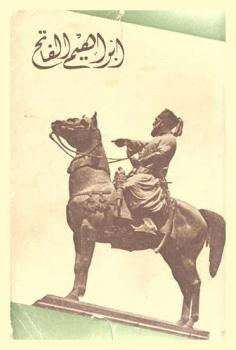
إبراهيم الفاتح
يتناول كتاب (إبراهيم الفاتح) والذي قام بتأليفه (عبد الفتاح حسن وأحمد الأرفلي) في حوالي (128) صفحة من القطع المتوسط موضوع (سيرة إبراهيم الفاتح) مستعرضا المحتويات التالية : قوله، مولد إبراهيم، قدوم محمد علي، إبراهيم بعد عدته لمصر، إبراهيم حاكم الوجه القبلي، إبراهيم قائد حملة الحجاز، إبراهيم منقذ الحرمين الشريفين، عودة إبراهيم، إبراهيم باشا في السودان، حرب اليونان، حصار نافارين، بطل ميسولونجي، معركة نافارين، إبراهيم بعد حرب الموره، حرب الشام الأولى، حرب الشام الثانية، معركة نزيب.
Unknown
Adaptive immune responses to SARS-CoV-2 persist in the pharyngeal lymphoid tissue of children
Most studies of adaptive immunity to SARS-CoV-2 infection focus on peripheral blood, which may not fully reflect immune responses at the site of infection. Using samples from 110 children undergoing tonsillectomy and adenoidectomy during the COVID-19 pandemic, we identified 24 samples with evidence of previous SARS-CoV-2 infection, including neutralizing antibodies in serum and SARS-CoV-2-specific germinal center and memory B cells in the tonsils and adenoids. Single-cell B cell receptor (BCR) sequencing indicated virus-specific BCRs were class-switched and somatically hypermutated, with overlapping clones in the two tissues. Expanded T cell clonotypes were found in tonsils, adenoids and blood post-COVID-19, some with CDR3 sequences identical to previously reported SARS-CoV-2-reactive T cell receptors (TCRs). Pharyngeal tissues from COVID-19-convalescent children showed persistent expansion of germinal center and antiviral lymphocyte populations associated with interferon (IFN)-γ-type responses, particularly in the adenoids, and viral RNA in both tissues. Our results provide evidence for persistent tissue-specific immunity to SARS-CoV-2 in the upper respiratory tract of children after infection.
Manthiram and colleagues analyze the peripheral blood, tonsils and adenoids in children undergoing tonsillectomy or adenoidectomy and find evidence of continued tissue-specific immunity to SARS-CoV-2 and viral RNA persistence weeks to months after acute infection.
Journal Article
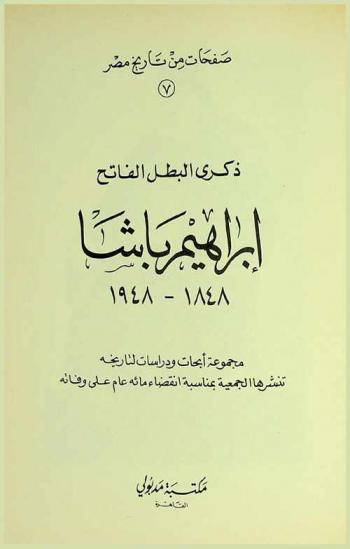
ذكرى البطل الفاتح إبراهيم باشا 1848-1948 : مجموعة أبحاث ودراسات لتاريخه تنشرها الجمعية بمناسبة انقضاء مائة عام على وفاته
يتناول كتاب (ذكرى البطل الفاتح إبراهيم باشا 1848-1948 : مجموعة أبحاث ودراسات لتاريخه تنشرها الجمعية بمناسبة انقضاء مائة عام على وفاته) في حوالي (405) صفحة من القطع المتوسط المحتويات التالية : القسم الأول : التاريخ السياسي : إبراهيم باشا في بلاد العرب للدكتور عبد الحميد البطريق، جهود إبراهيم باشا في خدمة الزراعة والصناعة والتجارة للدكتور أحمد أحمد الحته ... إلخ.
Book

A Sense of a European Present and its Passing during the Revolutions of 1848
This article explores the temporality of revolution in 1848. It argues that what united the various revolutionary movements of that year was a sense of participating in a common European ‘present’, in which old imperial hierarchies collapsed and every cause and people seemed to exist in the same historical moment. The significance of that sense of the present was visible across the continent, but it was of greatest significance in the revolutionary theatres beyond the core imperial centres, and it was those places that would suffer first when that present passed. Too much ‘history’ was taking place at once, and as events in different settings followed their own particular courses, minds turned away from a European project. As European unity faltered, it was the representatives of imperial counter-revolution who demonstrated their ability to think strategically on a continent-wide level. They defeated the various movements, which had promised a better European present, and deferred improvements to the future. By doing so, they returned the peoples of the continent to their own particular – rather than common European – ‘nows’.
Journal Article