
Catalogue Search | MBRL


Are you sure you want to remove the book from the shelf?

{{itemTitle}}
20,792
result(s) for
"1854-1900"
Sort by:


Salome's modernity
Oscar Wilde's 1891 symbolist tragedySaloméhas had a rich afterlife in literature, opera, dance, film, and popular culture.Salome's Modernity: Oscar Wilde and the Aesthetics of Transgressionis the first comprehensive scholarly exploration of that extraordinary resonance that persists to the present. Petra Dierkes-Thrun positions Wilde as a founding figure of modernism andSaloméas a key text in modern culture's preoccupation with erotic and aesthetic transgression, arguing that Wilde'sSalomémarks a major turning point from a dominant traditional cultural, moral, and religious outlook to a utopian aesthetic of erotic and artistic transgression. Wilde andSaloméare seen to represent a bridge linking the philosophical and artistic projects of writers such as Mallarmé, Pater, and Nietzsche to modernist and postmodernist literature and philosophy and our contemporary culture. Dierkes-Thrun addresses subsequent representations of Salome in a wide range of artistic productions of both high and popular culture through the works of Richard Strauss, Maud Allan, Alla Nazimova, Ken Russell, Suri Krishnamma, Robert Altman, Tom Robbins, and Nick Cave, among others.
eBook

Philosophy and Oscar Wilde
This book is the first collection of essays to discuss Oscar Wilde's love and vast knowledge of philosophy. Over the past few decades, Oscar Wilde scholars have become increasingly aware of Wilde's love and intimate knowledge of philosophy. Wilde's 'Oxford notebooks' and his soon-to-be-published 'Notebook on philosophy' all point to Wilde not just as an aesthete, but also as a serious philosophical thinker. The aim of this collection is not to make the statement that Wilde was a philosopher, or that his works were philosophical tracts. Rather, it provides a space to explore any and all linkages between Wilde's works and philosophical thought. Addressing a broad spectrum of philosophical matter, from classical philology to Daoism, ethics to aestheticism, this collection enriches the literature on Wilde and philosophy alike.
Book

Henry James Oscar Wilde and Aesthetic Culture
In this engaging and provocative reading of the relations between two canonical Anglo-American authors and the aesthetic culture they helped create, Michèle Mendelssohn challenges critical assumptions about Aestheticism's response to anxieties about nationality, sexuality, identity, influence, originality and morality. This book, the first fully sustained reading of Henry James's and Oscar Wilde's relationship, reveals why the antagonisms between both authors are symptomatic of the cultural oppositions within Aestheticism itself. The book also shows how these conflicting energies animated the late nineteenth century's most exciting transatlantic cultural enterprise.
eBook


Oscar Wilde in Vienna
Oscar Wilde in Vienna is the first book-length study in English of the reception of Oscar Wilde's works in the German-speaking world. Charting the plays' history on Viennese stages between 1903 and 2013, it casts a spotlight on the international reputation of one of the most popular English-language writers while contributing to Austrian cultural history in the long twentieth century. Drawing on extensive archival material, the book examines the appropriation of Wilde's plays against the background of political crises and social transformations.It unravels the mechanisms of cultural transfer and canonisation within an environment positioned - like Wilde himself - at the crossroads of centre and periphery, tradition and modernity.
eBook


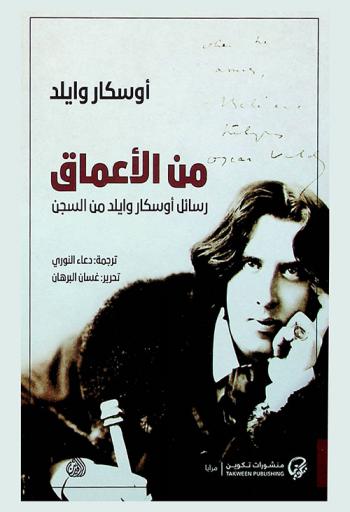
من الأعماق : رسائل أوسكار وايلد من السجن
يتحدث الكتاب عن رسائل هذه الرسائل حصاد المعاناة والحسرة التي قضى بها أوسكار وايلد أيامه في السجن التي تجرعها وحيدا ومخذولا دون أن تتاح له فرصة رواية قصته من منظوره الخاص رسائل أرسلت إلى العالم قبل أن تصل إلى ألفريد دوجلاس تتضح فيها طبيعة العلاقة التي جمعتهما وأثرها على حياة وايلد وفنه وما آلت إليه من خساة وخذلان وكأنه كان يكتب ليكون هنا ليكون حرا ليحلق ولو قليلا رغم الجرح الذي يطوق جناحيه كتبه أوسكار وايلد على شكل رسالة وجهها من السجن لصديقه الحميم اللورد ألفريد دوغلاس ولكنه منع من إرسالها فاحتفظ بها لحين خروجه من السجن ليسلمها بعد ذلك لمحرره الأدبي روبرت روس الذي قام بنشر الرسالة على شكل كتاب بعد وفاة أوسكار وايلد.
Book

The Queer Politics of Filth and Humility
In The Picture of Dorian Gray (1890), Oscar Wilde links the degradation of physical beauty to the morality of a cursed portrait's sitter. It's an age-old idea that pleasing appearances, pale flesh, and a blemish-free facade correspond with good nature and virtuous behavior within. The French director Coralie Fargeat updates similar themes in her critically acclaimed body horror film The Substance (2024), a feminist take on aging, vanity, and the vapid nature of celebrity culture. The artists Neal Auch and Alex Turgeon both employ the concept of decay, and its aesthetics and associated philosophical underpinnings, as a queering tool to critique notions such as consumption and capitalism. Through hedonistic pleasure and a discerning critique of gentrification, respectively, they offer a space rife for interrogating these ideas, using filth and the derelict to explore destruction and disintegration in ways that speak to a queer sensitivity and counter normativity, material idolatry, and mass consumption. A queer politics of decay contains lessons for finding beauty in the rundown, animating the abandoned, and making life out of loss. Most importantly, it teaches in holding on to communities and relations rather than material goods.
Journal Article