
Catalogue Search | MBRL


Are you sure you want to remove the book from the shelf?

{{itemTitle}}
19,016
result(s) for
"1856-1924"
Sort by:

Who was Woodrow Wilson?
First he was known as Tommy, then Woodrow, and eventually, Mr. President. Born on December 28, 1856, in Staunton, Virginia, Thomas Woodrow Wilson was a born leader. He was the president of Princeton University, served as governor of New Jersey after that, and was then elected president of the United States. But not everything was so easy for Wilson. He was ahead of his time in wanting a League of Nations after World War I to help prevent another war like it, but his hopes were dashed when the United States refused to join. Margaret Frith offers a fascinating look at how this magnificent and tragic figure handled debilitating illness, heartbreak, and \"the war to end all wars.\"
BOOK

Making the World Safe for Workers
In this intellectually ambitious study, Elizabeth McKillen explores the significance of Wilsonian internationalism for workers and the influence of American labor in both shaping and undermining the foreign policies and war mobilization efforts of Woodrow Wilson's administration. McKillen highlights the major fault lines and conflicts that emerged within labor circles as Wilson pursued his agenda in the context of Mexican and European revolutions, World War I, and the Versailles Peace Conference. As McKillen shows, the choice to collaborate with or resist U.S. foreign policy remained an important one for labor throughout the twentieth century. In fact, it continues to resonate today in debates over the global economy, wars in Iraq and Afghanistan, and the impact of U.S. policies on workers at home and abroad.
eBook


The rise and fall of American hegemony from Wilson to Trump
A century ago, Woodrow Wilson changed America’s place in the world when he sent two million men to fight in Europe, but America withdrew into isolationism in the 1930s. After the Second World War, Harry Truman and others created a framework of permanent alliances and multilateral institutions that became known as the ‘liberal international order’ or ‘Pax Americana’. Those terms have become obsolete as descriptions of the US place in the world, but the need for the largest countries to provide public goods remains. An open international order covers political–military affairs; economic relations; ecological relations; and human rights. It remains to be seen to what degree these depend on each other and what will remain as the 1945 package is unpacked. Wilson’s legacy of developing international institutions continues to make sense. Leadership is not the same as domination, and it will need to be shared. There have always been degrees of leadership and degrees of influence during the seven decades of American pre-eminence after 1945. Now with less preponderance and a more complex world, American exceptionalism in terms of its economic and military power should focus on sharing the provision of global public goods, particularly those that require ‘power with’ others. Wilson’s century old insights about international institutions and a rules-based order will remain crucial, but America’s place in that world may be threatened more by the rise of populist politics at home than the rise of other powers abroad.
Journal Article


Searching for Early Psychohistory Studies and Usages of the Word Psychohistory
The distinguished Luther scholar, Preserved Smith (18801941) published Luther's Table Talk: A Critical Study (1907) and \"Luther's Early Development in the Light of Psycho-analysis\" in the American Journal of Psychology (1913). Late in his life, Clark commonly used the term \"psychohistory\" and wrote on Alexander the Great, Lincoln, and Napoleon, focusing on narcissism but without much psychobiographical depth. Since I knew of no one else writing on these colleagues, I wrote a short article on each, crediting Elizabeth, who had died in 2005, as a co-author.6 Although my interest in the early uses of the term psychohistory never flagged, other activities absorbed my time. [...]I invited my Finnish colleague Professor Juhani Ihanus to join this project: he right- fully deserves credit for finding the word psycho-historical in 1810 and his erudite discussion of the issues involved.
Journal Article

World War I through the eyes of Woodrow Wilson
\"Go inside the Oval Office during World War I to see the challenges faced by President Woodrow Wilson, how he responded to difficult issues, and how he shaped the country during this pressing time in office\"--Publisher's website.
BOOK

The Lessons of Woodrow Wilson
IN HIS EXCELLENT book about our troubled times, Democracy and Solidarity: On the Cultural Roots of America's Political Crisis, James Davison Hunter notes that enduring solidarity rests on common affirmations and shared loves: \"Solidarity . . . is a richer term than mere consensus.\" [...]he also notes the enduring role of Protestant Christianity, especially dissenting forms such as Puritanism and Methodism, as well as revivalist and populist Christianity. (Roosevelt intimidated the Supreme Court to secure the overturning of Lochner.) In a word, Wilson and FDR administered strong doses of illiberalism.
Journal Article
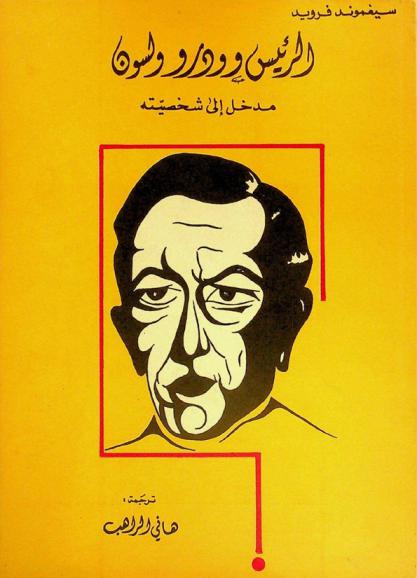
الرئيس وودرو ولسون : مدخل إلى شخصيته
الدراسة التي بين أيدينا ذات أهمية خاصة، فهي تطبيق المذهب التحليل النفسي يقوم به مؤسس المذهب على شخصية كان لها شان في صرح الاحداث السياسية العالمية هي شخصية الرئيس الأمريكي الاسبق ودرو ولسون، وقد ظل هذا النص مجهولا فترة طويلة وقد اقتضى العثور عليه جهدا دام أكثر من عشر سنين، في هذه الدراسة يفسر المعلم نفسه-فروید-كيف يتقمص الطفل شخصية الاب وينبه على الخطر الذي تلحقه شخصية الاب المسيطرة بالابن، كما يؤكد على سلطان الدوافع اللاشعورية التي تحرك الشخصية الانسانية وتتحكم بتصرفاتها. ما هو الكبت ما هو التصعيد ما هو التراجع، بل ما هو معنى الذكورة والأنوثة داخل الشخصية الواحدة ثم كيف توفق الانا بين الصراعات المختلفة داخل الذات.. وغير ذلك، وانه لأمر مقيد حقا أن نرى كيف يؤول واضع النظرية الوقائع المتعلقة بالحياة الانسانية فيؤلف منها شواهد تجريبية تؤيد صحة ملاحظاته. يجد القارئ والمثقف في هذا الكتاب فوائد علمية وتربوية كثيرة لا غنى عنها، وقد وفق المترجم في نقل هذا الأثر الى العربية بلغة واضحة دقيقة لا لبس فيها ولا غموض.
BOOK

Statecraft and Salvation
Understanding Woodrow Wilson's approach to international relations requires acknowledgment of his Protestant faith. In Statecraft and Salvation, Milan Babík delivers a fresh analysis of Wilson's progressive international political thought by examining it within the broader context of the American liberal tradition. The progressive belief that the world in general, and Europe in particular, could achieve peace carried with it a secular hope and a Christian eschatological vision for the future. Babík contends that the ultimate result of this belief devolved to serve a more totalitarian agenda. Statecraft and Salvation traces Wilson's \"New Democracy\" to liberal internationalism as an effort distinctly shaped by his faith.
eBook