
Catalogue Search | MBRL


Are you sure you want to remove the book from the shelf?

{{itemTitle}}
1,129
result(s) for
"1864"
Sort by:


Development of an ex-vivo porcine lower urinary tract model to evaluate the performance of urinary catheters
Intermittent catheterization is the gold standard method for bladder management in individuals with urinary retention and/or incontinence. It is therefore important to understand the performance of urinary catheters, especially on parameters associated to risks of developing urinary tract infections, and that may impact the quality of life for urinary catheter users. Examples of such parameters include, urine flowrate, occurrence of flow-stops, and residual urine left in the bladder after flow-stop. Reliable in-vitro and/or ex-vivo laboratory models represent a strong asset to assess the performance of urinary catheters, preceding and guiding in-vivo animal studies and/or human clinical studies. Existing laboratory models are generally simplified, covering only portions of the catheterization process, or poorly reflect clinical procedures. In this work, we developed an ex-vivo porcine lower urinary tract model that better reflects the catheterization procedure in humans and allows to investigate the performance of standard of care catheters. The performance of three standard of care catheters was investigated in the developed model showing significant differences in terms of flowrate. No differences were detected in terms of residual volume in the bladder at first flow-stop also when tuning the abdominal pressure to mimic a sitting down and standing up position. A newly discovered phenomenon named hammering was detected and measured. Lastly, mucosal suction was observed and measured in all standard of care catheters, raising the concern for microtrauma during catheterization and a need for new and improved urinary catheter designs. Results obtained with the ex-vivo model were compared to in-vivo studies, highlighting similar concerns.
Journal Article


My work is that of conservation
George Washington Carver (ca. 1864-1943) is at once one of the most familiar and misunderstood figures in American history. In My Work Is That of Conservation, Mark D. Hersey reveals the life and work of this fascinating man who is widely-and reductively-known as the African American scientist who developed a wide variety of uses for the peanut. Carver had a truly prolific career dedicated to studying the ways in which people ought to interact with the natural world, yet much of his work has been largely forgotten. Hersey rectifies this by tracing the evolution of Carver's agricultural and environmental thought starting with his childhood in Missouri and Kansas and his education at the Iowa Agricultural College. Carver's environmental vision came into focus when he moved to the Tuskegee Institute in Macon County, Alabama, where his sensibilities and training collided with the denuded agrosystems, deep poverty, and institutional racism of the Black Belt. It was there that Carver realized his most profound agricultural thinking, as his efforts to improve the lot of the area's poorest farmers forced him to adjust his conception of scientific agriculture. Hersey shows that in the hands of pioneers like Carver, Progressive Era agronomy was actually considerably \"greener\" than is often thought today. My Work Is That of Conservation uses Carver's life story to explore aspects of southern environmental history and to place this important scientist within the early conservation movement.
eBook


Urobiome updates: advances in urinary microbiome research
Since the discovery and confirmation of the human urobiome, highly influential studies to characterize this microbial community and understand how it relates to human health and disease have been undertaken. Technological advances will improve information about the status of the urobiome for clinicians.
Journal Article

Max Weber's vision for bureaucracy : a casualty of World War I
\"This volume examines Max Weber's pre-World War I thinking about bureaucracy. It suggests that Weber's vision shares common components with the highly efficient Prussian General Staff military bureaucracy developed by Clausewitz and Helmuth von Moltke. Weber did not believe that Germany's other major institutions, the Civil Service, industry, or the army could deliver world class performances since he believed that they pursued narrow, selfish interests. However, following Weber's death in 1920, the model published by his wife Marianne contained none of the military material about which Weber had written approvingly in the early chapters of Economy and Society. Glynn Cochrane concludes that Weber's model was unlikely to include military material after the Versailles peace negotiations (in which Weber participated) outlawed the Prussian General Staff in 1919.\"-- Provided by publisher.
Book
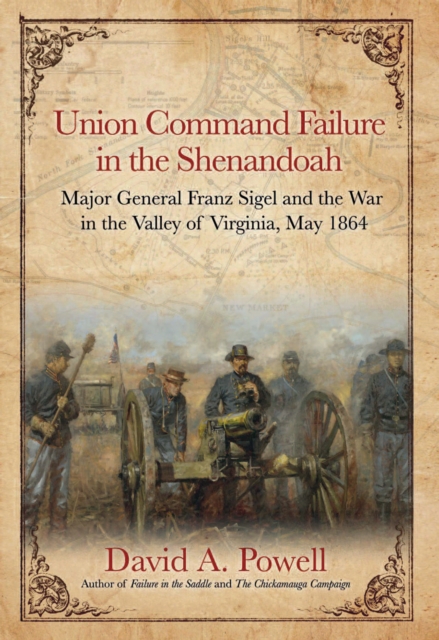
Union Command Failure in the Shenandoah
Complete with original maps, photos, and the skillful writing readers have come to expect, this book delves into all the issues, analysing the campaign from an operational standpoint.
eBook


Trench Warfare under Grant and Lee
Continuing the study of field fortifications he began inField Armies and Fortifications in the Civil War, Earl J. Hess turns to the 1864 Overland campaign to cover battles from the Wilderness to Cold Harbor. A grueling form of trench warfare became a key feature of tactical operations during this phase of the war in Virginia.Drawing on meticulous research in primary sources and careful examination of trench remnants at the Wilderness, Spotsylvania, North Anna, Cold Harbor, and Bermuda Hundred, Hess describes Union and Confederate earthworks and how Grant and Lee used them in this new era of field entrenchments. According to Hess, the heavy reliance on earthworks by both armies in the Overland campaign was driven by Grant's relentless attacks against Lee, not by the widespread use of rifle muskets, as historians have previously argued. Entrenchments kept the armies within striking distance and compelled soldiers to dig in for protection. Despite suffering massive casualties, Grant seized control of the strategic initiative and retained it for the rest of the war in the eastern theater.Illustrated by rare, historic photographs and new detailed maps of the trench remnants, this book constitutes the second installment of a three-volume study of field fortifications in the eastern campaigns.
eBook