
Catalogue Search | MBRL


Are you sure you want to remove the book from the shelf?

{{itemTitle}}
109
result(s) for
"1867-1918"
Sort by:


The Afterlife of Austria-Hungary
The assassination of Archduke Franz Ferdinand in 1914 was just one link in a chain of events leading to World War I and the downfall of the Austro-Hungarian empire. By 1918, after nearly four hundred years of rule, the Habsburg monarchy was expunged in an instant of history. Remarkably, despite tales of decadence, ethnic indifference, and a failure to modernize, the empire enjoyed a renewed popularity in interwar narratives. Today, it remains a crucial point of reference for Central European identity, evoking nostalgia among the nations that once dismembered it.The Afterlife of Austria-Hungaryexamines histories, journalism, and literature in the period between world wars to expose both the positive and the negative treatment of the Habsburg monarchy following its dissolution and the powerful influence of fiction and memory over history. Originally published in Polish, Adam Kozuchowski's study analyzes the myriad factors that contributed to this phenomenon. Chief among these were economic depression, widespread authoritarianism on the continent, and the painful rise of aggressive nationalism. Many authors of these narratives were well-known intellectuals who yearned for the high culture and peaceable kingdom of their personal memory.Kozuchowski contrasts these imaginaries with the causal realities of the empire's failure. He considers the aspirations of Czechs, Poles, Romanians, Hungarians, and Austrians, and their quest for autonomy or domination over their neighbors, coupled with the wave of nationalism spreading across Europe. Kozuchowski then dissects the reign of the legendary Habsburg monarch, Franz Joseph, and the lasting perceptions that he inspired.To Kozuchowski, the interwar discourse was a reaction to the monumental change wrought by the dissolution of Austria-Hungary and the fear of a history lost. Those displaced at the empire's end attempted, through collective (and selective) memory, to reconstruct the vision of a once great multinational power. It was an imaginary that would influence future histories of the empire and even became a model for the European Union.
eBook

The Transylvanian trilogy. Volume II
\"The celebrated Transylvanian Trilogy by Count Miklâos Bâanffy is a stunning historical epic set in the lost world of the Hungarian aristocracy just before World War I. Written in the 1930s and first discovered by the English-speaking world after the fall of communism in Hungary, Bâanffy's novels were translated in the late 1990s to critical acclaim and now appear for the first time in hardcover... They Were Found Wanting and They Were Divided, the second and third novels in the trilogy, continue the story of the two aristocratic cousins introducted in They were Counted.\"--Page 2 of cover.
Book

The Monumental Nation
From the 1860s onward, Habsburg Hungary attempted a massive project of cultural assimilation to impose a unified national identity on its diverse populations. In one of the more quixotic episodes in this \"Magyarization,\" large monuments were erected near small towns commemorating the medieval conquest of the Carpathian Basin—supposedly, the moment when the Hungarian nation was born. This exactingly researched study recounts the troubled history of this plan, which—far from cultivating national pride—provoked resistance and even hostility among provincial Hungarians. Author Bálint Varga thus reframes the narrative of nineteenth-century nationalism, demonstrating the complex relationship between local and national memories.
eBook


Urban tissue typology and urban typology : special cases: Zagreb and Rijeka/ Tipologija gradskoga tkiva i urbana tipologija u razdoblju od 1868. do 1918. godine: posebni slucajevi: Zagreb i Rijeka
In the last third of the 19th century urban modernisation processes took place in Austria-Hungary. The urban evolution took new direction and created similar urban forms: the urban tissue types were studied in case of more than seventy towns and enabled the taxonomy of the urban types. Among the low number of special urban types found, two are situated in Croatia. The study is about to discuss and define the unique type of Zagreb and Rijeka. AUSTRIA-HUNGARY SPECIAL CASES URBAN FORMS URBAN TISSUE URBAN TYPOLOGY Tijekom zadnje trecine 19. stoljeca u Austro-Ugarskoj je doslo do modernizacije urbanih sredista. Razvoj gradova krenuo je novim smjerom pa su se razvile slicne urbane forme: na temelju analize vise od 70 gradova, izvedena je tipologija urbanog tkiva s pripadajucom taksonomskom organizacijom. Od malog broja specificnih urbanih tipova, dva se nalaze u Hrvatskoj. Ovaj rad istrazuje gradove Zagreb i Rijeku kao jedinstvene primjere. AUSTRO-UGARSKA POSEBNI SLUCAJEVI URBANE FORME URBANO TKIVO URBANA TIPOLOGIJA
Journal Article
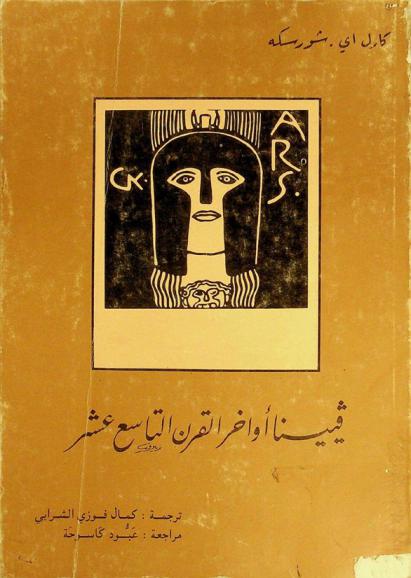
فيينا أواخر القرن التاسع عشر
كتاب بارز من أحد العلماء الأصليين في عصرنا : كشف رائع عن فيينا في مطلع القرن العشرين حيث ولد الكثير من الفن والفكر الحديث من أزمة التفكك السياسي والاجتماعي، إن القارئ العربي الذي ألف لحد ما العديد من أعلام الأدب والفكر في أوروبا الغربية والشرقية، ولكنه يكاد يجهل في الوقت ذاته أعلام أدب النمسا منهم على سبيل المثال هرمان بروخ روبرت موذيل الرجل بلا صفات وغيرهما من أدباء النصف الأول من القرن العشرين. بكتابنا هذا يسد فراعا في ثقافتنا ويمهد لترجمات اخرى، تأمل أن نواصلها كي نغطي ضمن الحدود الممكنة تعريف القارئ بأعلام الأدب والفكر العالميين.
Book
Urban tissue typology and urban typology
In the last third of the 19th century urban modernisation processes took place in Austria-Hungary. The urban evolution took new direction and created similar urban forms: the urban tissue types were studied in case of more than seventy towns and enabled the taxonomy of the urban types. Among the low number of special urban types found, two are situated in Croatia. The study is about to discuss and define the unique type of Zagreb and Rijeka.
Journal Article


The Political Activities of a Catholic Church Leader During the Period of Secularization in Hungary
In the Kingdom of Hungary, the process of secularization started rather late. After 1867, the country was led by liberal political forces but, despite this, the separation of church and state continued for a long time. Some ecclesiastical dignitaries were members of the upper house by virtue of their position, which obviously slowed down the process of secularization. By the 1890s, there were still many legal institutions in which public power was exercised by the churches instead of the state. The most important of these was the area of marriage law. Civil marriage was introduced by the Marriage Act passed in 1894, the adoption of which was preceded by sharp parliamentary debates. This was the culmination of the first wave of discourse on secularization in the country, which ended with the adoption of the law. Károly Hornig was appointed bishop of Veszprém by the pope in 1888 and, as a result of his position, he became a member of the upper house. Assessing Hornig’s parliamentary activities is more difficult. Joining the spirit of Rerum Novarum, he spoke, for example, in favor of the prohibition of industrial workers from working on Sundays. On the other hand, in the debates about secularization, he advocated positions that would have hindered it, although he eventually withdrew several of his proposals due to counterarguments. In my work, with the help of Hornig’s example, I would like to present an important stage of the process of secularization in Hungary.
Journal Article