
Catalogue Search | MBRL


Are you sure you want to remove the book from the shelf?

{{itemTitle}}
132
result(s) for
"1910-1936"
Sort by:
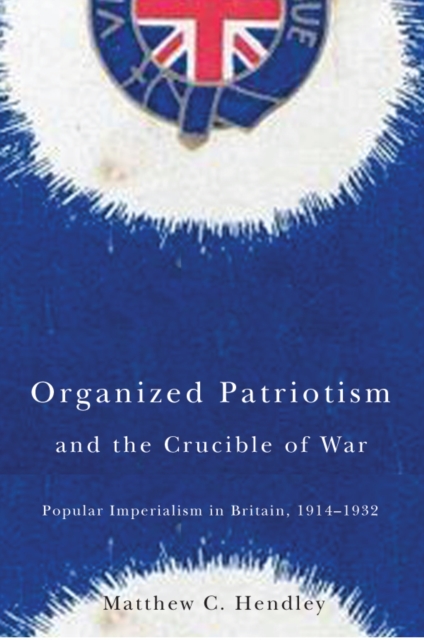
Organized Patriotism and the Crucible of War
Patriotic organizations in prewar Britain are often blamed for the public's enthusiastic response to the outbreak of World War One. The wartime experience of these same organizations is insufficiently understood. In Organized Patriotism and the Crucible of War, Matthew Hendley examines how the stresses and strains of the Great War radically reshaped popular patriotism and imperialism in Britain after 1918. Using insights from gender history and recent accounts of associational life in early twentieth-century Britain, Hendley compares the wartime and postwar histories of three major patriotic organizations founded between 1901 and 1902 - the National Service League, the League of the Empire, and the Victoria League. He shows how the National Service League, strongly masculinist and supportive of militaristic aims, floundered in wartime. Conversely, the League of the Empire and the Victoria League, with strong female memberships, goals related to education and hospitality, and a language emphasizing metaphors of family, home, and kinship prospered in wartime and beyond into the 1920s. Organized Patriotism and the Crucible of War is a richly detailed study of women's roles in Britain during the height of popular imperialism, as well as a major contribution to our understanding of the continuities in Britain before and after the First World War.
eBook

رسائل أليخاندرا بيثارنيك، ليون أوستروف
هذه الرسائل وعددها 21 رسالة وخمسة ردود من المعالج النفسي، تعرض الشاعرة بلا مواربة حالاتها النفسية الأدعى للألم، عندما تغرق في أقسى حالات الكآبة. القراءة المنتظمة لمجموع الرسائل تسمح ببناء سرد واضح عن إقامتها في باريس، وعلاقاتها وصداقاتها، ومكان إقامتها، وتفاصيل عملها الإبداعي، وتحولاتها النفسية وتجاربها العاطفية، وتعرفها إلى كتاب وشعراء من أميركا اللاتينية مثل أكتافيو باث، الذي كتب مقدمة ديوانها الثاني، وقيصر باييخو (شاعر من البيرو، يعد من كبار شعراء الإسبانية، أقام في فرنسا وانتحر في شقته الباريسية) وغيرهم، وتعرفها إلى المنظرة النسوية (سيمون دي بوفوار) صديقة سارتر ومارغريت دوراس، وغيرهم من الكتاب والشعراء الذين كانت باريس وجهتهم آنذاك.
Book

British Foreign Office Documents on the Macedonian Question, 1919-1941
This book of documents aims to analyze the British Foreign Office’s policy regarding the Macedonian Question in the interwar period and its reflection on the diplomatic relations between the United Kingdom and Bulgaria as well as with the other Balkan countries involved. The selected documents review the policy of the British Foreign Office towards the Macedonian Question. The British Foreign Office’s policy, formulated at the Paris Peace Conference, had always been aiming at weakening the issue. Gradually, the British diplomatic efforts focused on prohibiting the Internal Macedonian Revolutionary Organization (IMRO) and on its complete disbanding. The end of IMRO in 1934, however, did not bring the desired end to the Macedonian Question. WWII revived the unresolved national questions once again. The selected documents have not been published yet and are of great use and interest for many scholars and students. The presented documents are not only part of the diplomatic correspondence between Sofia and London but also part of the correspondence between the British Foreign Office and its representatives, mainly Athens and Belgrade.
eBook

رسائل أليخاندرا بيثارنيك، ليون أوستروف
هذه الرسائل وعددها 21 رسالة وخمسة ردود من المعالج النفسي، تعرض الشاعرة بلا مواربة حالاتها النفسية الأدعى للألم، عندما تغرق في أقسى حالات الكآبة. القراءة المنتظمة لمجموع الرسائل تسمح ببناء سرد واضح عن إقامتها في باريس، وعلاقاتها وصداقاتها، ومكان إقامتها، وتفاصيل عملها الإبداعي، وتحولاتها النفسية وتجاربها العاطفية، وتعرفها إلى كتاب وشعراء من أميركا اللاتينية مثل أكتافيو باث، الذي كتب مقدمة ديوانها الثاني، وقيصر باييخو (شاعر من البيرو، يعد من كبار شعراء الإسبانية، أقام في فرنسا وانتحر في شقته الباريسية) وغيرهم، وتعرفها إلى المنظرة النسوية (سيمون دي بوفوار) صديقة سارتر ومارغريت دوراس، وغيرهم من الكتاب والشعراء الذين كانت باريس وجهتهم آنذاك.
Book
A Devilish Kind of Courage
A thrilling account of the 1911 Siege of Sidney Street—when a young Winston Churchill allowed two immigrant revolutionaries to burn to death in London's East End. On January 3, 1911, police discovered Latvian revolutionaries on the lam in London's East End. A six-hour gunfight ensued until fire consumed the building where the radicals had taken refuge. When a not-yet-prime-minister Winston Churchill arrived at the scene, he ordered officials to let the fire run its course. At least two people burned to death in the blaze, but the Latvian ringleader, Peter the Painter, remained at large. Known as the Siege of Sidney Street, the event was a nationwide sensation and ignited fierce debates about immigration, extremism, and law enforcement. This book unravels the full story of the siege, the Latvian expatriates, and London's vibrant anarchist movement in the early twentieth century.
eBook

Sing as we go : Britain between the wars
'Sing As We Go' is an astonishingly ambitious overview of the political, social and cultural history of the country from 1919 to 1939. It explores and explains the politics of the period, and puts such moments of national turmoil as the General Strike of 1926 and the Abdication Crisis of 1936 under the microscope. It offers pen portraits of the era's most significant figures. It traces the changing face of Britain as cars made their first mass appearance, the suburbs sprawled, and radio and cinema became the means of mass entertainment. And it probes the deep divisions that split the nation: between the haves and have-nots, between warring ideological factions, and between those who promoted accommodation with fascism in Europe and those who bitterly opposed it.
BOOK

Conservative Politics in National and Imperial Crisis
Whilst serving in the prestigious post of Viceroy of India between 1926 and 1931, Lord Irwin (later the Earl of Halifax) was kept informed about political events in Britain by frequent and lengthy letters from Cabinet Ministers, senior Conservative MPs and other prominent figures, such as the editor of The Times. Covering events from the General Strike of May 1926 to Irwin's negotiation of a pact with Gandhi in March 1931, these private and previously unpublished letters mix analysis and gossip. They offer a frank account from within the highest political circles of the Baldwin government of 1924-29 and the serious crisis in the Conservative Party which followed in 1929-31. There is also much commentary on major figures such as Stanley Baldwin, Neville Chamberlain, Winston Churchill and Ramsay MacDonald. Of great depth and richness, and emanating from experienced and shrewd political insiders, this collection is an essential historical source for British history between the two world wars.
eBook


Parties and People
This book, the sequel to Classes and Cultures, is a historical reinterpretation of British politics in the first decades of universal suffrage. It reveals how the British democratic system developed and more importantly, it challenges its success and suggests reasons why it is flawed. The book targets significant questions, such as what it means to be a democratic society and to what extent voters really make up their own minds on politics. Exploring the political culture of these extraordinary years, the author shows that class difference became one of the principal determinants of political behaviour. It argues that the kind of democracy that emerged in Britain was far from inevitable, was as much historical accident as design, and was in many ways highly flawed.
eBook