
Catalogue Search | MBRL


Are you sure you want to remove the book from the shelf?

{{itemTitle}}
278
result(s) for
"1912-1945"
Sort by:

Tumultuous decade : empire, society, and diplomacy in 1930s Japan
\"The 1930s was a dark period in international affairs. The Great Depression affected the economic and social circumstances of the world's major powers, contributing to armed conflicts such as the Spanish Civil War and the Second World War. This volume focuses exclusively on Japan, which witnessed a flurry of progressive activities in this period, activities which served both domestic and international society during the \"tumultuous decade.\" Featuring an interdisciplinary and international group of scholars, Tumultuous Decade examines Japanese domestic and foreign affairs between 1931 and 1941. It looks at Japan in the context of changing approaches to global governance, the rise of the League of Nations, and attempts to understand the Japanese worldview as it stood in the 1930s, a crucial period for Japan and the wider world. The editors argue that, like many other emerging powers at the time, Japan experienced a national identity crisis during this period and that this crisis is what ultimately precipitated Japan's role in the Second World War as well as the global order that took shape in its aftermath.\"--Publisher's website.
Book
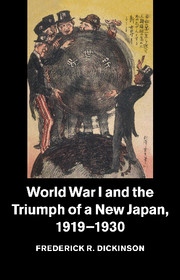
World War I and the Triumph of a New Japan, 1919–1930
Frederick R. Dickinson illuminates a new, integrative history of interwar Japan that highlights the transformative effects of the Great War far from the Western Front. World War I and the Triumph of a New Japan, 1919–1930 reveals how Japan embarked upon a decade of national reconstruction following the Paris Peace Conference, rivalling the monumental rebuilding efforts in post-Versailles Europe. Taking World War I as his anchor, Dickinson examines the structural foundations of a new Japan, discussing the country's wholehearted participation in new post-war projects of democracy, internationalism, disarmament and peace. Dickinson proposes that Japan's renewed drive for military expansion in the 1930s marked less a failure of Japan's interwar culture than the start of a tumultuous domestic debate over the most desirable shape of Japan's twentieth-century world. This stimulating study will engage students and researchers alike, offering a unique, global perspective of interwar Japan.
eBook

Beyond the metropolis
In Beyond the Metropolis, Louise Young looks at the emergence of urbanism in the interwar period, a global moment when the material and ideological structures that constitute \"the city\" took their characteristic modern shape. In Japan, as elsewhere, cities became the staging ground for wide ranging social, cultural, economic, and political transformations. The rise of social problems, the formation of a consumer marketplace, the proliferation of streetcars and streetcar suburbs, and the cascade of investments in urban development reinvented the city as both socio-spatial form and set of ideas. Young tells this story through the optic of the provincial city, examining four second-tier cities: Sapporo, Kanazawa, Niigata, and Okayama. As prefectural capitals, these cities constituted centers of their respective regions. All four grew at an enormous rate in the interwar decades, much as the metropolitan giants did. In spite of their commonalities, local conditions meant that policies of national development and the vagaries of the business cycle affected individual cities in diverse ways. As their differences reveal, there is no single master narrative of twentieth century modernization. By engaging urban culture beyond the metropolis, this study shows that Japanese modernity was not made in Tokyo and exported to the provinces, but rather co-constituted through the circulation and exchange of people and ideas throughout the country and beyond.
eBook


Japan Prepares for Total War
The roots of Japan's aggressive, expansionist foreign policy
have often been traced to its concern over acute economic
vulnerability. Historian Michael Barnhart tests this assumption by
examining the events leading up to World War II in the context of
Japan's quest for economic security. Drawing on a wide array of
Japanese and American sources, this is the first English-language
book on the war's origins to be based on research in archives on
both sides of the Pacific.
Barnhart focuses on the critical years from 1938 to 1941 as he
investigates the development of Japan's drive for national economic
self-sufficiency and independence and the way in which this drive
shaped its internal and external policies. He also explores
American economic pressure on Tokyo and assesses its impact on
Japan's foreign policy and domestic economy. He concludes that
Japan's internal political dynamics, especially the bitter rivalry
between its army and navy, played a far greater role in propelling
the nation into war with the United States than did its economic
condition or even pressure from Washington.
Japan Prepares for Total War sheds new light on prewar Japan and
confirms the opinions of those in Washington who advocated economic
pressure against Japan. At a time of growing interest in
U.S.-Japanese economic relations, this book will be stimulating and
provocative reading for scholars and students of international
relations and American and Asian history.
The roots of Japan's aggressive, expansionist foreign policy
have often been traced to its concern over acute economic
vulnerability. Michael A. Barnhart tests this assumption by
examining the events leading up to World War II in the context of
Japan's quest for economic security, drawing on a wide array of
Japanese and American sources.Barnhart focuses on the critical
years from 1938 to 1941 as he investigates the development of
Japan's drive for national economic self-sufficiency and
independence and the way in which this drive shaped its internal
and external policies. He also explores American economic pressure
on Tokyo and assesses its impact on Japan's foreign policy and
domestic economy. He concludes that Japan's internal political
dynamics, especially the bitter rivalry between its army and navy,
played a far greater role in propelling the nation into war with
the United States than did its economic condition or even pressure
from Washington. Japan Prepares for Total War sheds new
light on prewar Japan and confirms the opinions of those in
Washington who advocated economic pressure against Japan.
eBook

Schoolgirl
\"The novella that first propelled Dazai into the literary elite of post-war Japan. Essentially the start of Dazai's career, Schoolgirl gained notoriety for its ironic and inventive use of language. Now it illuminates the prevalent social structures of a lost time, as well as the struggle of the individual against them--a theme that occupied Dazai's life both personally and professionally. This new translation preserves the playful language of the original and offers the reader a new window into the mind of one of the greatest Japanese authors of the 20th century\"--Page 4 of cover.
Book
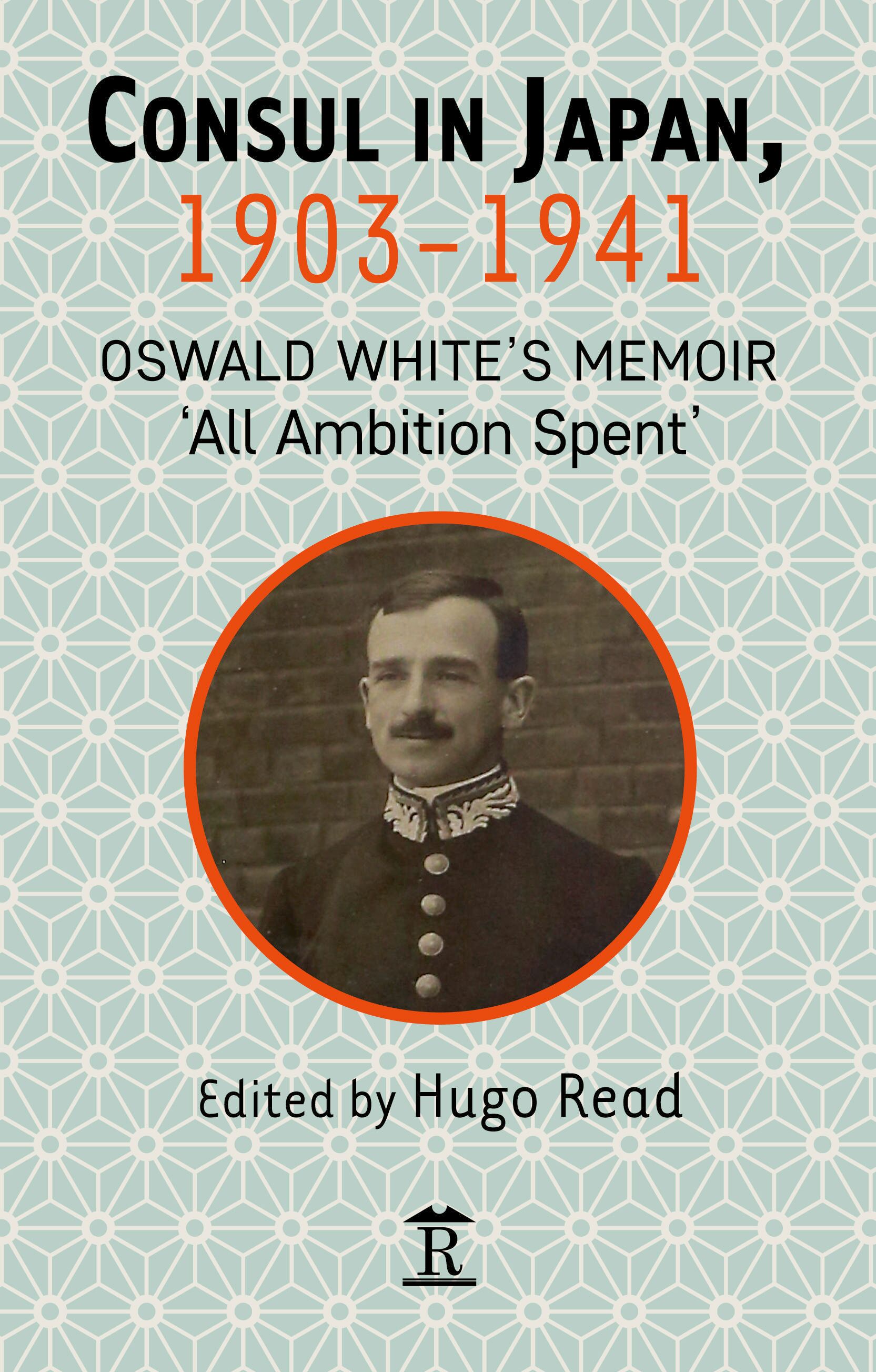
Consul in Japan, 1903-1941
Here is a rare first-hand account by a foreigner living and working in Japan in the first half of the twentieth century which provides a unique insight into this important period of Japan’s history, and complements the existing archival material. Beginning life as a student interpreter, he went on to become an assistant in Korea, Vice-Consul in Yokohama and Osaka, Consul in Nagasaki and Dairen, then Consul-General in Seoul, Osaka, Mukden and Tientsin. Not a contemporary diary as such, but a write-up of notes made towards the end of White’s career spanning thirty-eight years. Importantly, it includes reflective passages on the momentous developments of the later 1930s, as Japan moved onto a war-footing in China – and as Consul-General in the Chinese treaty port of Tianjin under Japanese occupation, White was in the middle of the growing tensions between Britain and Japan. His post-war recollections are also valuable. Like others who had lived and worked in Japan, he sought to come to terms with what had happened to the country in which he had spent so much of his adult life. Along the way he provides fascinating vignettes of his colleagues, some well known, others less so, while his service in Seoul, Mukden (now Shenyang) and Tianjin provides fresh material on the Japanese colonial empire.
eBook

China's Wars : Rousing the Dragon, 1894-1949
By the end of the first decade of the 21st century, China had become one of the great powers of the modern world. Economically, politically, and militarily, its power and international reach is only exceeded by the United States, the world's one remaining superpower. The period from the First Sino-Japanese War of 1894-95 through to the Communist victory in the Chinese Civil War ending in 1949 was one of near-constant conflict that saw China emerge as a fledgling new world power. Militarily at least, this is the defining period in Chinese history. In this new study, Philip Jowett traces the complicated military history of China during these pivotal years, describing in detail the conflicts that forge the modern superpower that is China today.
Book

Yugoslavia and Macedonia before Tito : between repression and integration
Held together by apparatchiks and, later, Tito's charisma, Yugoslavia never really incorporated separate Balkan nationalisms into the Pan-Slavic ideal.Macedonia - frequently ignored by Belgrade - had survived centuries of Turkish domination, Bulgarian invasion and Serbian assimilation before it became part of the Yugoslav project in the aftermath.
eBook