
Catalogue Search | MBRL


Are you sure you want to remove the book from the shelf?

{{itemTitle}}
911
result(s) for
"1940-1996"
Sort by:
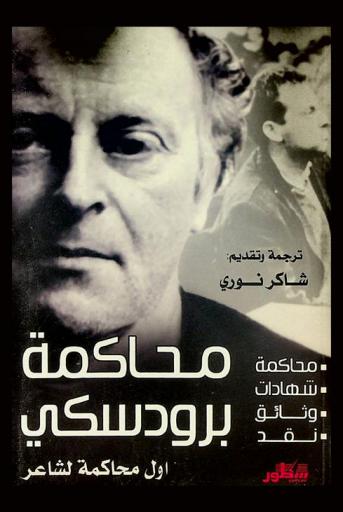

محاكمة برودسكي : أول محاكمة لشاعر محاكمة.شهادات.وثائق.نقد
هذا الكتاب : محاكمة سريالية تراجيكوميدية، إن من يركض وراء نشر كتبه لا يمكن أن يكتب وينتج، نحن جئنا إلى هنا لا لكي نعيش بل لكي نكمل ما تبقى لنا من أيام العمر، عندما نفقد قدرتنا على كتابة الشعر، يعني ذلك أن الحياة أوشكت على الانتهاء. -برودسكي لم تكن محاكمة الشاعر جوزيف برودسكي من نسج الخيال بل هي حقيقة واقعة موجودة في الوثائق والأرشيف إذ تجسد أول محاكمة لشاعر، العلاقة المأساوية بين السلطة والإبداع، وهذه القضية ما زالت تتفاعل في مجتمعنا العربي ولم تجد بعد الحلول اللازمة رغم سقوط الإمبراطوريات والدكتاتوريات والأنظمة الشمولية هنا وهناك. لقد تعرض الشاعر إلى المنع من الكتابة لأنه لم يكن منتميا إلى اتحاد الكتاب والأدباء السوفيات آنذاك، فالإبداع الأدبي كان عليه أن يمر بسلسلة من القنوات الحزبية قبل أن يرى النور وألا يعتبر منشورا سريا يحاسب عليه صاحبه، وهذا ما حصل مع الشاعر برودسكي يعود الفضل في تدوين وحفظ جلسات محاكمة الشاعر برودسكي في عام 1964 الصحافية الشجاعة فريدا فيغدوروفا التي لولاها لذهبت وقائعها أدراج الرياح، لذلك أصبحت وثيقة مهمة وفريدة من نوعها، في تاريخ الأدب، علق عليها ايفيم ايتكند، عضو اتحاد الكتاب والأدباء، وصديق برودسكي وأحد الذين شهدوا محاكمته، وقد وصفها الكثيرون بأنها رائعة سريالية تراجيكوميدية، انبثقت من لجتها البيروسترويكا التي غيرت وجه روسيا نحو الديمقراطية. وقد صدمت سلطات بلده أن حاز مواطنها الشاعر على جائزة نوبل للآداب من مقر إقامته في الولايات المتحدة، الذي اعتبر أكثر من شاعر، فهو مفكر، خرج على تقاليد الأدب المألوف ليذهب بتجربته إلى أقصى مداها في عالم كتابة الشعر.
BOOK

Life with a Foreign Accent
Using the words of some poets, the essay illuminates some difficulties of living in exile.
Journal Article

The anti-landscape
There have always been some uninhabitable places, but in the last century human beings have produced many more of them. These anti-landscapes have proliferated to include the sandy wastes of what was once the Aral Sea, severely polluted irrigated lands, open pit mines, blighted nuclear zones, coastal areas inundated by rising seas, and many others. The Anti-Landscape examines the emergence of such sites, how they have been understood, and how some of them have been recovered for habitation. The anti-landscape refers both to artistic and literary representations and to specific places that no longer sustain life. This history includes T.S. Eliot's Wasteland and Cormac McCarthy's The Road as well as air pollution, recycled railway lines, photography and landfills. It links theories of aesthetics, politics, tourism, history, geography, and literature into the new synthesis of the environmental humanities. The Anti-Landscape provides an interdisciplinary appraoch that moves beyond the false duality of nature vs. culture, and beyond diagnosis and complaint to the recuparation of damaged sites into our complex heritage. -- cover verso.
BOOK

The Man Who Brought Brodsky into English
Brodsky's poetic career in the West was launched when Joseph
Brodsky: Selected Poems was published in 1973. Its translator
was a scholar and war hero, George L. Kline. This is the story of
that friendship and collaboration, from its beginnings in 1960s
Leningrad and concluding with the Nobel poet's death in 1996.
Kline translated more of Brodsky's poems than any other single
person, with the exception of Brodsky himself. The Bryn Mawr
philosophy professor and Slavic scholar was a modest and retiring
man, but on occasion he could be as forthright and adamant as
Brodsky himself. \"Akhmatova discovered Brodsky for Russia, but I
discovered him for the West,\" he claimed.
Kline's interviews with author Cynthia L. Haven before his death
in 2014 include a description of his first encounter with Brodsky,
the KGB interrogations triggered by their friendship, Brodsky's
emigration, and the camaraderie and conflict over translation. When
Kline called Brodsky in London to congratulate him for the Nobel,
the grateful poet responded, \"And congratulations to you, too,
George!\"
eBook

The Man Who Brought Brodsky into English
Brodsky's poetic careerin the West was launched when Joseph Brodsky: Selected Poems waspublished in 1973. Its translator was George L. Kline, a Bryn Mawr professorand war hero. This is the story of that friendship and collaboration, from itsbeginnings in 1960s Leningrad and concluding with the Nobel poet's death.
eBook

Racism, the Highest Stage of Anti-Communism
There are many and different types of racism in contemporary Russia: institutional racism, far-right racism, everyday (bytovoi) racism, and a fourth kind to which this essay will be devoted, the racism of the liberal intelligentsia. Russian liberal media's reaction to the BLM protests of 2020 has offered abundant material for the study of its social base, main tropes, and underlying logic. This article attempts to historicize it, locating its origins in the anti-Soviet pro-western dissidence of the stagnation era and illustrating its workings through some statements made by Joseph Brodsky and his milieu. Furthermore, the article identifies the intersection of two main ideas from which this racism emerges. In the first place, this is Cold-War rejection of real or perceived Soviet alliances with newly decolonized countries of Africa and Asia or with African Americans during the Civil Rights era. In the second place, this is dissident civilizational hierarchies that placed the west at the top and saw the east or the south as a backward space best avoided.
Journal Article

Orchestrating Impartiality: The Impact of \Blind\ Auditions on Female Musicians
A change in the audition procedures of symphony orchestras--adoption of \"blind\" auditions with a \"screen\" to conceal the candidate's identity from the jury--provides a test for sex-biased hiring. Using data from actual auditions, in an individual fixed-effects framework, we find that the screen increases the probability a woman will be advanced and hired. Although some of our estimates have large standard errors and there is one persistent effect in the opposite direction, the weight of the evidence suggests that the blind audition procedure fostered impartiality in hiring and increased the proportion women in symphony orchestras.
Journal Article

Poesía cubana traducida por Joseph Brodsky
El caso de Joseph Brodsky (1940-1996), premio Nobel de literatura, es un ejemplo del destino de un poeta en el universo soviético. Compartió con otros autores censurados la imposibilidad de expresarse con libertad a través de la poesía e, igual que B. Pasternak, O. Mandelshtam, M. Tsvetaeva y muchos más, recurrió a lo largo de los 60 a la traducción poética como recurso de sobrevivir pero también como una válvula de escape para la creación literaria. Tradujo autores ingleses, norteamericanos, polacos, yugoslavos, españoles, argentinos y en dos casos, cubanos. Se conocen las versiones rusas de poemas de Pablo Armando Fernández, Virgilio Piñera, Eugenio Florit y Ángel Augier realizadas por Brodsky. El análisis de estas traducciones supone el estudio del balance entre la coyuntura del momento histórico, la elección de los textos a traducir, la presencia del texto mediador (podstrochnik) y la relevancia del texto resultante para la cultura recipiente y revela varios aspectos importantes tanto de la obra de Joseph Brodsky como de las realidades de la escritura y la traducción en la época socialista.
Journal Article