
Catalogue Search | MBRL


Are you sure you want to remove the book from the shelf?

{{itemTitle}}
4,455
result(s) for
"1940s"
Sort by:

Presenting an Authentic Reflection of the Past Through Storytelling and Living History in 1940s Events
Live events that replicate the 1940s era celebrate the heritage of a defining moment in history. This research presents the results of a study examining authenticity, storytelling, and living history in the context of 1940s events in the UK. The research demonstrates how storytelling
and living history intensifies the authentic nature of the event, depicting a true reflection of the past and facilitating a collective memory of the era. Through online semistructured interviews with event organizers and attendees of 1940s events, the findings confirm that organizers feel
a sense of cultural duty to tell an accurate story to the best of their abilities. This is supported through living history as presented by reenactment groups. They provide elements of the three concepts of authenticity: objectivism, constructivism, and existentialism. Reenactors provide historically
accurate detail and speak with authority, generating what is perceived to be an authentic level of engagement.
Journal Article

Not Only by Accident. Arthur Koestler’s Reception in Post-war Hungary, 1945–1948
This article is the first part of a series of publications on Arthur Koestler’s reception in Hungary during its transition to Communism. Given the author’s iconic status as an anti-Communist writer, it is reasonable to suppose that his texts would have been banned and his name rarely uttered, much less printed, in Hungary before the 1989 regime change. It is thus not surprising that this view is virtually uncontested by scholars both in Hungary and beyond. Yet, as shown here on the basis of thirty-one articles published between April 1945 and June 1948 in Hungarian dailies, journals, and magazines, at least in this early and transitional period, Koestler’s writing is not only frequently mentioned but actively discussed. Furthermore, through a closer analysis of the contents of these texts, five specific categories of mentions are identified: (1) Koestler cited as a journalist reporting on contemporary events; (2) his opinion quoted as that of an authority figure; (3) polemics towards Koestler’s views; (4) reports on the foreign reception of Hungarian literature, including Koestler; and (5) Koestler used as a public scapegoat.
Journal Article

Delayed first births and completed fertility across the 1940–1969 birth cohorts
The rise in the age at first birth has been universal in low-fertility countries in the last decades. Mothers who have their first child later tend to have fewer children, and in the absence of fertility catch-up at older ages, delayed fertility contributes to cohort fertility decline. We aim to study how changes in completed cohort fertility (quantum) relate to delayed age at first birth (tempo) across birth cohorts. We use birth histories collected in surveys or censuses in ten high-income countries. We rely on a decomposition analysis that quantifies how much the changes in age at first birth, mothers' completed fertility conditional on age at first birth, and childlessness contribute to the total change in cohort fertility over the 1940-1969 birth cohorts. In many countries and cohorts, the fertility intensity of mothers increased more at later ages than at earlier ages, reflecting the catching up of those who had delayed childbearing. However, in most countries studied, the increased fertility intensity of mothers at older ages was not sufficient to offset the depressing effect of delayed first births on cohort fertility rates. Increased childlessness and delayed childbearing are important components of the fertility decline. The chances of a full fertility recovery in the future are minimal, given the inertia of mothers' completed fertility conditional on age at first birth across successive birth cohorts.
Journal Article
Presenting an Authentic Reflection of the Past Through Storytelling and Living History in 1940s Events
Live events that replicate the 1940s era celebrate the heritage of a defining moment in history. This research presents the results of a study examining authenticity, storytelling and living history in the context of 1940s events in the UK. The research demonstrates how storytelling and living history intensifies the authentic nature of the event, depicting a true reflection of the past and facilitating a collective memory of the era. Through online semi-structured interviews with event organisers and attendees of 1940s events, the findings confirm that organisers feel a sense of cultural duty to tell an accurate story to the best of their abilities. This is supported through living history as presented by re-enactment groups. They provide elements of the three concepts of authenticity, objectivism, constructivism and existentialism. Reenactors provide historically accurate detail and speak with authority, generating what is perceived to be an authentic level of engagement.
Journal Article

Four from the Forties
This is a book for those who love British cinema and want to know more about its rise to popularity in the 1940s. The 'quality' films of the decade have been thoroughly explored already, but this book looks at the films the public actually went to see, and provides detailed information on the directors behind them.
eBook
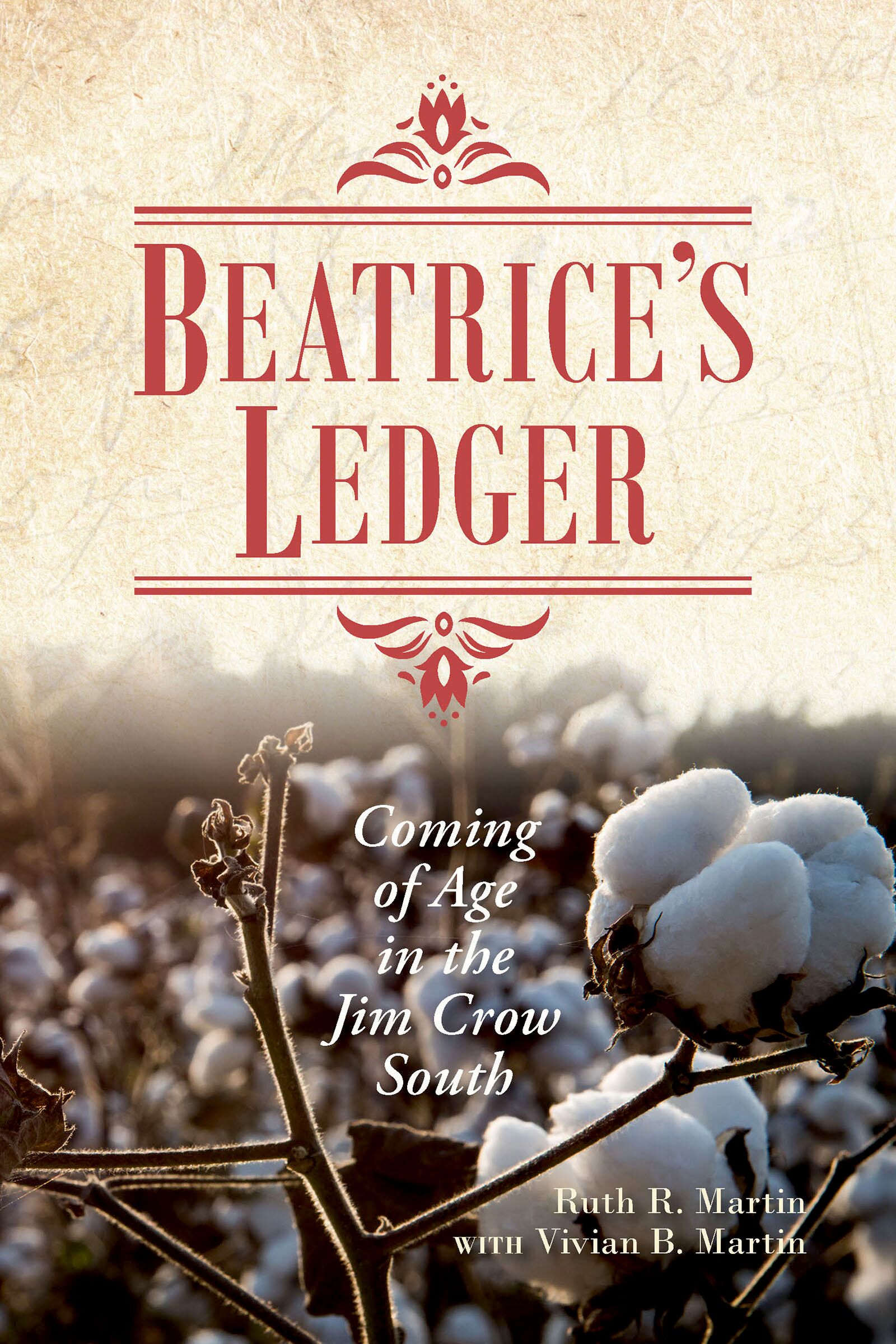
Beatrice's Ledger
A vivid and moving story about family, courage, and the power of
education
Ruth remembers the day the sheriff pulled up in front of her
family's home with a white neighbor who claimed Ruth's father owed
her recently deceased husband money. It was the early 1940s in Jim
Crow South Carolina, and even at the age of eleven, Ruth knew a
Black person's word wasn't trusted. But her father remained calm as
he waited on her mother's return from the house. Ruth's mother had
retrieved a gray book, which she opened and handed to the sheriff.
Satisfied by what he saw, the sheriff and the woman left. Ruth
didn't know what was in that book, but she knew it was important.
In Beatrice's Ledger, Ruth R. Martin brings to life the stories
behind her mother's entries in that well-worn ledger, from
financial transactions to important details about her family's
daily struggle to survive in Smoaks, South Carolina, a small town
sixty miles outside of Charleston. Once the land of plantations,
slavery, and cotton, by the time Ruth was born in 1930 many of the
plantations were gone but the cotton remained. Ruth's family made a
living working the land, and her father owned a local grist and
sawmill used by Black and white residents in the area. The family
worked hard, but life was often difficult, and Ruth offers rich
descriptions of the sometimes-perilous existence of a Black family
living in rural South Carolina at mid-century. But there was joy as
well as hardship, and readers will be drawn into the story of life
in Smoaks. Enriched with public records research and interviews
with friends and family still living in Smoaks, Martin weaves
history, humor, and family lore into a compelling narrative about
coming of age as a Black woman in the Jim Crow South. Martin
recounts her journey from Smoaks to Tuskegee Institute and beyond.
It is a story about the power of family; about the importance of
the people we meet along the way; and about the place we call
home.
eBook

Thrillers, Chillers, and Killers
Film noir is one of the most exciting and most debated products of studio-era Hollywood, but did you know that American radio broadcast many programs in the noir vein through the 1940s and 1950s? These included adaptations of such well-known films as The Maltese Falcon, Murder, My Sweet, and Double Indemnity, detective series devoted to the adventures of private eyes Philip Marlowe and Sam Spade, and the spine-tingling anthology programs Lights Out and Suspense. Thrillers, Chillers, and Killers is the first book to explore in detail noir storytelling on the two media, arguing that radio's noir dramas played an important role as a counterpart to, influence on, or a spin-off from the noir films. Besides shedding new light on long-neglected radio dramas, and a medium that was cinema's major rival, this scrupulously researched yet accessible study also uses these programs to challenge conventional understandings of the much-debated topic of noir.
eBook

Urban Property in Havana 1934–1960
Objective/context: The present research, of a historical nature, reconstructs the genesis and development of Urban Property in Havana between 1934 and 1960, representing a pillar for sustaining its autonomy and management. Originality: Historical studies on the city have not dealt with the subject, which has limited the understanding of the role of property and the property-owning class within social and urban history. Methodology: The results shown are approached from documentary analysis and are supported by primary sources of information. Conclusions: The study of the historical conditioning factors and the legal and financial factors articulated around Urban Property allows us to affirm that its existence left a legacy that deserves to be studied to understand part of the evolution of Havana in that period.
Journal Article

Broadcasting Hollywood
Broadcasting Hollywood: The Struggle Over Feature Films on
Early Television uses extensive archival research into the
files of studios, networks, advertising agencies, unions and
guilds, theatre associations, the FCC, and key legal cases to
analyze the tensions and synergies between the film and television
industries in the early years of television. This analysis of the
case study of the struggle over Hollywood's feature films appearing
on television in the 1940s and 1950s illustrates that the notion of
an industry misunderstands the complex array of
stakeholders who work in and profit from a media sector, and models
a variegated examination of the history of media industries.
Ultimately, it draws a parallel to the contemporary period and the
introduction of digital media to highlight the fact that history
repeats itself and can therefore play a key role in helping media
industry scholars and practitioners to understand and navigate
contemporary industrial phenomena.
eBook

Art Academy of Latvia Graphic Arts Alumnae Who Established the Principles of Latvian National Textile Art, 1931–1943
In the 1920s and 1930s, Latvian magazines featured original textile compositions by renowned male artists. Through my research of textile compositions of the famous Latvian artist and designer Jūlijs Madernieks, it became apparent that during this period, Latvian magazines also showcased textiles by lesser-known artists, particularly graduates of the Graphic Arts Workshop of the Art Academy of Latvia. Despite the significant role played by graphic artists in the formation and promotion of Latvian national textile art, their contributions remain largely unexplored. This research focuses on the popular women’s magazine Zeltene, which presented numerous original textile designs by Elza Druja, Marija Muceniece, Otomija Freiberga, and Kristine Pāvulina. Another focal point of this study is the state of textile crafts education in the third decade of the 20th century and its role in encouraging women to engage in textile art or crafts. The contributions of women to Latvian textile art during the 1920s and 1930s have not received adequate scholarly attention due to the occupation of Latvia by the Soviet Union and Nazi Germany in the 1940s, as well as subsequent constraints imposed on Latvian art historians by the Soviet regime. This paper marks an initial stage in the development of Latvian textile art history, with a particular emphasis on female textile artists.
Journal Article