
Catalogue Search | MBRL


Are you sure you want to remove the book from the shelf?

{{itemTitle}}
120
result(s) for
"1945–1990"
Sort by:


From craftsmen to capitalists
Politically adrift, alienated from Weimar society, and fearful of competition from industrial elites and the working class alike, the independent artisans of interwar Germany were a particularly receptive audience for National Socialist ideology. As Hitler consolidated power, they emerged as an important Nazi constituency, drawn by the party's rejection of both capitalism and Bolshevism. Yet, in the years after 1945, the artisan class became one of the pillars of postwar stability, thoroughly integrated into German society.From Craftsmen to Capitalists gives the first account of this astonishing transformation, exploring how skilled tradesmen recast their historical traditions and forged alliances with former antagonists to help realize German democratization and recovery.
eBook


Architecture, Politics, and Identity in Divided Berlin
On August 13, 1961, under the cover of darkness, East German authorities sealed the border between East and West Berlin using a hastily constructed barbed wire fence. Over the next twenty-eight years of the Cold War, the Berlin Wall grew to become an ever-present physical and psychological divider in this capital city and a powerful symbol of Cold War tensions. Similarly, stark polarities arose in nearly every aspect of public and private life, including the built environment.InArchitecture, Politics, and Identity in Divided BerlinEmily Pugh provides an original comparative analysis of selected works of architecture and urban planning in both halves of Berlin during the Wall era, revealing the importance of these structures to the formation of political, cultural, and social identities. Pugh uncovers the roles played by organizations such as the Foundation for Prussian Cultural Heritage and the Building Academy in conveying the political narrative of their respective states through constructed spaces. She also provides an overview of earlier notable architectural works, to show the precursors for design aesthetics in Berlin at large, and considers projects in the post-Wall period, to demonstrate the ongoing effects of the Cold War.Overall, Pugh offers a compelling case study of a divided city poised between powerful contending political and ideological forces, and she highlights the effort expended by each side to influence public opinion in Europe and around the World through the manipulation of the built environment.
eBook

What was the Berlin Wall?
\"In 1961, overnight a concrete border went up, dividing the city of Berlin into two parts - East and West. The story of the Berlin Wall holds up a mirror to post-WWII politics and the Cold War Era when the United States and the USSR were enemies, always on the verge of war. Author Nico Medina explains the spy-vs-spy politics of the time as well as what has happened since the removal of one of the most divisive landmarks in modern history.\"-- From publisher's description.
BOOK

Shattered Spaces
After the Holocaust, the empty, silent spaces of bombed-out synagogues, cemeteries, and Jewish districts were all that was left of Jewish life in many German and Polish cities. What happened to this scarred landscape after the war, and how Germans, Poles, and Jews encountered these ruins over the past sixty years, is the story this book tells.
eBook
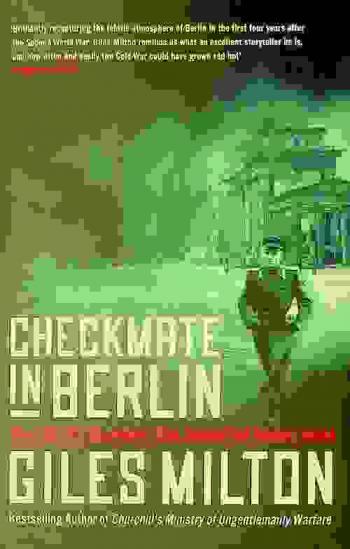
Checkmate in Berlin : the Cold War showdown that shaped the modern world
Berlin was in ruins when Soviet forces fought their way towards the Reichstag in the spring of 1945. Streets were choked with rubble, power supplies severed and the population close to starvation. The arrival of the Soviet army heralded yet greater terrors: the city's civilians were to suffer rape, looting and horrific violence. Worse still, they faced a future with neither certainty nor hope. Berlin's fate had been sealed four months earlier at the Yalta Conference. The city, along with the rest of Germany, was to be carved up between the victorious powers - British, American, French and Soviet. On paper, it seemed a pragmatic solution; in reality, it fired the starting gun for the Cold War. As soon as the four powers were no longer united by the common purpose of defeating Germany, they reverted to their pre-war hostility and suspicion. Rival systems, rival ideologies and rival personalities ensured that Berlin became an explosive battleground. The ruins of this once-great city were soon awash with spies, gangsters and black-marketeers, all of whom sought to profit from the disarray. For the next four years, a handful of charismatic but flawed individuals - British, American and Soviet - fought an intensely personal battle over the future of Germany, Europe and the entire free world. Checkmate In Berlin tells this exhilarating, high-stakes tale of grit, skullduggery, and raw power. From the high politics of Yalta to the desperate scramble to break the Soviet stranglehold of Berlin with the greatest aerial operation in history, this is the epic story of the first battle of the Cold War and how it shaped the modern world.

Malcolm Fraser
In this part memoir and part authorised biography, Malcolm Fraser talks about his time in public life.'The great task of statesmanship is to apply past lessons to new situations, to draw correct analogies to understand and act upon present forces, to recognise the need for change.'--Malcolm Fraser Malcolm Fraser is one of the most interesting.
eBook

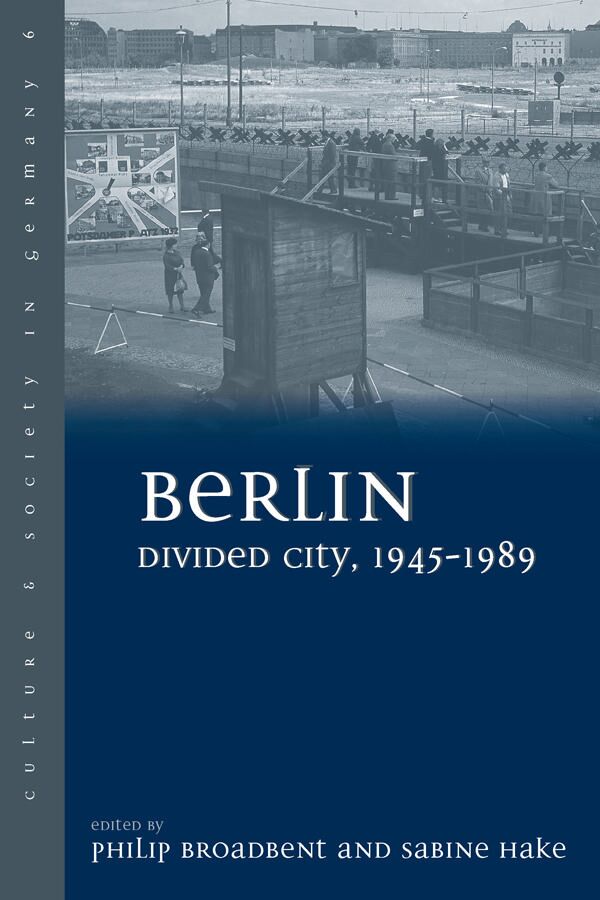
Berlin Divided City, 1945-1989
A great deal of attention continues to focus on Berlin's cultural and political landscape after the fall of the Berlin Wall, but as yet, no single volume looks at the divided city through an interdisciplinary analysis. This volume examines how the city was conceived, perceived, and represented during the four decades preceding reunification and thereby offers a unique perspective on divided Berlin's identities. German historians, art historians, architectural historians, and literary and cultural studies scholars explore the divisions and antagonisms that defined East and West Berlin; and by tracing the little studied similarities and extensive exchanges that occurred despite the presence of the Berlin Wall, they present an indispensible study on the politics and culture of the Cold War.
eBook