
Catalogue Search | MBRL


Are you sure you want to remove the book from the shelf?

{{itemTitle}}
10,046
result(s) for
"1962"
Sort by:

Murakami : unfamiliar people, swelling of monsterized human ego
\"One of Japan's leading contemporary artists, Takashi Murakami's work has been distinguished by a wide-ranging practice that encompasses not only fine art, but fashion, consumer products, curation, and entertainment. As founder of the Superflat movement, Murakami's artworks are larger than life, boldly colored, and buoyant, with a pop sensibility that draws inspiration from anime and manga. His familiar happy flowers and kawaii characters have become branded icons for the artist's production and management company, Kaikai Kiki, Ltd. Beyond the cheerful images that have defined Murakami's career lurk darker manifestations-the sharp-toothed, multi-eyed monsters that have increasingly become this artist's vehicle for expressing the effects of rampant consumerism, human fallibility, and media-induced anxiety. Murakami: Unfamiliar People-Swelling of Monsterized Human Ego explores this theme in works from the last decade, a time of intense environmental, political, and social upheaval in the world at large. Using humor and playful distortion, he portrays the monsters that alternately haunt us and offer diversion, solace, and protection from chaos. Lately, the COVID pandemic has unleashed its own demons, prompting new images of estrangement and NFT art that speaks to the rise of replicants and cyborgs that inhabit virtual realms\"-- Provided by publisher.
Book

The Cuban Missile Crisis
Drawing on an extensive body of research, including primary sources released only in the last few years, this work places the crisis in a broader international and chronological context than previously possible.
eBook


Distinct baseline immune characteristics associated with responses to conjugated and unconjugated pneumococcal polysaccharide vaccines in older adults
Pneumococcal infections cause serious illness and death among older adults. The capsular polysaccharide vaccine PPSV23 and conjugated alternative PCV13 can prevent these infections; yet, underlying immunological responses and baseline predictors remain unknown. We vaccinated 39 older adults (>60 years) with PPSV23 or PCV13 and observed comparable antibody responses (day 28) and plasmablast transcriptional responses (day 10); however, the baseline predictors were distinct. Analyses of baseline flow cytometry and bulk and single-cell RNA-sequencing data revealed a baseline phenotype specifically associated with weaker PCV13 responses, which was characterized by increased expression of cytotoxicity-associated genes, increased frequencies of CD16
+
natural killer cells and interleukin-17-producing helper T cells and a decreased frequency of type 1 helper T cells. Men displayed this phenotype more robustly and mounted weaker PCV13 responses than women. Baseline expression levels of a distinct gene set predicted PPSV23 responses. This pneumococcal precision vaccinology study in older adults uncovered distinct baseline predictors that might transform vaccination strategies and initiate novel interventions.
Ravichandran et al. performed a systems immunology study to profile the responses to pneumococcal vaccines in older adults. They identified distinct baseline features that could capture responses to Prevnar and Pneumovax and sex-biased differences in Prevnar responses.
Journal Article

Where Has All the Data Gone?
Since the finance industry is transforming into a data industry, measuring the quantity of data investors have about various assets is important. Informed by a structural model, we develop such a cross-sectional measure. We show how our measure differs from price informativeness and use it to document a new fact: data about large high-growth firms is becoming increasingly abundant, relative to data about other firms. Our structural model offers an explanation for this data divergence: large high-growth firms’ data became more valuable, as big firms got bigger and growth magnified the effect of these changes in size.
Journal Article

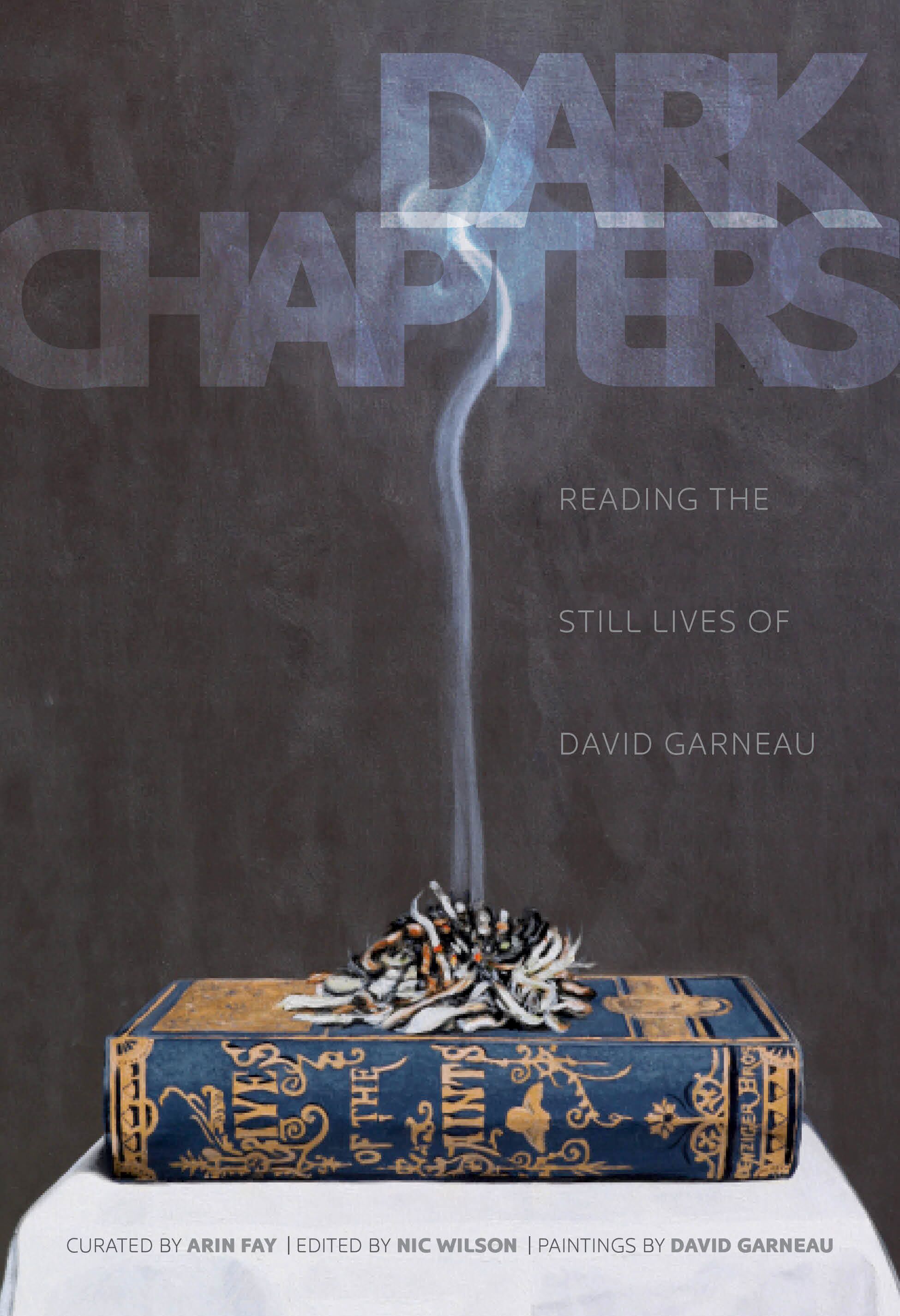
Dark Chapters
A singular collection of responses to the still life paintings of acclaimed artist David Garneau Dark Chapters brings together 17 poets, fiction writers, curators, and critics to engage with the works of David Garneau, the Governor General's Award-winning Métis artist. Featuring paintings from Garneau's still life series \"Dark Chapters\" alongside poetry, fiction, critical analysis, and autotheory, the book includes contributions from Fred Wah, Paul Seesequasis, Jesse Wente, Lillian Allen, Billy-Ray Belcourt, Larissa Lai, Susan Musgrave, and more. A nod to the Reports of Truth and Reconciliation Commission, in which Justice Murray Sinclair describes the residential school system as \"one of the darkest, most troubling chapters in our nation's history,\" Garneau's still life paintings combine common objects (books, bones, teacups, mirrors) and less familiar ones (a Métis sash, a stone hammer, a braid of sweetgrass) to reflect the complexity of contemporary Indigenous experiences. Provocative titles like \"Métis in the Academy\" and \"Smudge Before Reading\" invite consideration of the mixed influences and loyalties faced by Indigenous students and scholars. Other paintings explore colonialism, vertical and lateral violence, Christian influence on traditional knowledge, and museum treatment of Indigenous belongings. Rooted in Garneau's life-long engagement at the intersections of visual art and writing, Dark Chapters presents a multifaceted reflection on the work of an inimitable, unparalleled artist. Includes contributions from Arin Fay, Billy-Ray Belcourt, Cecily Nicholson, David Howes, Dick Averns, Fred Wah, Jeff Derksen, Jesse Wente, John G. Hampton, Larissa Lai, Lillian Allen, Paul Seesequasis, Peter Morin, Rita Bouvier, Susan Musgrave, Tarene Thomas, and Trevor Herriot.
eBook

Intravenous nanoparticle vaccination generates stem-like TCF1+ neoantigen-specific CD8+ T cells
Personalized cancer vaccines are a promising approach for inducing T cell immunity to tumor neoantigens. Using a self-assembling nanoparticle vaccine that links neoantigen peptides to a Toll-like receptor 7/8 agonist (SNP-7/8a), we show how the route and dose alter the magnitude and quality of neoantigen-specific CD8
+
T cells. Intravenous vaccination (SNP-IV) induced a higher proportion of TCF1
+
PD-1
+
CD8
+
T cells as compared to subcutaneous immunization (SNP-SC). Single-cell RNA sequencing showed that SNP-IV induced stem-like genes (
Tcf7
,
Slamf6
,
Xcl1
) whereas SNP-SC enriched for effector genes (
Gzmb
,
Klrg1
,
Cx3cr1
). Stem-like cells generated by SNP-IV proliferated and differentiated into effector cells upon checkpoint blockade, leading to superior antitumor response as compared to SNP-SC in a therapeutic model. The duration of antigen presentation by dendritic cells controlled the magnitude and quality of CD8
+
T cells. These data demonstrate how to optimize antitumor immunity by modulating vaccine parameters for specific generation of effector or stem-like CD8
+
T cells.
Seder and colleagues use a self-assembling nanoparticle vaccine and adjuvant to expand stem-like CD8
+
T cells and trigger potent antitumor responses.
Journal Article