
Catalogue Search | MBRL


Are you sure you want to remove the book from the shelf?

{{itemTitle}}
9,546
result(s) for
"1979"
Sort by:
A Political Economy of the Middle East
A Political Economy of the Middle East is the most comprehensive
analysis of developments in the political economy of the region over the past several
decades, examining the interaction of economic development processes, state systems and
policies, and social actors in the Middle East.
The fourth edition, with new authors Melani Cammett and Ishac Diwan, has been thoroughly
revised, with new introductory chapters that provide an updated framework with which to
understand and study the many changes in demography, education, labor markets,
urbanization, water and agriculture, and international labor migration in recent years.
The new edition also includes: a new chapter that charts the political economy of the
Gulf states and, in particular, the phenomenal growth of oil economies; a new chapter on
the rise of \"crony capitalism;\" and increased coverage of the changes in civil society
and social movements in the region, including an exploration of the causes, dynamics,
consequences, and aftermath of the Arab uprisings.
eBook
ارتدادات الثورة الثالثة = Aftershocks of the third revolution : بحث الانعكاسات الإقليمية والعالمية للثورة الإيرانية
يتناول الكتاب تاريخ العالم الحديث حيث حدثت الكثير من الثورات والانقلابات العسكرية والحركات الساسية العنيفة انتهى معظمها إلى تغييرات سياسية محدودة على صعيد وطني أو إقليمي ؛ فالتاريخ الحديث شهد ثلاث ثورات مختلفة تماما عن غيرها لجهة خطورتها وأهدافها وتأثيرها على العالم بمجملة فتناول الكتاب الثورة الفرنسية عام 1789، والثورة البولشوفية عام 1917، والثورة الإيرانية عام 1979. وهذه الثالثة كانت الأخطر على الإطلاق، لكونها ارتكزت إلى العقيدة الدينية والمقدسات، الأمر الذي جعل الثورة \"الخمينية\" لتكون بمثابة زلزالا إقليميا كبيرا، وضع المنطقة أمام خطرين كبيرين : الأول تأثير هذه الثورة على المجتمعات الإسلامية في الدول المحيطة والثاني يتمثل في طموح الإيرانيين بـ\"تصدير ثورتهم\" إلى الدول المجاورة، التي تدين بالدين الإسلامي، عبر التدخل المباشر والعلني، أو اتباع استراتيجية \"الثورة الناعمة\". الأمر الذي أدى إلى اهتزاز بنية المجتمعات الإسلامية، في معظم الأقطار المجاورة للدولة الفارسية وساهم بتفككها إلى جماعات طائفية ومذهبية متناحرة وما تشهده المنطقة اليوم من صراعات وحروب دموية ما هو إلا ارتدادات للثورة الإسلامية في إيران.
Book

The Ethiopian Revolution
Revolution, civil wars, and guerilla warfare wracked Ethiopia during three turbulent decades at the end of the twentieth century. This book is a pioneering study of the military history and political significance of this crucial Horn of Africa region during that period. Drawing on new archival materials and interviews, Gebru Tareke illuminates the conflicts, comparing them to the Russian and Iranian revolutions in terms of regional impact.
Writing in vigorous and accessible prose, Tareke brings to life the leading personalities in the domestic political struggles, strategies of the warring parties, international actors, and key battles. He demonstrates how the brutal dictatorship of Mengistu Haile Mariam lacked imagination in responding to crises and alienated the peasantry by destroying human and material resources. And he describes the delicate balance of persuasion and force with which northern insurgents mobilized the peasantry and triumphed. The book sheds invaluable light not only on modern Ethiopia but also on post-colonial state formation and insurrectionary politics worldwide.
eBook

State-Building and Tax Regimes in Central America
In Central America, dynamic economic actors have inserted themselves into global markets. Elites atop these sectors attempt to advance a state-building project that will allow them to expand their activities and access political power, but they differ in their internal cohesion and their dominance with respect to other groups, especially previously constituted elites and popular sectors. Differences in resulting state-building patterns are expressed in the capacity to mobilize revenues from the most dynamic sectors in quantities sufficient to undertake public endeavors and in a relatively universal fashion across sectors. Historical, quantitative and qualitative detail on the five countries of Central America are followed by a focus on El Salvador, Honduras, and Guatemala. The greatest changes have occurred in El Salvador, and Honduras has made some advances, although they are almost as quickly reversed by incentives, exemptions and special arrangements for particular producers. Guatemala has raised revenues only marginally and failed to address problems of inequity across sectors and between rich and poor.
eBook

Alicja Kwade : in aporie
In Aporie is the first monograph on Alicja Kwade (b.1979) covering a wide range of her intriguing works. Being 'In Aporie' is to be in a state where an insoluble theoretical problem allows for the paradoxical knowledge of one's own ignorance. The monograph features articles by Danish curator and Director of Copenhagen Contemporary Marie Nipper, Chief Curator at EMMA - Espoo Museum of Modern Art Arja Miller and Professor in Geology at Copenhagen University Minik Rosing.
BOOK
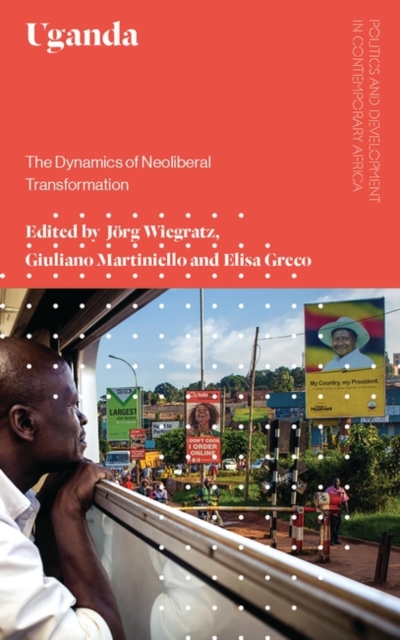
Uganda : the dynamics of neoliberal transformation
For the last three decades, Uganda has been one of the fastest growing economies in Africa. Globally praised as an African success story and heavily backed by international financial institutions, development agencies and bilateral donors, the country has become an exemplar of economic and political reform for those who espouse a neoliberal model of development. The neoliberal policies and the resulting restructuring of the country have been accompanied by narratives of progress, prosperity, and modernisation and justified in the name of development. But this self-celebratory narrative, which is critiqued by many in Uganda, masks the disruptive social impact of these reforms and silences the complex and persistent crises resulting from neoliberal transformation. Bringing together a range of leading scholars on the country, this collection represents a timely contribution to the debate around the New Uganda, one which confronts the often sanitised and largely depoliticised accounts of the Museveni government and its proponents. Harnessing a wealth of empirical materials, the contributors offer a critical, multi-disciplinary analysis of the unprecedented political, socio-economic, cultural and ecological transformations brought about by neoliberal capitalist restructuring since the 1980s. The result is the most comprehensive collective study to date of a neoliberal market society in contemporary Africa, offering crucial insights for other countries in the Global South.
eBook


A more equal society?
This major new book provides, for the first time, a detailed evaluation of policies on poverty and social exclusion since 1997, and their effects. Bringing together leading experts in the field, it considers the challenges the government has faced, the policies chosen and the targets set in order to assess results. Drawing on research from the Centre for Analysis of Social Exclusion, and on external evaluations, the book asks how children, older people, poor neighbourhoods, ethnic minorities and other vulnerable groups have fared under New Labour and seeks to assess the government both on its own terms - in meeting its own targets - and according to alternative views of social exclusion.
eBook