
Catalogue Search | MBRL


Are you sure you want to remove the book from the shelf?

{{itemTitle}}
7
result(s) for
"1983 strike"
Sort by:
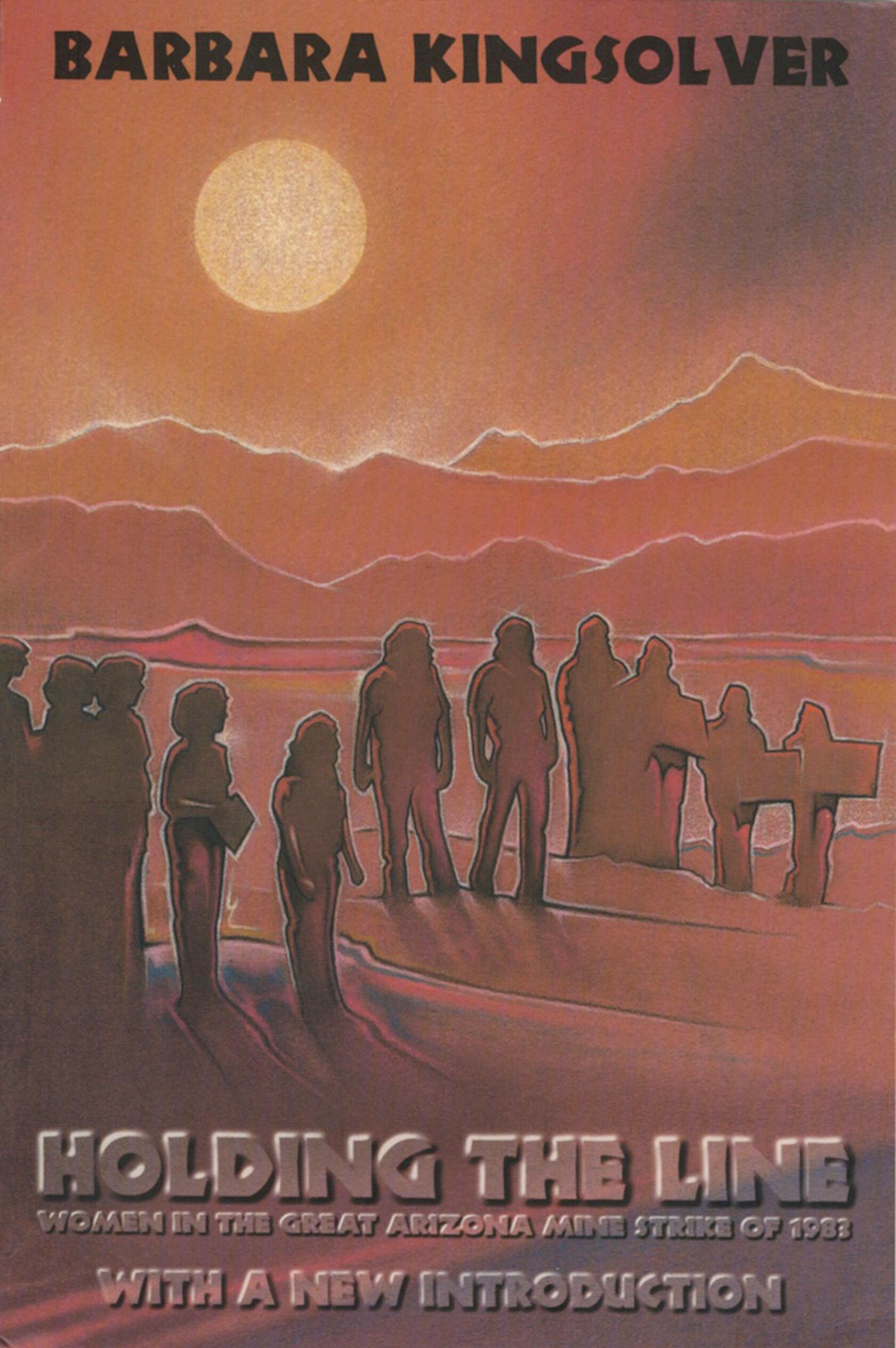
Holding the Line
Holding the Line, Barbara Kingsolver's first non-fiction book, is the story of women's lives transformed by an a signal event. Set in the small mining towns of Arizona, it is part oral history and part social criticism, exploring the process of empowerment which occurs when people work together as a community. Like Kingsolver's award-winning novels,Holding the Lineis a beautifully written book grounded on the strength of its characters.
Hundreds of families held the line in the 1983 strike against Phelps Dodge Copper in Arizona. After more than a year the strikers lost their union certification, but the battle permanently altered the social order in these small, predominantly Hispanic mining towns. At the time the strike began, many women said they couldn't leave the house without their husband's permission. Yet, when injunctions barred union men from picketing, their wives and daughters turned out for the daily picket lines. When the strike dragged on and men left to seek jobs elsewhere, women continued to picket, organize support, and defend their rights even when the towns were occupied by the National Guard. \"Nothing can ever be the same as it was before,\" said Diane McCormick of the Morenci Miners Women's Auxiliary. \"Look at us. At the beginning of this strike, we were just a bunch of ladies.\"
eBook
Holding the line : women in the great Arizona mine strike of 1983
Barbara Kingsolver's first non-fiction book is the story of women's lives transformed by an a signal event. Set in the small mining towns of Arizona, it explores the process of empowerment which occurs when people work together as a community.
eBook

Holding the Line
Barbara Kingsolver's first non-fiction book is the story of women's lives transformed by an a signal event. Set in the small mining towns of Arizona, it explores the process of empowerment which occurs when people work together as a community.
eBook

A Productive Systems Analysis of the 1983 Phelps Dodge Strike
On July 1, 1983, some 2,400 workers went on strike against the Phelps Dodge Corp., then the US' 2nd-largest domestic producer of copper. The strike lasted 2 1/2 years and ended in the decertification of the 13 unions involved. The strikers lost their jobs, unions, homes, and communities. A productive systems analysis of the strike shows that labor cost concessions would not have solved Phelps Dodge's problems. At the time, the industry was in a cyclical downturn, not a secular structural decline. Phelps Dodge accurately assessed the economic and political environment in perceiving that the 1983 negotiations presented an excellent opportunity to challenge the power of the unions. Phelps Dodge exploited the trough of the business cycle to attack its labor organizations and disrupt a long-term bargaining relationship. The company was aided and encouraged by the changing labor relations environment. Given the firm's opportunism, paternalism, anti-union sentiment, and inability to relocate to escape unionization, the pieces were in place for a confrontation with the unions.
Journal Article
The Current Crisis in South Africa: Hearing before the Subcommittee on Africa of the Committee on Foreign Affairs, House of Representatives, Ninety-Eighth Congress, Second Session, December 4, 1984
[Carl Levin; Mark O. Hatfield] send a letter to South Africa. Ambassador to the United States Bernardus G. Fourie expressing concern over the Imprisonment of Opposition leaders and calling for the release of [Nelson Mandela; Winnie Mandela]; Desmond Tutu answers questions about differences of opinion among Black leaders in South Africa about the best policy toward South Africa, and states that he will not meet with any members of the Reagan Administration (20 January 1981-20 January 1989) until Constructive Engagement is abandoned; Desmond Tutu provides Congressional testimony before the U.S. Congress. House. Committee on Foreign Affairs on [Political conditions; Apartheid; Constructive Engagement; Strikes; Boycotts; Homelands; Investments] in South Africa; Desmond Tutu criticizes the South Africa. Constitution of 1983 which provides Political participation to [Indians; Coloureds] but not to Blacks
Government Document

The Ollie We Knew
Oliver L. North assisted in drafting National Security Decision Directive 138 in order to be able to fight Terrorism more aggressively from the U.S. National Security Council; Oliver L. North arranged for Solidarity Trade Union (Poland) to divert shipment of [Rifles; SA-7 Missiles] intended for Poland. Armed Forces to be sent to Honduras Contras; Oliver L. North Biographic Sketch of career in [U.S. Marine Corps; U.S. National Security Council]; Oliver L. North experience during the Vietnamese Conflict (1961-1975) affected his involvement in the [Israeli Invasion of Lebanon (6 June 1982); Grenada Invasion (25 October 1983); TWA Flight 847 Hijacking (14-30 June 1985); Achille Lauro Hijacking (7-10 October 1985); Air Strike on Libya (14-15 April 1986); Iran Initiative; Iran-Contra connection] during his tenure at the U.S. National Security Council; Oliver L. North began to direct [Special operations; Covert operations] from U.S. National Security Council with the encouragement of William J. Casey to avoid the bureaucracy of the U.S. Central Intelligence Agency; Oliver L. North frequently informed United States government officials that he was acting with authorization from Ronald W. Reagan
Government Document