
Catalogue Search | MBRL


Are you sure you want to remove the book from the shelf?

{{itemTitle}}
782
result(s) for
"1990-1991"
Sort by:

The Gulf War
President George H. W. Bush assumed office at a critical
juncture, as the Cold War came to an end and the world shifted to a
new era of international relations. In The Gulf War ,
Spencer Bakich argues that Bush fashioned a grand strategy to bring
about a New World Order designed to transform international
politics by focusing on great power cooperation through the United
Nations. The Persian Gulf War became the chance for Bush to put his
strategy into action. This latest volume in the Landmark
Presidential Decision series offers a fresh and concise look at
President Bush's strategic decision making and his choice to wage
war against Iraq.
Bakich, an expert in wartime strategy, traces the ideas and
actions of Bush's new world order strategy between 1989 and 1991,
which had a profound impact on the diplomacy of Desert Shield and
the warfighting of Desert Storm. Bush's strategic beliefs contained
core elements of Wilsonian internationalism-specifically its goals
of promoting democracy, conducting multilateral diplomacy through
international institutions, and transforming the United Nations
into the collective security institution that its founders
envisioned. His \"New World Order\" was not mere political
sloganeering intended to bolster support for the Persian Gulf War
among a skeptical American public. Rather, Bush intended the Gulf
War to exercise and firmly establish the UN's collective security
function in the post-Cold War era.
In this bold new interpretation of George H. W. Bush's foreign
policy, Bakich challenges conventional wisdom, arguing that Bush's
New World Order was carefully defined and had a comprehensive
logic. He shows how Bush's strategic beliefs oriented American
statecraft in peace and war. Bush's grand strategy was remarkably
coherent, powerfully affecting how his administration decided to go
to war to evict Iraq from Kuwait, how it waged war in the Persian
Gulf, and ultimately the reasons why the fighting was terminated
before the coalition's war aims were completely achieved. In the
end, the Gulf War's outcome exposed faulty assumptions about the
international system that underpinned the strategy, weakening the
president's fidelity to his own approach. Ultimately, the Gulf War
did usher in a New World Order, but not the one Bush had
envisioned.
eBook
The Gulf Conflict and International Relations
This book provides a comprehensive analysis and review of the major events and the leading actors of the Gulf War. Copies of key documents and essential factual information build up a picture of the realities of war in the Middle East but the material is set in a strong theoretical framework. This allows the author to see the conflict within the context of the international system and to relate it to the changes of the post-cold-war world.
Matthews looks at the shifts in international order which dictated the nature of the international response to the war, but also at the new conditions created by the war itself. What scope is there for Arab socialism after the fall of European socialism? Has the conflict made Israel stronger or weaker? Can the UN be entrusted with the post of global peace-keeper?
Introduction: The Middle East and the Study of International Relations 1. The Middle East in Historical Context 2. Crisis: The Provocation and the Protagonists 3. The United Nations and the Gulf Conflict 4. The Diplomacy of Crisis 5. The Gulf Conflict and International Law 6. The Laws of War and the Gulf Conflict 7. Morality and the Gulf Conflict 8. The Economnic Dimension of the Gulf Conflict 9. War, Strategy and the Gulf Conflict 10. The Aftermath Appendix 1. Gazetteer Appendix 2. Chronology Appendix 3. Maps Appendix 4. Documents Appendix 5. Statistics
eBook
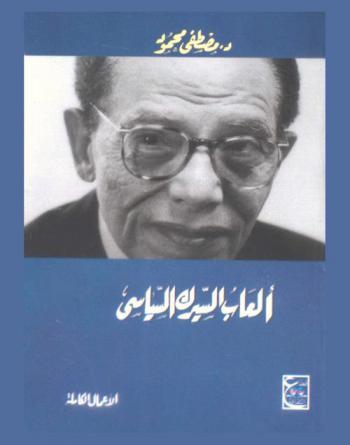
ألعاب السيرك السياسي
السياسة العالمية حفلة تنكرية يظهر فيها كل سياسي بوجه غير وجهه إنها لعبة ذكاء الشعارات المعلنة فيها غير النيات المبيتة والأوراق التي تكشف على المائدة غير المؤامرات التي تحاك تحتها ولا أحد يدري ماذا تحت القبعة. وفي هذا الكتاب محاولة مختلفة لجمع ما تفرق من أوراق وحقائق وأكاذيب هذا اللغز العجيب الذي اسمه حرب الخليج وما في هذه الحرب من سراديب ودهاليز ومتاهات يحار فيه اللبيب ىوما زالت نتائج تلك الحرب تتداعى، وما زال مطبخ الحوادث يكشف لنا الجديد كل يوم، ولا يعلم أحمد أين ستلقى سفن التاريخ مراسيها ولا على أي صورة سيرثث أولادنا وأحفادنا خريطة هذه التركة التي أسمها الشرق الأوسط.
Book

Channels of Power
When President George W. Bush launched an invasion of Iraq in
March of 2003, he did so without the explicit approval of the
Security Council. His father's administration, by contrast,
carefully funneled statecraft through the United Nations and
achieved Council authorization for the U.S.-led Gulf War in 1991.
The history of American policy toward Iraq displays considerable
variation in the extent to which policies were conducted through
the UN and other international organizations.
In Channels of Power, Alexander Thompson surveys U.S. policy
toward Iraq, starting with the Gulf War, continuing through the
interwar years of sanctions and coercive disarmament, and
concluding with the 2003 invasion and its long aftermath. He offers
a framework for understanding why powerful states often work
through international organizations when conducting coercive
policies-and why they sometimes choose instead to work alone or
with ad hoc coalitions. The conventional wisdom holds that because
having legitimacy for their actions is important for normative
reasons, states seek multilateral approval. Channels of Power
offers a rationalist alternative to these standard legitimation
arguments, one based on the notion of strategic information
transmission: When state actions are endorsed by an independent
organization, this sends politically crucial information to the
world community, both leaders and their publics, and results in
greater international support.
When President George W. Bush launched an invasion of Iraq in
March of 2003, he did so without the explicit approval of the
Security Council. His father's administration, by contrast,
carefully funneled statecraft through the United Nations and
achieved Council authorization for the U.S.-led Gulf War in 1991.
The history of American policy toward Iraq displays considerable
variation in the extent to which policies were conducted through
the UN and other international organizations.In Channels of
Power , Alexander Thompson surveys U.S. policy toward Iraq,
starting with the Gulf War, continuing through the interwar years
of sanctions and coercive disarmament, and concluding with the 2003
invasion and its long aftermath. He offers a framework for
understanding why powerful states often work through international
organizations when conducting coercive policies-and why they
sometimes choose instead to work alone or with ad hoc coalitions.
The conventional wisdom holds that because having legitimacy for
their actions is important for normative reasons, states seek
multilateral approval. Channels of Power offers a
rationalist alternative to these standard legitimation arguments,
one based on the notion of strategic information transmission: When
state actions are endorsed by an independent organization, this
sends politically crucial information to the world community, both
leaders and their publics, and results in greater international
support.
eBook
حرب الخليج الثانية : المقدمات والنتائج
كانت حرب الخليج الثانية نقطة البدء المباشرة للكارثة التي راحت فصولها تتوالى بدءا من تحطيم لبنية العسكرية للعراق إلى الحصار الخانق الذي لم يعرف له التاريخ مثيلا على بلد منهك ثم تدميره واحتلاله والكارثة مستمرة حتى الساعة فما يجري على امتداد الساحة لا يخفى على أحد ليس في العراق فقط على الرغم مما كتب عن هذه الحرب فإن في هذا الكتاب ما ينير البقعة المعتمة التي ما تزال تضرب خلفية هذه الحرب والعتمة لا تزال تتوالد بالبلاهة نفسها عندنا نحن العرب والمؤسف أننا نصر على تجاهلها ونأبى التخلي عن حماقتنا.
Book

Worldmaking at the End of History: The Gulf Crisis of 1990–91 and International Law
This Article argues that the Gulf Crisis of 1990–91, the first major international crisis of the post-Cold War era, was a constitutive moment for international law. The Article examines the contests in the United Nations over the meaning of the Crisis and shows that these contests were also over the meaning of cooperation under international law in the “new world order.” The Article casts the Gulf Crisis itself as a moment of “worldmaking,” in which the United States refashioned foundational concepts like interdependence, sovereignty, and humanity in warfare and deployed them to suit a state-centered vision of international cooperation under hierarchy.
Journal Article
الخليج بيننا : قطرة نفط بقطرة دم
يتناول كتاب (الخليج بيننا : قطرة نفط بقطرة دم) والذي قام بتأليفه (حمدان حمدان) ويقع في حوالي (717) صفحة من القطع المتوسط موضوع (سياسة الأزمة العراقية الكويتية) مستعرضا المحتويات التالية : مقدمة، الفصل الأول : شيء من التاريخ، الفصل الثاني : النفط أولا النفط دائما، الفصل الثالث : لم يهطل المطر من غيمة عابرة، الفصل الرابع : الاجتياح، الفصل الخامس : وجها لوجه مع التحالف، الفصل السادس : من درع الصحراء إلى عاصفة الصحراء، الفصل السابع : كتب عليكم القتال، الفصل الثامن : نظام عالمي برأس واحد، الفصل الأخير : ملحق مختارات من كتاب شوفنمان.
Book
The Gulf War. Thunder and lightning
The Gulf War is a 4-part series aired on the fifth anniversary of the war. It features interviews with various individuals involved, as well as analysis of the events that took place.
Streaming Video