
Catalogue Search | MBRL


Are you sure you want to remove the book from the shelf?

{{itemTitle}}
5,293
result(s) for
"1999"
Sort by:

The drawings of Al Taylor
\"Featuring nearly eighty drawings and pages from a dozen sketchbooks from Al Taylor's entire career, The Drawings of Al Taylor documents the artist's important achievements as a draftsman. This book investigates important and illuminating aspects of Al Taylor's drawings, which numbered over five thousand at the time of his death. It includes a chronological survey of Taylor's drawings from the mid-1980s, when he abandoned painting in favor of sculpture and drawing, and highlights the combination of technical refinement, humor, and sensuousness that characterizes his works on paper. Stunning reproductions of the works, which were inspired by such ordinary things as tin cans, pet stains, and rat guards, reveal the drawings' minute details, nuanced shading, and playfully agile pencil lines. Lively texts explore how Taylor's style resonates with that of late Renaissance and Baroque Old Masters in the rich and complex visual sensibility of his drawings. The book also examines Taylor's innovative approach to process and materials, such as photocopier toner, with its intense black, and the extreme white of correction fluid. Created with equal parts humor and technical virtuosity, and informed by scientific models as well as everyday minutiae, Al Taylor's magnificent drawings are meditations on form and structure that stand alone as testament to great draftsmanship\"-- Provided by publisher.
Book

Popular Choice and Managed Democracy: The Russian Elections of 1999 and 2000
Twice in the winter of 1999-2000, citizens of the Russian Federation flocked to their neighborhood voting stations and scratched their ballots in an atmosphere of uncertainty, rancor, and fear. This book is a tale of these two elections -one for the 450-seat Duma, the other for President. Despite financial crisis, a national security emergency in Chechnya, and cabinet instability, Russian voters unexpectedly supported the status quo. The elected lawmakers prepared to cooperate with the executive branch, a gift that had eluded President Boris Yeltsin since he imposed a post-Soviet constitution by referendum in 1993. When Yeltsin retired six months in advance of schedule, the presidential mantle went to Vladimir Putin -a career KGB officer who fused new and old ways of doing politics. Putin was easily elected President in his own right. This book demonstrates key trends in an extinct superpower, a troubled country in whose stability, modernization, and openness to the international community the West still has a huge stake.
eBook

What i see
\"Sometimes described as the world's most popular teen, Brooklyn Beckham has a massive social media footprint with over 9 million followers of his Instagram alone. As a model he has appeared in New York Times Style Magazine and Man About Town, and as a photographer he shot the recent Burberry Brit fragrance campaign. What I See is Brooklyn's collection of around 300 personal photographs--most shot by him but with some shots of Brooklyn taken by others--offering a rare and intimate glimpse of the world through his eyes. This stylish and beautifully designed edition will be comprised of fan favorites as well as new and exclusive images from his personal archive. Each chapter tells a different story through pictures by and of Brooklyn, and each will be accompanied by captions and passages of text. What I See documents many of Brooklyn's travels around the world--California, New York, Greece, and Iceland among other destinations--as well as life behind the scenes at home with his family.\"--Amazon.com.
Book

Holocaust Memory Reframed
Holocaust memorials and museums face a difficult task as their staffs strive to commemorate and document horror. On the one hand, the events museums represent are beyond most people's experiences. At the same time they are often portrayed by theologians, artists, and philosophers in ways that are already known by the public. Museum administrators and curators have the challenging role of finding a creative way to present Holocaust exhibits to avoid clichéd or dehumanizing portrayals of victims and their suffering.InHolocaust Memory Reframed, Jennifer Hansen-Glucklich examines representations in three museums: Israel's Yad Vashem in Jerusalem, Germany's Jewish Museum in Berlin, and the United States Holocaust Memorial Museum in Washington, D.C. She describes a variety of visually striking media, including architecture, photography exhibits, artifact displays, and video installations in order to explain the aesthetic techniques that the museums employ. As she interprets the exhibits, Hansen-Glucklich clarifies how museums communicate Holocaust narratives within the historical and cultural contexts specific to Germany, Israel, and the United States. In Yad Vashem, architect Moshe Safdie developed a narrative suited for Israel, rooted in a redemptive, Zionist story of homecoming to a place of mythic geography and renewal, in contrast to death and suffering in exile. In the Jewish Museum in Berlin, Daniel Libeskind's architecture, broken lines, and voids emphasize absence. Here exhibits communicate a conflicted ideology, torn between the loss of a Jewish past and the country's current multicultural ethos. The United States Holocaust Memorial Museum presents yet another lens, conveying through its exhibits a sense of sacrifice that is part of the civil values of American democracy, and trying to overcome geographic and temporal distance. One well-know example, the pile of thousands of shoes plundered from concentration camp victims encourages the visitor to bridge the gap between viewer and victim.Hansen-Glucklich explores how each museum's concept of the sacred shapes the design and choreography of visitors' experiences within museum spaces. These spaces are sites of pilgrimage that can in turn lead to rites of passage.
eBook

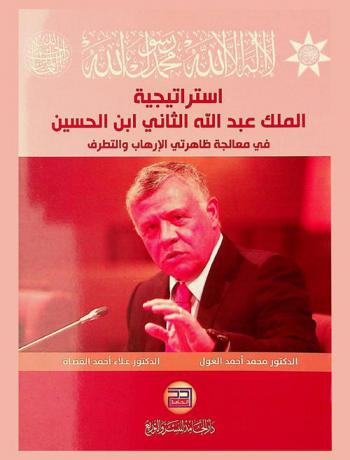
الملك الحسين بن طلال ودوره السياسي في الأردن 1953-1967
ويهدف الكتاب لإبراز شخصية الملك الحسين بن طلال ودوره السياسي المهم في تاريخ المملكة الأردنية الهاشمية الحديث والمعاصر1953-1967 والذي تولى الحكم في أصعب الحقب التي شهدتها منطقة الشرق الأوسط ووسط تحديات إقليمية ودولية عديدة ولكنه استطاع أن يبذل الجهود الكبيرة لبناء المملكة الأردنية الهاشمية وتحقيق النهوض العلمي والتقدم السياسي.
BOOK

LABOR SHARE DECLINE AND INTELLECTUAL PROPERTY PRODUCTS CAPITAL
We study the behavior of the U.S. labor share over the past 90 years. We find that the observed decline of the labor share is entirely explained by the capitalization of intellectual property products in the national income and product accounts.
Journal Article


Molecular mechanisms and consequences of mitochondrial permeability transition
Mitochondrial permeability transition (mPT) is a phenomenon that abruptly causes the flux of low molecular weight solutes (molecular weight up to 1,500) across the generally impermeable inner mitochondrial membrane. The mPT is mediated by the so-called mitochondrial permeability transition pore (mPTP), a supramolecular entity assembled at the interface of the inner and outer mitochondrial membranes. In contrast to mitochondrial outer membrane permeabilization, which mostly activates apoptosis, mPT can trigger different cellular responses, from the physiological regulation of mitophagy to the activation of apoptosis or necrosis. Although there are several molecular candidates for the mPTP, its molecular nature remains contentious. This lack of molecular data was a significant setback that prevented mechanistic insight into the mPTP, pharmacological targeting and the generation of informative animal models. In recent years, experimental evidence has highlighted mitochondrial F1Fo ATP synthase as a participant in mPTP formation, although a molecular model for its transition to the mPTP is still lacking. Recently, the resolution of the F1Fo ATP synthase structure by cryogenic electron microscopy led to a model for mPTP gating. The elusive molecular nature of the mPTP is now being clarified, marking a turning point for understanding mitochondrial biology and its pathophysiological ramifications. This Review provides an up-to-date reference for the understanding of the mammalian mPTP and its cellular functions. We review current insights into the molecular mechanisms of mPT and validated observations — from studies in vivo or in artificial membranes — on mPTP activity and functions. We end with a discussion of the contribution of the mPTP to human disease. Throughout the Review, we highlight the multiple unanswered questions and, when applicable, we also provide alternative interpretations of the recent discoveries.Mitochondrial permeability transition — mediated by the opening of the so-called mitochondrial permeability transition pore — causes abrupt flux of low molecular weight solutes across the generally impermeable inner mitochondrial membrane. Recent studies provide new insights into the molecular nature and mechanisms of the mitochondrial permeability transition pore and the physiological consequences of its opening.
Journal Article
The functional universe of membrane contact sites
Although organelles compartmentalize eukaryotic cells, they can communicate and integrate their activities by connecting at membrane contact sites (MCSs). The roles of MCSs in biology are becoming increasingly clear, with MCSs now known to function in intracellular signalling, lipid metabolism, membrane dynamics, organelle biogenesis and the cellular stress response.
Journal Article