
Catalogue Search | MBRL


Are you sure you want to remove the book from the shelf?

{{itemTitle}}
9
result(s) for
"20.70 European art."
Sort by:

The power of color : five centuries of European painting
This expansive study of color illuminates the substance, context, and meaning of five centuries of European painting. Between the mid-15th and the mid-19th centuries, the materials of painting remained remarkably unchanged, but innovations in their use flourished. Technical discoveries facilitated new visual effects, political conditions prompted innovations, and economic changes shaped artists' strategies, especially as trade became global. Marcia Hall explores how Michelangelo radically broke with his contemporaries' harmonizing use of color in favor of a highly saturated approach; how the robust art market and demand for affordable pictures in 17th-century Netherlands helped popularize subtly colored landscape paintings; how politics and color became entangled during the French Revolution; and how modern artists liberated color from representation as their own role transformed from manipulators of pigments to visionaries celebrated for their individual expression. Using insights from recent conservation studies, Hall captivates readers with fascinating details and developments in magnificent examples-from Botticelli and Titian to Van Gogh and Kandinsky-to weave an engaging analysis. Her insistence on the importance of examining technique and material to understand artistic meaning gives readers the tools to look at these paintings with fresh eyes.
Book

Framing Majismo
Majismo, a cultural phenomenon that embodied the popular aesthetic in Spain from the second half of the eighteenth century, served as a vehicle to \"regain\" Spanish heritage. As expressed in visual representations of popular types participating in traditional customs and wearing garments viewed as historically Spanish, majismo conferred on Spanish \"citizens\" the pictorial ideal of a shared national character.
In Framing Majismo, Tara Zanardi explores nobles' fascination with and appropriation of the practices and types associated with majismo, as well as how this connection cultivated the formation of an elite Spanish identity in the late 1700s and aided the Bourbons' objective to fashion themselves as the legitimate rulers of Spain. In particular, the book considers artistic and literary representations of the majo and the maja, purportedly native types who embodied and performed uniquely Spanish characteristics. Such visual examples of majismo emerge as critical and contentious sites for navigating eighteenth-century conceptions of gender, national character, and noble identity. Zanardi also examines how these bodies were contrasted with those regarded as \"foreign,\" finding that \"foreign\" and \"national\" bodies were frequently described and depicted in similar ways. She isolates and uncovers the nuances of bodily representation, ultimately showing how the body and the emergent nation were mutually constructed at a critical historical moment for both.
eBook

Embattled avant-gardes : modernism's resistance to commodity culture in Europe
\"This sweeping work, at once a panoramic overview and an ambitious critical reinterpretation of European modernism, provides a bold new perspective on a movement that defined the cultural landscape of the early twentieth century. Walter L. Adamson embarks on a lucid, wide-ranging exploration of the avant-garde practices through which the modernist generations after 1900 resisted the rise of commodity culture as a threat to authentic cultural expression. Taking biographical approaches to numerous avant-garde leaders, Adamson charts the rise and fall of modernist aspirations in movements and individuals as diverse as Ruskin, Marinetti, Kandinsky, Bauhaus, Purism, and the art critic Herbert Read. In conclusion, Adamson rises to the defense of the modernists, suggesting that their ideas are relevant to current efforts to think through what it might mean to create a vibrant, aesthetically satisfying form of cultural democracy.\"--Publisher's website.
Book
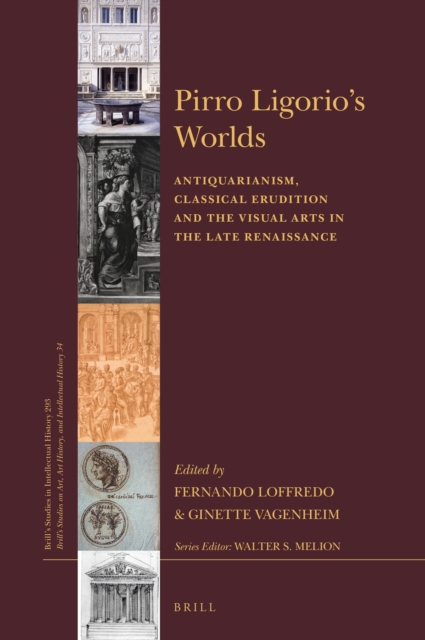
Pirro Ligorio's Worlds
A reconsideration of the manifold interests of the central and controversial figure Pirro Ligorio, an ambiguous antagonist of the canon embodied by Michelangelo and one of the most fascinating and learned antiquarians in the entourage of Cardinal Alessandro Farnese.
eBook

The Power and the Glorification
Focusing on a turbulent time in the history of the Roman Catholic Church, The Power and the Glorification considers how, in the fifteenth and sixteenth centuries, the papacy employed the visual arts to help reinforce Catholic power structures. All means of propaganda were deployed to counter the papacy’s eroding authority in the wake of the Great Schism of 1378 and in response to the upheaval surrounding the Protestant Reformation a century later. In the Vatican and elsewhere in Rome, extensive decorative cycles were commissioned to represent the strength of the church and historical justifications for its supreme authority. Replicating the contemporary viewer’s experience is central to De Jong’s approach, and he encourages readers to consider the works through fifteenth- and sixteenth-century eyes. De Jong argues that most visitors would only have had a limited knowledge of the historical events represented in these works, and would likely have accepted (or been intended to accept) what they saw at face value. With that end in mind, the painters’ advisors did their best to “manipulate” the viewer accordingly, and De Jong discusses their strategies and methods.
eBook

Artists and Migration 1400-1850
This volume offers a thematic exploration of the migrant artist's experience in Europe and its colonies from the early modern period through to the Industrial Revolution. The influence of the transient artist, both on their adoptive country as well as their own oeuvre and native culture, is considered through a collection of essays arranged according to geographic location. The contributions here examine the impetuses behind artistic migrations and the status of the foreign artist at home and abroad through the patterns of patronage, contemporary responses to their work and the preservation of their artistic legacy in domestic and foreign settings. Objects and sites from across the visual arts are considered as evidence of the migrant artist's experience; talismans of cultural exchange that yielded hybrid artistic styles and disseminated foreign tastes and workshop practices across the globe.
eBook

Framing Majismo
Majismo, a cultural phenomenon that embodied the
popular aesthetic in Spain from the second half of the eighteenth
century, served as a vehicle to \"regain\" Spanish heritage. As
expressed in visual representations of popular types participating
in traditional customs and wearing garments viewed as historically
Spanish, majismo conferred on Spanish \"citizens\" the pictorial
ideal of a shared national character.
In Framing Majismo, Tara Zanardi explores nobles'
fascination with and appropriation of the practices and types
associated with majismo, as well as how this connection cultivated
the formation of an elite Spanish identity in the late 1700s and
aided the Bourbons' objective to fashion themselves as the
legitimate rulers of Spain. In particular, the book considers
artistic and literary representations of the majo and the
maja , purportedly native types who embodied and performed
uniquely Spanish characteristics. Such visual examples of majismo
emerge as critical and contentious sites for navigating
eighteenth-century conceptions of gender, national character, and
noble identity. Zanardi also examines how these bodies were
contrasted with those regarded as \"foreign,\" finding that \"foreign\"
and \"national\" bodies were frequently described and depicted in
similar ways. She isolates and uncovers the nuances of bodily
representation, ultimately showing how the body and the emergent
nation were mutually constructed at a critical historical moment
for both.
eBook
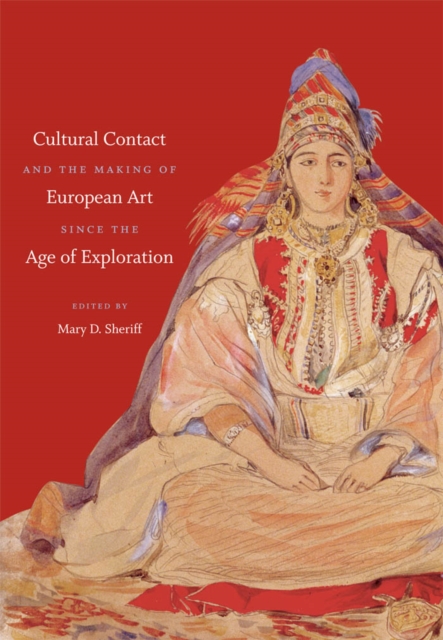
Cultural contact and the making of European art since the age of exploration
Art historians have long been accustomed to thinking about art and artists in terms of national traditions. This volume takes a different approach, suggesting instead that a history of art based on national divisions often obscures the processes of cultural appropriation and global exchange that shaped the visual arts of Europe in fundamental ways between 1492 and the early twentieth century.
Essays here analyze distinct zones of contact - between various European states, between Asia and Europe, or between Europe and so-called primitive cultures in Africa, the Americas, and the South Pacific - focusing mainly but not exclusively on painting, drawing, or the decorative arts. Each case foregrounds the centrality of international borrowings or colonial appropriations and counters conceptions of European art as a \"pure\" tradition uninfluenced by the artistic forms of other cultures. The contributors analyze the social, cultural, commercial, and political conditions of cultural contact - including tourism, colonialism, religious pilgrimage, trade missions, and scientific voyages - that enabled these exchanges well before the modern age of globalization.
Contributors:
Claire Farago, University of Colorado at Boulder
Elisabeth A. Fraser, University of South Florida
Julie Hochstrasser, University of Iowa
Christopher Johns, Vanderbilt University
Carol Mavor, University of North Carolina at Chapel Hill
Mary D. Sheriff, University of North Carolina at Chapel Hill
Lyneise E. Williams, University of North Carolina at Chapel Hill
eBook
Bohm-Biederman correspondence
\"It was sheer chance that I encountered David Bohm's writing in 1958 ... I knew nothing about him. What struck me about his work and prompted my initial letter was his underlying effort to seek for some larger sense of reality, which seemed a very humanized search.\" - Charles Biederman, from the foreword of the bookThis book marks the beginning of a four thousand page correspondence between Charles Biederman, founder of Constructivism in the 1930s, and David Bohm the prestigious physicist known for his interpretation of quantum theory. Available for the first time, we are given a rare opportunity to read through and engage in a remarkable transatlantic, intellectual discussion on art and science, creativity and theory.
eBook