
Catalogue Search | MBRL


Are you sure you want to remove the book from the shelf?

{{itemTitle}}
8
result(s) for
"2000 - 2099 fast"
Sort by:

Faith as an option : possible futures for Christianity
Many people these days regard religion as outdated and are unable to understand how believers can intellectually justify their faith. Nonbelievers have long assumed that progress in technology and the sciences renders religion irrelevant. Believers, in contrast, see religion as vital to society's spiritual and moral well-being. But does modernization lead to secularization? Does secularization lead to moral decay? Sociologist Hans Joas argues that these two supposed certainties have kept scholars from serious contemporary debate and that people must put these old arguments aside in order for debate to move forward. The emergence of a \"secular option\" does not mean that religion must decline, but that even believers must now define their faith as one option among many. In this book, Joas spells out some of the consequences of the abandonment of conventional assumptions for contemporary religion and develops an alternative to the cliché of an inevitable conflict between Christianity and modernity. Arguing that secularization comes in waves and stressing the increasing contingency of our worlds, he calls upon faith to articulate contemporary experiences. Churches and religious communities must take into account religious diversity, but the modern world is not a threat to Christianity or to faith in general. On the contrary, Joas says, modernity and faith can be mutually enriching.
eBook


The Arab Spring and Arab Thaw
What were the unifying principles or strategies that governed the protest movements that swept the Middle East and North Africa in the spring of 2011?
Who were the protestors and how did the different authoritarian regimes respond to them?
How did regional and international institutions react to a region in turmoil?
The Arab Spring and Arab Thaw; Unfinished Revolutions and the Quest for Democracy addresses these questions by examining a range of successful and unsuccessful protest strategies and counter revolutionary tactics employed by protestors and autocratic regimes. Contributors explore the reactions of the USA, EU and Arab League to events in the region and provide insight as to the gendered dimensions of the struggle along with the ethnic and tribal divisions that continue to impact the post-revolt period. By addressing these critical queries the book demonstrate how the Arab Spring has evolved into a protracted Arab Thaw that continues to profoundly affect regional and international politics.
eBook
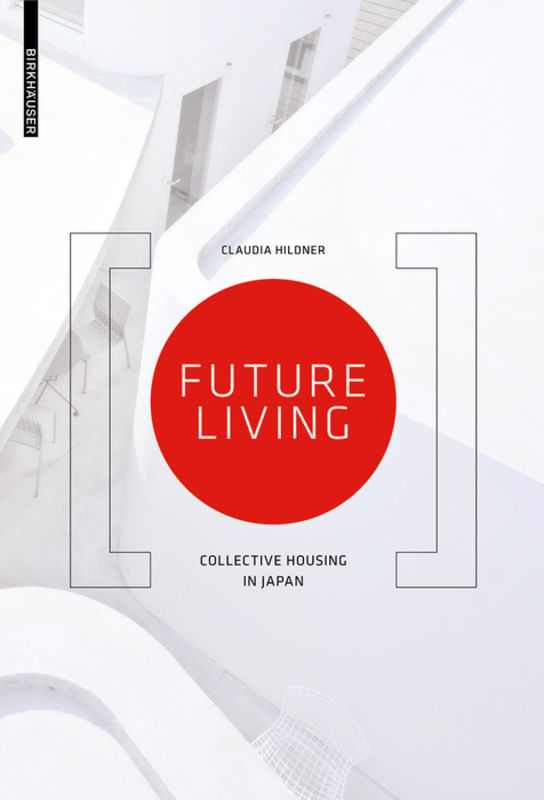
Future Living
Single-family houses are becoming increasingly outdated.They offer no response to demographic change or to the fact that there are fewer and fewer life-long relationships.They are often too inflexible for new family models or ways of cohabitation.
eBook

Ornament
Once condemned by Modernism and compared to a 'crime' by Adolf Loos, ornament has made a spectacular return in contemporary architecture. This is typified by the works of well-known architects such as Herzog & de Meuron, Sauerbruch Hutton, Farshid Moussavi Architecture and OMA. There is no doubt that these new ornamental tendencies are inseparable from innovations in computer technology. The proliferation of developments in design software has enabled architects to experiment afresh with texture, colour, pattern and topology. Though inextricably linked with digital tools and culture, Antoine Picon argues that some significant traits in ornament persist from earlier Western architectural traditions. These he defines as the 'subjective' – the human interaction that ornament requires in both its production and its reception – and the political. Contrary to the message conveyed by the founding fathers of modern architecture, traditional ornament was not meant only for pleasure. It conveyed vital information about the designation of buildings as well as about the rank of their owners. As such, it participated in the expression of social values, hierarchies and order. By bringing previous traditions in ornament under scrutiny, Picon makes us question the political issues at stake in today's ornamental revival. What does it tell us about present-day culture? Why are we presently so fearful of meaning in architecture? Could it be that by steering so vehemently away from symbolism, contemporary architecture is evading any explicit contribution to collective values?
eBook
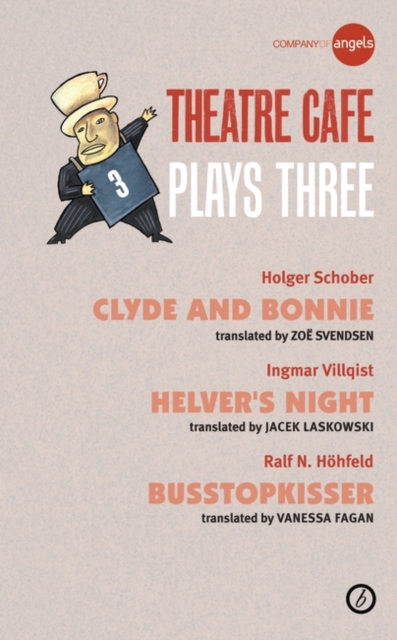
Theatre Café Plays Three
This third volume in the Theatre Café series brings together three more European plays, which received their UK premieres at Theatre Café Festivals. Clyde and Bonnie: Parents! Hide your children! Hide your savings! Clyde and Bonnie are back in town! A play about responsibility, love and also about how to stay cool when the cops are hot on your heels. In 2009, Clyde and Bonnie won two Austrian Theatre for Young People Awards, including Best Theatre Production. Helver's Night: Carla's young charge, Helver, is fascinated by fascism - not by the ideology, which he is unable to grasp, but by the bravura of the movement. As a violent occupying army rampages through his town, will Helver become a victim of his own fascination? Busstopkisser: A boy. A girl. A bus stop. 18 kisses over 18 months. Coffee and conversation by candlelight, a picnic under the Eiffel Tower. Then the girl vanishes. But was she ever really there? A funny, unusual take on the classic boy‐meets‐girl scenario, Busstopkisser takes the audience on a mind-bending, tweet-sized journey through adolescent romance.
eBook

Japanization
An in-depth look at Japan's economic malaise and the steps it must take to compete globally In Japanization, Bloomberg columnist William Pesek--based in Tokyo--presents a detailed look at Japan's continuing twenty-year economic slow-down, the political and economic reasons behind it, and the policies it could and should undertake to return to.
eBook

Contemporary American Fiction
This is an accessible, lucid and incisive study that will prove indispensable to students and scholars of contemporary American fiction. Featuring a wide range of authors - from canonical figures such as Philip Roth, Don DeLillo and Annie Proulx, to increasingly influential writers such as Jeffrey Eugenides, Gish Jen and Richard Powers - the book combines detailed readings of key texts with informative discussions of their historical, social and cultural contexts.
There are chapters focusing on formal characteristics (the use of irony and paradox in novels by Don DeLillo, Paul Auster and Bret Easton Ellis, and the generic properties of the texts and films of Cold Mountain, Brokeback Mountain and No Country for Old Men) and on thematic concerns (the representation of gender and sexuality in novels by Jane Smiley, Carol Shields and Jeffrey Eugenides, and of ethnicity, race and hybridity in fiction by Gish Jen, Philip Roth and Richard Powers). Running through all these chapters is an interrogation of all three elements making up the phrase 'contemporary American fiction'.
Key Features
Identifies some of the main trends in contemporary American fiction and situates them in historical and cultural contextsDiscusses a representative range of recent fiction, providing a sense of the rich diversity of the field and of its key themes and modes of writingIntroduces students to a variety of critical approaches to, and debates concerning, contemporary American fictionEncourages reflection on the nature of national, gender, ethnic and generic identities
eBook